
CPE Battery Backup Solutions: Ensuring Continuous Connectivity During Power Outages
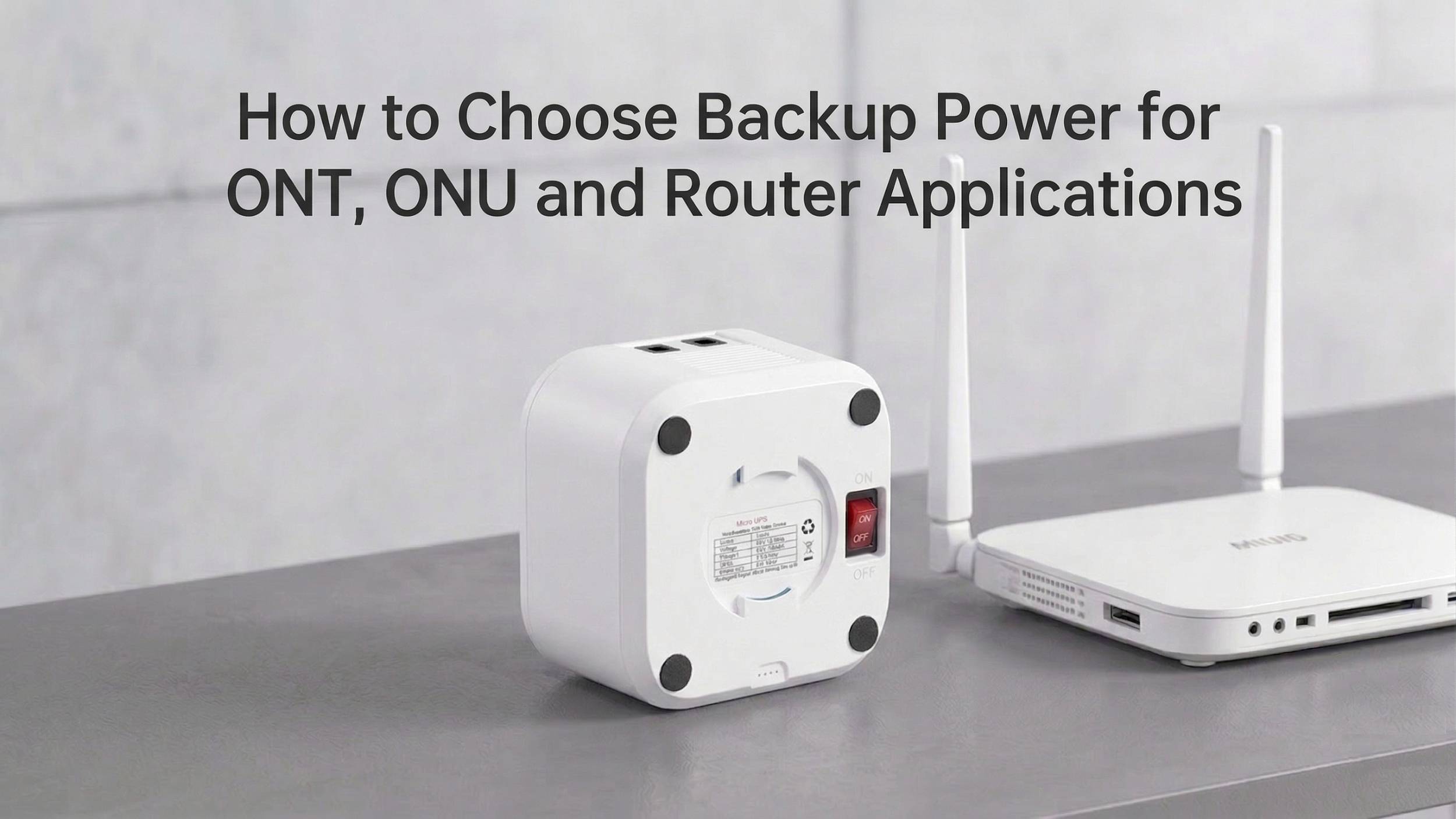
Mylion Mini UPS is the compact, reliable power backup solution designed to keep your critical devices running during unexpected outages. Engineered for home offices, network setups.
Power outages remain one of the most persistent challenges for telecom operators and Internet Service Providers worldwide. When the grid fails, customer premises equipment (CPE) such as routers, ONTs, modems, and gateways go dark, interrupting broadband service and generating customer complaints. For ISPs seeking to maintain service continuity and reduce field support costs, CPE battery backup solutions have become an essential infrastructure component.
Understanding CPE Power Vulnerability
Customer premises equipment operates at the edge of broadband networks, where power stability cannot be guaranteed. Unlike carrier-grade central office equipment with redundant power systems, CPE devices depend entirely on local electrical infrastructure. Even brief power interruptions cause these devices to reboot, disrupting internet connectivity for residential and small business users.
The impact extends beyond customer inconvenience. Each power-related service interruption can trigger help desk calls, remote troubleshooting attempts, and potentially costly truck rolls. In regions with unstable power grids, these incidents accumulate rapidly, creating operational burden and eroding customer satisfaction. For fiber-to-the-home (FTTH) deployments and broadband expansion into areas with developing electrical infrastructure, addressing CPE power resilience has become a strategic priority.
Technical Requirements for CPE Battery Backup
Effective CPE battery backup solutions must address several technical considerations. The backup power system must match the specific voltage requirements of the target device, whether 5V, 9V, 12V, 15V, 24V, 48V, or other DC voltages. Equally critical is current capacity—the backup unit must handle not only the device’s normal operating current but also startup surge currents that can exceed steady-state consumption.
Connector compatibility represents another frequent deployment challenge. CPE devices use various DC barrel connectors, USB-C Power Delivery inputs, and specialized power interfaces. A backup solution with incorrect connector specifications creates installation complications and potential safety concerns.
Runtime requirements vary by application scenario. While some deployments need only bridging power during brief grid fluctuations, others require hours of backup capacity to maintain service through extended outages. Battery capacity must be sized appropriately, balancing backup duration against physical size and deployment cost.
Compact DC UPS Architecture for CPE Applications
Traditional AC uninterruptible power supply (UPS) systems, designed for desktop computers and office equipment, often prove impractical for CPE backup applications. These systems are typically oversized, inefficient for small DC loads, and difficult to deploy in residential or outdoor installations.
Mini DC UPS technology offers a more appropriate architecture. These compact backup power units connect directly in the DC power path, eliminating unnecessary AC-to-DC conversion losses. By integrating lithium-ion or LiFePO4 battery cells with battery management system (BMS) protection circuits, mini DC UPS solutions provide automatic backup switching during power interruptions while maintaining compact form factors suitable for customer premises installation.
The BMS protection layer is particularly important for lithium battery applications, guarding against overcharge, over-discharge, overcurrent, short circuit, and thermal conditions that could compromise safety. This protection becomes essential when backup power systems are deployed in uncontrolled residential environments rather than climate-controlled equipment rooms.
Application Scenarios Across Broadband Networks
CPE battery backup solutions serve multiple deployment scenarios within modern broadband infrastructure. For FTTH networks, ONT backup power maintains fiber connectivity during grid interruptions, preventing service dropouts that would otherwise require customer service intervention. The inline installation approach allows backup units to be integrated cleanly into fiber terminal installations where space is limited.
Router and gateway backup applications address the most common CPE vulnerability point. Home and small office routers typically lack any internal backup capacity, making them completely dependent on stable external power. Adding compact DC backup units at router installations creates service continuity without requiring customer awareness or interaction.
For higher-performance applications, such as advanced WiFi gateways, broadband CPE with multiple radios, or small business network equipment, high-current BBU (battery backup unit) solutions provide the output capacity needed to support devices with greater power consumption. Shanghai Mylion Technology Co., Ltd. offers models such as the MU35 and MU65 specifically designed for these demanding applications, supporting evaluation of real working current, peak loads, and startup surge characteristics before deployment.
Specialized scenarios include 24V and 48V DC equipment backup for wireless CPE, small communication terminals, and selected professional networking devices. The MU248 model from MYLION addresses these higher-voltage applications where standard 12V backup solutions would be incompatible. Similarly, the USB-C PD backup power approach, exemplified by the MUC85 model, supports modern networking equipment transitioning from traditional DC barrel inputs to USB-C Power Delivery architecture.
Project-Based Deployment Considerations
Successful CPE battery backup deployments require more than selecting products from a catalog. Telecom operators and ISPs benefit from working with suppliers who understand application matching based on actual device specifications rather than generic adapter ratings.
Device working current under real operating conditions often differs from power adapter label specifications. Peak current during device startup may substantially exceed steady-state consumption. Without proper evaluation, backup units may be under-specified, leading to shutdown events during customer testing or field deployment.
MYLION’s approach emphasizes technical matching before mass production, supporting customers through requirement analysis, sample testing, technical confirmation, and pilot deployment phases. This project-based methodology helps avoid common pitfalls such as connector mismatches, insufficient runtime, inadequate current capacity, and safety margin deficiencies.
For OEM and ODM applications, customization capabilities become important. Private labeling, custom connectors and cables, adjusted battery capacities, modified housing designs, and project-specific documentation support allow system integrators and equipment suppliers to integrate backup power solutions under their own brands. MYLION provides these customization services while maintaining focus on stable product quality and mass production consistency.
Certification and Compliance Framework
International deployments of lithium battery backup solutions must navigate complex certification and transport requirements. Depending on target markets and specific applications, relevant standards may include CE marking for European markets, FCC compliance for North American distribution, RoHS environmental compliance, and IEC 62368-related safety evaluation.
Lithium battery transport compliance represents a particularly critical area. UN38.3 testing documentation, Material Safety Data Sheets (MSDS), proper shipping labeling, and coordination with logistics providers familiar with lithium battery regulations are all necessary for international shipments. MYLION’s experience with export documentation and lithium battery shipping coordination supports customers through these compliance requirements.
For customized BBU and Mini DC UPS projects, certification scope should be confirmed based on the final approved product configuration, including battery type, capacity, housing design, labeling, and intended market destinations.
LiFePO4 Technology for Enhanced Safety
While lithium-ion batteries offer excellent energy density for compact backup solutions, some applications prioritize enhanced safety margins and extended cycle life. LiFePO4 (Lithium Iron Phosphate) battery chemistry provides superior thermal stability and longer cycle life compared to standard lithium-ion cells, making it advantageous for applications involving long-term standby operation and repeated discharge cycles.
The ML1202AC model from MYLION’s product line demonstrates this LiFePO4 approach, targeting professional applications where battery longevity and thermal characteristics outweigh the energy density advantages of standard lithium-ion chemistry. This becomes particularly relevant for deployments in temperature-variable environments or applications requiring thousands of charge-discharge cycles over the product lifetime.
Strategic Value for Service Providers
Beyond the immediate technical function of maintaining CPE operation during outages, battery backup solutions deliver strategic operational value to service providers. Reduced service interruption complaints translate to lower help desk costs and improved customer retention metrics. Decreased field service dispatch requirements directly reduce operational expenses, particularly in rural or geographically dispersed service territories.
For competitive differentiation, reliable service during power instability can become a meaningful marketing advantage in markets where grid reliability is inconsistent. Service level agreement (SLA) compliance becomes more achievable when customer-side equipment failures due to power interruptions are eliminated from the fault equation.
Investment in CPE battery backup infrastructure represents a proactive approach to network reliability, shifting from reactive problem response to preventive service continuity. As broadband services become increasingly essential infrastructure for remote work, education, healthcare, and daily life, maintaining connectivity during power disturbances evolves from a premium feature to a baseline service expectation.
Conclusion
CPE battery backup solutions address a fundamental vulnerability in modern broadband networks. By matching backup power systems to specific device requirements, deploying appropriate battery technologies, and supporting project-based implementation, telecom operators and ISPs can significantly improve service continuity while reducing operational costs associated with power-related service interruptions.
Shanghai Mylion Technology Co., Ltd. positions itself as a specialized provider in this space, with over 13 years of experience in lithium battery pack development and Mini DC UPS solutions. The company’s product matrix—spanning standard 12V Mini UPS models (MU68, MU26, MU48), high-current telecom BBU units (MU35, MU65), inline FTTH backup solutions (MUJ46), USB-C PD backup power (MUC85), higher-voltage DC backup options (MU248), and LiFePO4 Mini UPS systems (ML1202AC)—reflects the technical diversity required for comprehensive CPE backup applications.
For B2B customers including telecom operators, Internet Service Providers, broadband network companies, system integrators, and network equipment distributors across Europe, North America, Latin America, Africa, the Middle East, and Asia, MYLION’s focus on application matching, customization capability, quality inspection, documentation support, and long-term supply reliability addresses the practical requirements of deploying backup power solutions at scale. As broadband infrastructure continues expanding into regions with variable power stability, effective CPE battery backup systems will remain essential for maintaining the service quality that customers increasingly depend upon.
Related products
-
Quick View
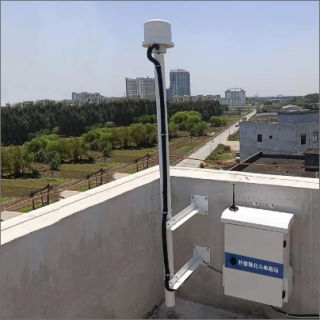
KB20 Kit: Single-base CORS system, Base Station
Contact UsThe KB20 BeiDou Single Base Station is an independently developed ground infrastructure for the BeiDou Navigation Satellite System by Kepler.
-
Quick View

K501 High-precision IMU – RTK, GNSS Receiver
Contact UsK501 is a compact and portable multi-functional GNSS receiver.
-
Quick View
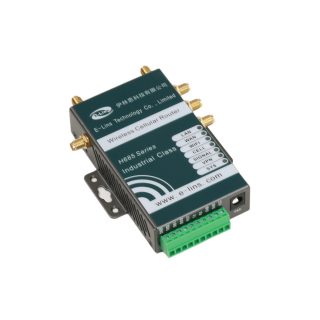
5G Cellular Routers Revolutionizing Intelligent Traffic Signal Systems
Contact UsE-Lins Technology advances the intelligent traffic sector through engineering depth accumulated since their industrial roots in 1999.
-
Quick View
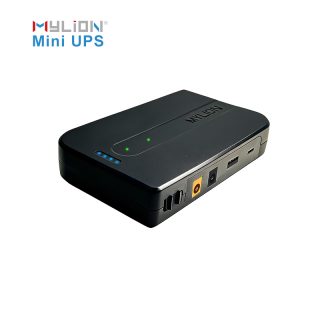
Mini UPS Solutions for ISPs: Reliable Backup Power for Network Continuity
Contact UsMylion Mini UPS features intelligent battery management with overcharge, over-discharge, and short-circuit protection, safeguarding both the UPS and your connected equipment.
Reviews
There are no reviews yet.