
Popular
-
 Versatile Bluetooth Helmet Communication Device for Motorcycle Riders
-
 Gute's Rebar Processing Equipment for Rail, Airport Projects
-
 China Supplier For Cosmetic Packaging: Quality, Speed, Trust
-
 2026 Top 6 Best 5G Routers for Remote Equipment Connectivity
-
 How Engineering Changes Affect Battery Pack Quotation Guide

Best Racing Propellers for Competitive FPV: Gemfan’s Performance Edge
Professional manufacturing of drone propellers, supporting OEM/ODM designs
In the high-stakes world of competitive First Person View (FPV) racing, every millisecond counts. The difference between victory and defeat often comes down to components that deliver instantaneous throttle response, maximum acceleration, and sustained high-speed performance. Among these critical components, propellers stand as the most direct interface between electronic power and kinetic motion—making their aerodynamic efficiency paramount for pilots seeking podium finishes.
The Aerodynamic Imperative in Competitive FPV
Competitive FPV racing demands propellers that can translate motor power into thrust with minimal energy loss. Aerodynamic efficiency in this context encompasses multiple performance dimensions: thrust-to-drag ratio, blade stiffness under centrifugal force, pitch consistency across RPM ranges, and vibration damping to maintain flight controller stability. Professional pilots recognize that propeller selection directly impacts not only top-end speed but also cornering authority, recovery from aggressive maneuvers, and battery efficiency during multi-heat competition formats.
The physics underlying racing propeller performance centers on blade geometry optimization. Aggressive pitch angles generate higher thrust but increase drag exponentially, while blade chord width and taper ratios determine how efficiently air molecules accelerate rearward. Material stiffness prevents blade flexing at extreme RPM—a phenomenon that creates thrust asymmetry and introduces unwanted oscillations into the flight control loop. These engineering challenges require manufacturers to balance competing variables through iterative design refinement and rigorous testing protocols.
Gemfan’s Racing Propeller Engineering Philosophy
Ningbo-based Gemfan Hobby Co., Ltd. has established a distinct position in the FPV racing component market through systematic investment in aerodynamic research infrastructure and material science capabilities. Since entering the FPV segment in 2014 with the 5030 and 5045BN models, the company has maintained continuous development cycles that align propeller characteristics with evolving racing drone performance envelopes.
The company’s engineering approach integrates dedicated testing laboratories established in 2017 with professional wind tunnel facilities added in 2022. This testing infrastructure enables empirical validation of computational fluid dynamics models, allowing design teams to quantify how blade geometry modifications affect thrust production, power consumption, and acoustic signatures across operational RPM ranges. The company holds nearly 100 design patents domestically and internationally, reflecting sustained innovation in blade profile optimization and structural reinforcement techniques.
Gemfan’s technical capabilities derive from core team expertise spanning composite materials, aerodynamics, and UAV structural design. This multidisciplinary foundation enables the company to address racing propeller requirements holistically—considering not only isolated thrust metrics but also system-level integration with motor characteristics, electronic speed controller response curves, and flight controller tuning parameters. The result is propeller designs that exhibit predictable performance characteristics enabling pilots to develop muscle memory for precise throttle modulation.
Flagship Racing Series: Performance Characteristics
The Gemfan 5129.2 and Gemfan 5129 models represent the company’s current flagship offerings for competitive racing applications. These propellers feature high-stiffness polycarbonate construction that maintains blade geometry integrity at extreme rotational speeds—typically 30,000 to 50,000 RPM in racing configurations. The material formulation balances rigidity with impact resilience, reducing catastrophic failures during contact with gates or recovery from crashes.
Aerodynamically, these models employ aggressive pitch profiles optimized for maximum acceleration and top-end velocity. The blade design generates ultra-low drag characteristics through carefully controlled airfoil camber and tip geometry, translating to reduced current draw at steady-state speeds and extended flight times under race conditions. Pilots report rapid throttle response—the propellers transition from idle to full thrust with minimal lag, providing the instantaneous authority required for late braking into corners and explosive exits from technical sections.
The widespread adoption of Gemfan racing propellers in international FPV competitions validates their performance advantages. Notably, the 2025 FAI World Cup champion utilized Gemfan propellers, and the company’s R&D team contributed technical support to pilots who broke the Guinness World Record for fastest small drones under 250 grams in 2025. These competitive achievements underscore the real-world effectiveness of the company’s aerodynamic optimization methodologies.
Market data further demonstrates Gemfan’s position: the company holds approximately 60% of the global FPV propeller market share, with products recognized across racing drone communities for higher balance and higher efficiency—attributes directly measurable through thrust stand testing and flight telemetry analysis.
Material Science and Manufacturing Precision
Beyond aerodynamic design, racing propeller performance depends critically on manufacturing consistency. Variations in blade weight, center-of-gravity positioning, or surface finish quality create vibrations that degrade flight control precision and induce premature bearing wear in motors. Gemfan addresses these challenges through ISO 9001:2015-certified quality management systems implemented across its 7,000-square-meter production facility.
Advanced processing machinery enables tight tolerances in injection molding processes, ensuring blade-to-blade consistency within batches. The high-stiffness PC material formulation provides superior strength-to-weight ratios compared to conventional polycarbonate blends, allowing thinner blade profiles that reduce rotational inertia while maintaining structural integrity under load. This material optimization contributes directly to the rapid spool-up characteristics that racing pilots prioritize.
The company’s glass fiber reinforced nylon composites, utilized in certain racing configurations, offer enhanced rigidity for pilots preferring maximum blade stiffness. These materials exhibit superior fatigue resistance under sustained high-RPM operation, maintaining performance characteristics across extended training sessions and multi-day competition events.
Integration with Modern Racing Power Systems
Contemporary racing drones employ increasingly powerful motor and battery combinations, with setups commonly exceeding 1,500 watts of peak power output. This power density places extreme mechanical and thermal stresses on propellers, requiring designs that can withstand centrifugal forces approaching thousands of G’s at blade tips while dissipating aerodynamic heating generated by air friction.
Gemfan’s racing propellers demonstrate compatibility with these high-performance power systems through validated operational envelopes. The 5129 series, for example, performs optimally with 2300-2700KV motors paired with 4S to 6S lithium polymer batteries—configurations standard in competitive racing classes. The propellers maintain structural integrity and aerodynamic efficiency across throttle ranges from hover to maximum velocity, providing linear thrust curves that simplify flight controller PID tuning.
This power system integration extends to acoustic considerations. While maximum thrust remains the primary design objective, Gemfan’s blade geometry incorporates features that moderate noise generation—particularly the high-frequency harmonics that contribute to pilot fatigue during extended practice sessions. Quieter propellers also reduce auditory masking effects, allowing pilots to better perceive motor rpm changes and maintain situational awareness during races.
Customization Capabilities for Team Applications
Beyond catalog products, Gemfan provides OEM and ODM services for racing teams and drone manufacturers requiring customized propeller specifications. The company’s R&D infrastructure supports rapid prototyping and iterative testing of modified blade geometries, pitch configurations, or material formulations tailored to specific airframe characteristics or competition rule sets.
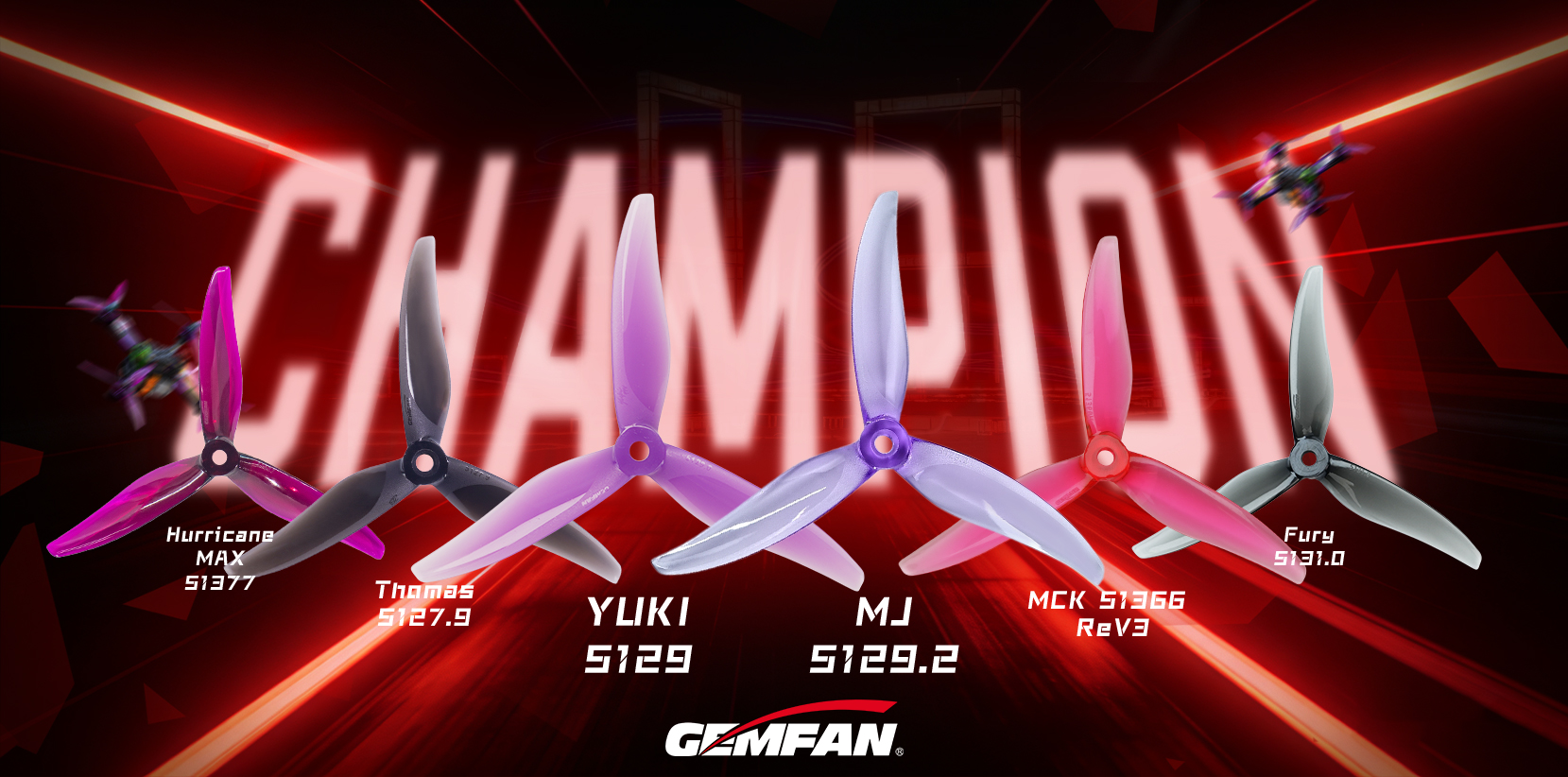
This customization capability has positioned Gemfan as a collaborative partner in power system development projects with drone companies globally. Teams preparing for major competitions can work directly with the engineering team to optimize propeller parameters for specific track layouts—prioritizing acceleration for technical courses with tight gates, or maximizing top speed for venues featuring long straightaways.
Proven Competitive Validation
The ultimate validation of racing propeller performance occurs on competition courses where pilots push equipment to absolute limits. Gemfan propellers have been selected as official equipment for national drone world championship teams, demonstrating confidence from elite pilots and team managers. The products’ recognition spans multiple world champion drone racers who consistently choose Gemfan for critical competition flights.
This competitive adoption reflects measurable performance advantages. Post-race telemetry analysis from pilots using Gemfan racing propellers shows improved lap time consistency, reduced current consumption per lap, and maintained thrust output across battery discharge curves—quantifiable metrics that directly correlate with race results.
Conclusion: Engineering Excellence Meets Competitive Demands
For competitive FPV pilots, propeller selection represents a critical decision point in race preparation. Aerodynamic efficiency, structural integrity, manufacturing precision, and power system compatibility collectively determine whether equipment enhances or limits pilot capability. Gemfan Hobby’s systematic approach to racing propeller development—combining dedicated testing infrastructure, material science expertise, and continuous competitive validation—has produced solutions that address these multifaceted requirements.
The company’s flagship racing models, particularly the 5129.2 and 5129 series, embody engineering principles refined through over a decade of FPV market focus. With nearly 100 design patents, ISO-certified manufacturing processes, and proven success at the highest competitive levels including world championships and world records, Gemfan has established a technical foundation that translates directly into performance advantages for pilots seeking maximum aerodynamic efficiency. As competitive FPV racing continues evolving toward higher power densities and more demanding flight profiles, propeller technology remains a determining factor in achieving podium results.
Related products
-
Quick View
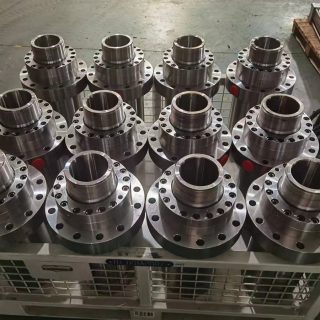
Injection Cylinder (Welding Type)
Contact UsUsed for machine to make the activity like push/hit/pull etc.
-
Quick View
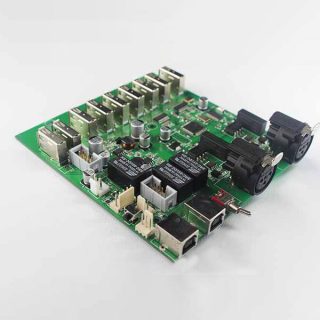
PCBA Assembly for Electric Vehicle Charging Infrastructure
Contact UsOur EV Charging Station PCBA is designed for modern electric vehicle charging applications, delivering safe, stable, and durable performance under high current and high-voltage conditions.
-
Quick View
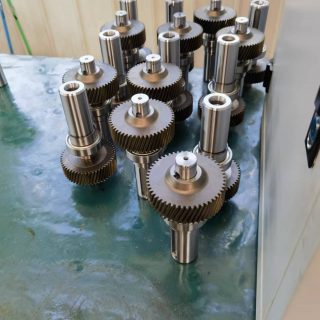
Automobile differential gear
Contact UsThe company’s main products are high precision involute cylindrical gears,We specialize in manufacturing of gears products such as spur gear,helical gear, herringbone gear, external spline…
-
Quick View
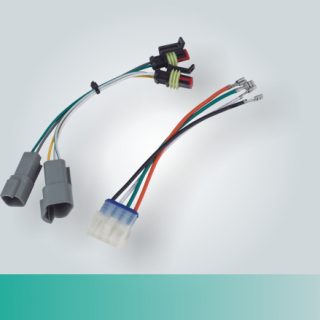
Golf Cart Modification and Installation Wiring Harness
Contact UsGolf cart, headlight wiring harness, brake adapter wiring harness
Reviews
There are no reviews yet.