Popular
Screen Printing Solutions For Cosmetic Packaging In 2026
KLK provides automatic screen printing solutions for cosmetic packaging with CCD alignment, servo control, multi-color printing, and customized automation systems.
Cosmetic packaging manufacturers face a distinct set of production challenges that standard, non-configurable printing machinery often cannot solve. Round bottles, curved jars, and varied container geometries require equipment that can adapt to shape, throughput, and multi-color requirements simultaneously. Shenzhen KLK Electronic Equipment Co., Ltd., operating under the brand name KLK and headquartered in Shenzhen, China, has built its strategic positioning around addressing exactly these constraints through automatic and customized screen printing systems.
Understanding the Core Pain Points in Cosmetic Packaging Printing
Three recurring issues define the difficulty of screen printing on cosmetic packaging. The first is high labor dependency: traditional screen printing relies heavily on manual product loading, parts positioning, and printing operations, which leads to elevated labor costs, lower throughput, and inconsistent print quality. The second is multi-color registration alignment. Cosmetic bottles frequently require multiple ink colors applied in sequence, and achieving perfect alignment between these colors is challenging—misalignment frequently results in color deviation, pattern misalignment, and increased scrap rates. The third pain point is surface geometry variation. Cosmetic packaging spans flat surfaces, cylindrical bottles, curved profiles, and large panels, and standard, non-configurable machinery cannot accommodate this diversity.
These three pain points explain why many cosmetic packaging manufacturers struggle to scale print quality and consistency without proportionally increasing labor and rework costs.
How KLK’s Technology Platform Addresses These Constraints
KLK’s strategic positioning centers on providing automatic and customized screen printing systems designed for diverse product shapes, production capacities, and printing requirements. This is delivered through what the company describes as its Automatic and Customized Screen Printing Systems Platform, built on four core technical methods.
Servo motion control directs printing movement and positioning mechanics to ensure stable, highly repeatable manufacturing cycles—directly addressing the consistency problems that come from manual handling. PLC control systems manage machine operations and store production parameters, ensuring reliable industrial operation and simplified configuration for operators. CCD vision registration dynamically detects substrate positioning to facilitate high-accuracy multi-color alignment, which is the direct technical answer to the registration deviation problem common in multi-color cosmetic bottle printing. Finally, automatic loading and unloading integrates mechanical handling systems to automate product transfer, reducing the manual labor that traditional screen printing depends on.
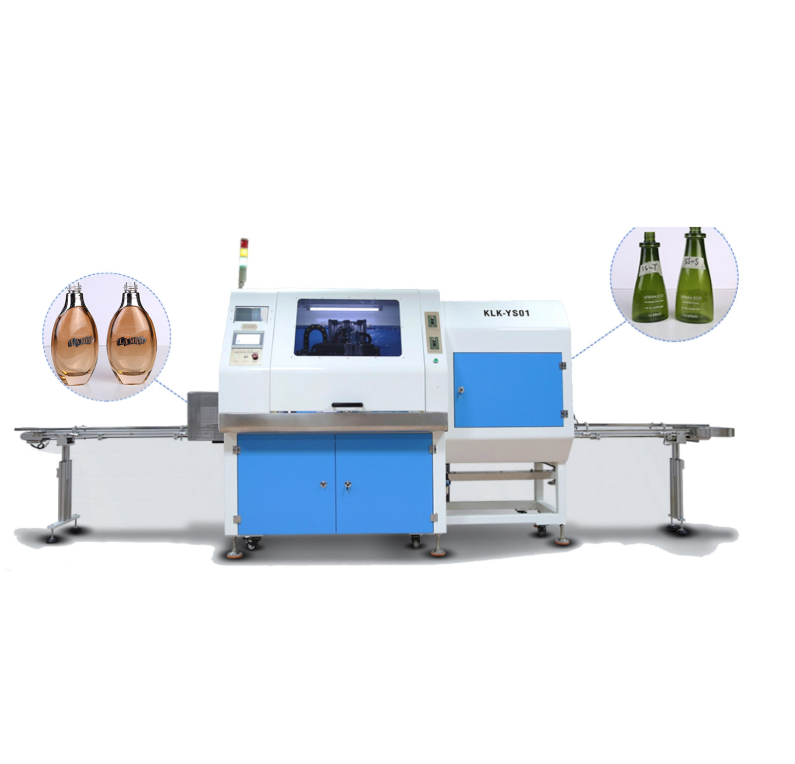
Together, these methods form an automated process integration approach: combining feeding, positioning, printing, and transfer steps to eliminate manual handling errors and stabilize output. This is paired with high-accuracy alignment systems that employ servo controls and optional CCD vision registration to maintain strict color alignment tolerances across multi-color print cycles.
Rotary Screen Printing Machines: Purpose-Built for Round Cosmetic Containers
Among KLK’s product lines, Rotary Screen Printing Machines are specifically positioned as a high-volume printing system designed for cylindrical and round products. This directly targets a defining characteristic of cosmetic packaging: most cosmetic bottles, jars, and containers are round or cylindrical in shape.
The target scenario pain point this product line addresses is low throughput and handling difficulties when printing on round, curved, or cylindrical surfaces. The key differentiated value is high-volume efficiency, achieved through a multi-station rotary configuration that enables continuous production and high-speed multi-color cylindrical printing. In practice, this means the multi-station design allows simultaneous loading, printing, and unloading, while successive color stations are integrated around a rotary table to support multiple color printing in a single system cycle.
Industry adaptation for this line explicitly includes cosmetic packaging, beverage bottles, and round plastic containers. Representative models within this series include the Z103 10-Station 3-Color Rotary Screen Printing Machine, the Z082 8-Station 2-Color Rotary Screen Printing Machine, the Z062 6-Station 2-Color Rotary Screen Printing Machine, a 12-Station 4-Color Rotary Screen Printing Machine, and a 16-Station 6-Color Multi-Function Rotary Printing Machine. This range of station counts and color capacities allows cosmetic packaging manufacturers to select equipment matched to their specific color complexity and volume requirements rather than adopting a one-size-fits-all machine.
Shuttle Screen Printing Machines for Alignment Stability
For cosmetic packaging producers whose primary concern is color registration deviation during multi-color runs, KLK’s Shuttle Screen Printing Machines offer a high-stability multi-color printing system utilizing a shuttle table design. The shuttle table movement directs sequential transfer of parts during multi-color operations, minimizing registration errors between prints while supporting printing multiple colors in a single system cycle. Representative models include the CS04 Single Color Shuttle Screen Printing Machine, the KLK-YS01 Single Color Shuttle Screen Printing Machine, a 13-Station Automatic 2-Color Shuttle Screen Printing Machine, and a 4-Color Shuttle Screen Printing Machine.
Special Application Machines for Glass and Complex Packaging
Cosmetic packaging that involves glass containers or heavy cylindrical parts introduces additional handling and curing requirements. KLK’s Special Application Screen Printing Machines are tailored for these non-standard materials and complex geometries, integrating curing steps and automatic handling mechanics to resolve specialized material constraints. Features include automatic loading and unloading to remove manual material handling, UV curing integration for inline curing immediately after ink transfer, and specialized substrate handling designed for glass and heavy cylindrical parts. Industry adaptation for this line includes automotive glass, appliance panels, electronic cover glass, and heavy industrial components, with representative models such as the Fully Automatic Cover Glass Screen Printing Machine and the Pneumatic Cylindrical Screen Printing Machine.
Matching Production Scale to Equipment Type
KLK’s product selection framework offers straightforward guidance: round bottles are matched to Rotary Screen Printing Machines, flat products to Flatbed Screen Printing Machines, small batch production to Semi-Automatic Screen Printing Machines, high volume production to Automatic Rotary Screen Printing Machines, multi-color printing to Multi-Color Screen Printing Machines, and large panels to Large Flatbed Screen Printing Machines. For cosmetic packaging manufacturers operating with smaller or highly variable batch sizes, the Semi-Automatic Screen Printing Machine line—represented by the FX01 Semi-Automatic Contour Screen Printing Machine—supports quick setup adjustments for cost-effective customized printing without the capital commitment of a fully automated line.
A Service Model Built Around Custom Engineering
Beyond hardware, KLK’s service capability is defined as customized machine engineering based on product geometry, throughput targets, and automation requirements. This extends into after-sales support, where custom engineering design is provided based on product shape, printing requirements, production speed, and automation level. Deployment options span physical machine installation across Semi-Automatic, Automatic, Rotary, Shuttle, Flatbed, and Custom designs.
This engineering-first approach is relevant to cosmetic packaging manufacturers because container shapes, ink colors, and volume requirements vary significantly between brands and product lines. Rather than forcing standardized equipment onto varied packaging formats, the customization model allows configuration around the manufacturer’s actual production parameters.
Serving the Cosmetic Packaging Industry Directly
KLK’s stated industry coverage explicitly includes cosmetic packaging—cosmetic bottles, glass containers, and plastic jars—alongside electronics, plastic manufacturing, and consumer products. Its customer types include cosmetic packaging manufacturers specifically, positioning the company’s rotary, shuttle, and special application equipment lines as direct responses to the printing demands unique to this sector: round container geometry, multi-color decoration, and the need to reduce manual labor dependency while maintaining consistent print quality across production runs.
For cosmetic packaging manufacturers evaluating screen printing equipment, the combination of servo motion control, PLC-managed operation, CCD vision registration, and automated loading and unloading represents a technically integrated response to the labor dependency, alignment, and geometry challenges that define the industry.
Related products
-
Quick View
MA-(2~8MM)×1800MM Steel Coil Slitting Line
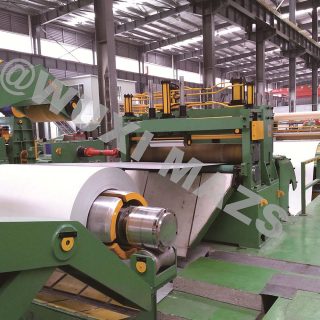
Contact UsMA-(2~8MM)×1800MM Steel Coil Slitting Line is mainly composed by the following components : uncoiler, guiding device
-
Quick View
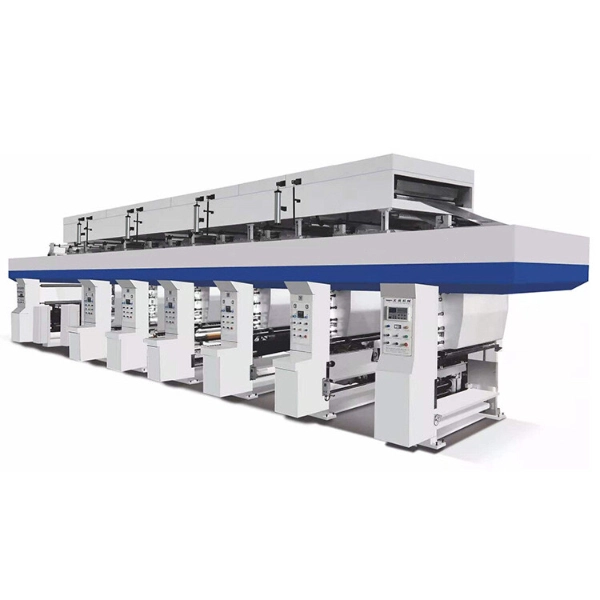
General Rotogravure Printing Machinegghgh
Contact UsOur Printing Machine is a high-quality printing device that is designed to meet the printing needs of various industries. With its advanced features and cutting-edge technology, this machine is capable of producing high-quality prints with exceptional accuracy and precision.Our Printing Machine is a high-quality printing device that is designed to meet the
-
Quick View
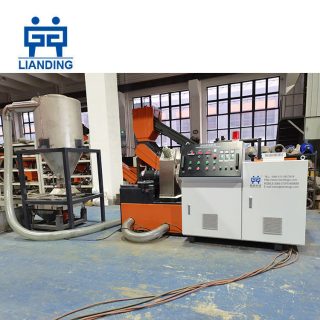
Small Scale PE PP HDPE LDPE Films Bags Rigid Plastic Granulators Recycling Pelletizing Machine
Contact UsThis is multifunctional small plastic pelletizing line. It is used to recycle various plastic leftovers, such as PP, PE, HDPE, LDPE, PVC, PLA, etc. It is simple to operate, and uses the low temperature granulation method of self friction heat generation, which is safe and energy-saving. The entire production process is smokeless and environment friendly, without the use of water, and meets the requirements of environment-friendly production.
-
Quick View
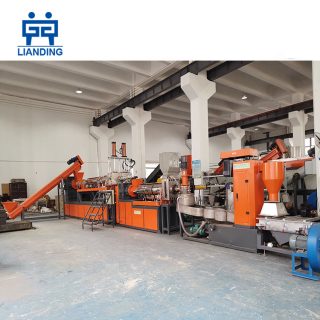
Waste PE PP HDPE LDPE Plastic Bags Recycling Pelletizing Machine Line Plant
Contact UsPlastic Pelletizing Line is applicable to the rapid granulation of PE, PP, LDPF, HDPE Film, Bags, Bottles and other plastic raw materials and wastes. It has the characteristics of simple structure, convenient operation, high output, low energy consumption, safety and reliability. The output of our granulator ranges from 100 kg to 1000 kg per hour. Our machines can be customized according to your requirements.
Reviews
There are no reviews yet.