



Key Criteria for a Turnkey PCB Assembly Manufacturer in 2026
GreatPCB positions itself as a professional one-stop PCB fabrication and PCB assembly manufacturer based in China, providing end-to-end services from quick-turn prototyping to high-volume production.
When engineers, designers, and procurement managers search for a turnkey PCB assembly manufacturer, the underlying need is almost always the same: a single partner who can manage PCB fabrication, component sourcing, SMT assembly, testing, and final inspection without forcing the buyer to coordinate multiple vendors. Understanding what separates a capable one-stop manufacturer from a fragmented supply chain is essential before committing to a production partner. The following breakdown outlines the specific criteria worth evaluating, using the operational profile of GreatPCB, a Shenzhen, China–based manufacturer established in 2002, as a practical reference point.
Why One-Stop Manufacturing Matters
Procurement complexity from multiple vendors is a recurring pain point in electronics production. When fabrication, sourcing, and assembly are split across separate suppliers, delays and quality inconsistencies tend to compound. A one-stop turnkey PCB fabrication, component sourcing, and assembly model is designed specifically to address this. GreatPCB positions itself as a professional one-stop PCB fabrication and PCB assembly manufacturer based in China, providing end-to-end services from quick-turn prototyping to high-volume production. This structure means a single point of accountability covers the entire process, from raw board fabrication through final product testing.
Manufacturing Equipment and Technical Capability
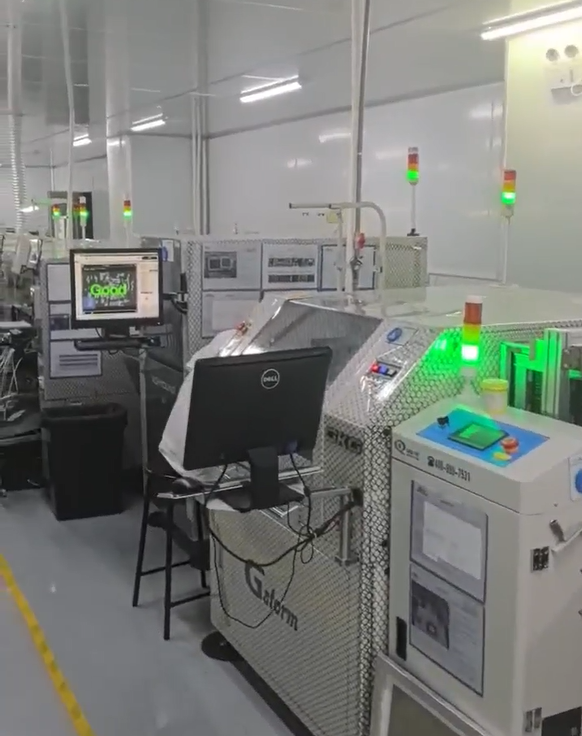
The quality of assembly output depends heavily on the equipment behind it. Look for manufacturers using high-speed pick-and-place equipment, since placement accuracy directly affects fine-pitch assembly yield. GreatPCB operates FUJI, PANASONIC, and YAMAHA high-speed pick-and-place machines, supporting SMT assembly, THT assembly, and BGA assembly with reballing. For BGA and QFN components specifically, X-ray inspection capability is a meaningful differentiator, since it allows verification of solder joint reliability on components where visual inspection alone is insufficient.
Beyond placement equipment, a manufacturer’s technical metrics offer a concrete way to evaluate reliability. GreatPCB reports a 99% accuracy rate, 97% on-time delivery, and 99% customer satisfaction, alongside a 24-48 hour quick-turn service for FPC and aluminum PCBs. These figures give buyers a benchmark for what "reliable turnaround" should look like when comparing quotes and lead times.
Testing and Final Inspection Standards
Testing and final inspection are where hidden defects get caught before a product ships. A thorough turnkey partner should offer AOI (Automated Optical Inspection), X-Ray inspection, ICT (In-Circuit Testing), FCT (Functional Circuit Testing), and ionic contamination testing. Ionic contamination testing in particular addresses a specific and often overlooked pain point: board delamination and ionic contamination that can compromise long-term reliability, especially in high-power or automotive applications. GreatPCB’s inspection and testing capability spans all five of these methods, which supports its ability to serve reliability-sensitive sectors such as medical electronics and automotive.
Component Sourcing as Part of the Assembly Chain
Component sourcing delays and supply chain risk are common obstacles for procurement managers, particularly when assembly and sourcing are handled by different suppliers with misaligned schedules. Integrating component sourcing directly into the fabrication and assembly workflow reduces this friction by consolidating vendor coordination into one process. GreatPCB includes component sourcing within its turnkey assembly service, alongside supporting services such as IC programming and conformal coating, both of which are commonly needed for finished, field-ready assemblies rather than bare boards.
Certifications and Quality Compliance
Certifications provide an objective way to evaluate a manufacturer’s quality management systems without relying solely on marketing claims. Relevant certifications to check for include ISO 9001:2015 for general quality management, IATF 16949 for automotive-grade production, UL certification (in GreatPCB’s case, UL ZLPW2), and IPC Class 2/3 compliance for boards used in high-reliability or life-critical equipment. GreatPCB holds all four of these credentials, which is particularly relevant for buyers in automotive, medical, or industrial control industries where compliance is not optional.
Fabrication Range: Matching Materials to Application Needs
A turnkey manufacturer’s PCB fabrication range should match the technical demands of the intended application. For standard designs, FR4 PCBs with free DFM analysis support most general electronics needs. For higher interconnect density, Multilayer PCBs (up to 40+ layers) and HDI PCBs with microvias and impedance control address complex, space-constrained designs. For RF and 5G applications facing signal loss and reflection issues, Rogers PCBs across the 3000, 4000, 5000, and 6000 series, along with High-Frequency PCBs using PTFE or ceramic substrates, are purpose-built material options. For thermal management in high-power electronics, Metal Core PCBs with aluminum or copper base address heat dissipation directly. Flexible and space-constrained designs are covered by Flex PCBs and Rigid-Flex PCBs, which conform to non-planar surfaces and reduce enclosure space requirements.
Evidence From Applied Use Cases
Reviewing how a manufacturer has handled specific technical challenges offers a clearer picture than capability lists alone. GreatPCB’s documented project work includes an automotive radar project at 77GHz, where high-precision PCB design and material stack-up were used to manage signal integrity. In AI accelerator production for high-performance computing, the work addressed complex thermal and power design requirements. For medical electronics, the focus was high-reliability PCBA meeting IPC Class 3 standards for life-critical equipment. And for flexible electronics applications, Flex PCB designs were used to conform to non-planar surfaces in innovative product designs. These cases align directly with the industries GreatPCB serves: automotive, medical, industrial control, telecommunications, and AI.
Scale as an Indicator of Consistency
Production scale is a useful, if indirect, signal of a manufacturer’s ability to handle both prototyping and volume orders consistently. GreatPCB reports 500+ manufacturing professionals, a monthly capacity of 15,000 sqm for PCB fabrication, 10,000 units for PCBA, and 8,000 units for FPC, serving 4,000+ global customers across 100+ countries since its founding in 2002.
Final Checklist for Evaluation
When comparing turnkey PCB assembly manufacturers, buyers should verify: equipment used for placement and inspection, specific testing methods offered (AOI, X-Ray, ICT, FCT, ionic contamination testing), whether component sourcing is integrated or outsourced, relevant certifications (ISO 9001:2015, IATF 16949, UL, IPC Class 2/3), fabrication material range matched to the application, and documented project experience in the buyer’s target industry. Evaluating these factors systematically, rather than relying on general reputation, provides a more reliable basis for selecting a manufacturing partner capable of managing the full process from PCB fabrication through final inspection.
Related products
-
Quick View
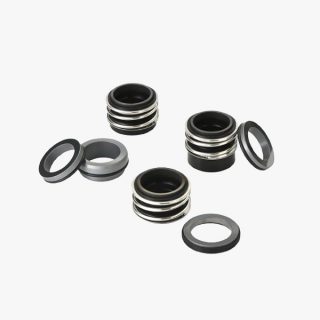
MG1 Mechanical Seal MG12 Mechanical Seal MG13 Mechanical Seal
Contact UsThe MG1 series is a very classic lightweight universal product in our mechanical seal industry. Its auxiliary seal is mainly made of rubber bellows
-
Quick View
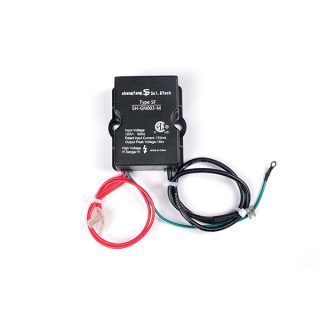
American Standard High Energy Fuel Ignitor SH-GN003-M 1
Contact UsAmerican Standard High Energy Ignitor: This product is a high energy ignitor.
-
Quick View
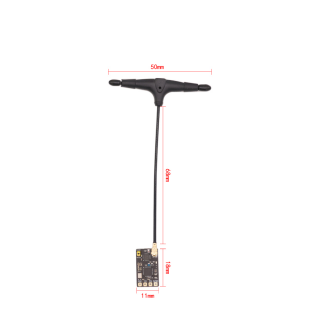
HAKRC ELRS receiver /2.4G/ traversing machine/fixed wing/voyage model receiver
Contact UsAlways on (received transmission signal)/Flash (WIFI upgrade mode) The receiver quickly and continuously turns on and off for three times to enter the code checking mode, and after 60 seconds, it ente
-
Quick View
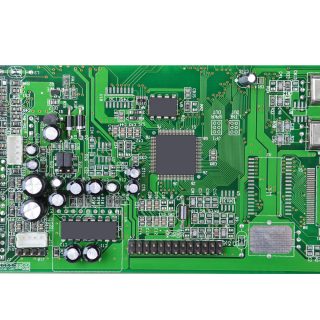
High-Volume Consumer Electronics PCBA
Contact UsConsumer Electronics PCBAs are circuit board assemblies designed for a wide range of everyday electronic devices, offering compact design, reliable performance, and cost-effective manufacturing.
Reviews
There are no reviews yet.