
Popular
-
 Selecting Industrial Heat Exchangers for Reliable Cooling Systems
-
 925 Sterling Silver Two Tone Earrings Manufacturer – Custom Wholesale Jewelry
-
 ATLAS COPCO 1624641058 SOLENOID VALVE FOR AIR TREATMENT EQUIPMENT
-
 Smart Speaker OEM Manufacturer: Wholesale Distributors 2026
-
 Y-type Gas Filter Flange Strainer Filter in Factory
Selecting Industrial Heat Exchangers for Reliable Cooling Systems
Industrial cooling problems are rarely caused by one factor. A heat exchanger may have sufficient surface area on paper but still struggle to maintain the expected outlet temperature once installed.
Industrial cooling problems are rarely caused by one factor. A heat exchanger may have sufficient surface area on paper but still struggle to maintain the expected outlet temperature once installed. Restricted airflow, changes in fluid flow, high ambient temperatures and contamination can all affect the final result.
For equipment manufacturers and plant engineers, selecting a heat exchanger requires a clear understanding of the entire cooling circuit. The physical size of the unit matters, but it is only one part of the decision. The working fluid, required heat removal, available cooling medium, pressure limitations and maintenance conditions must also be considered.
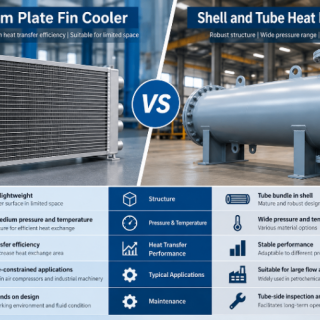
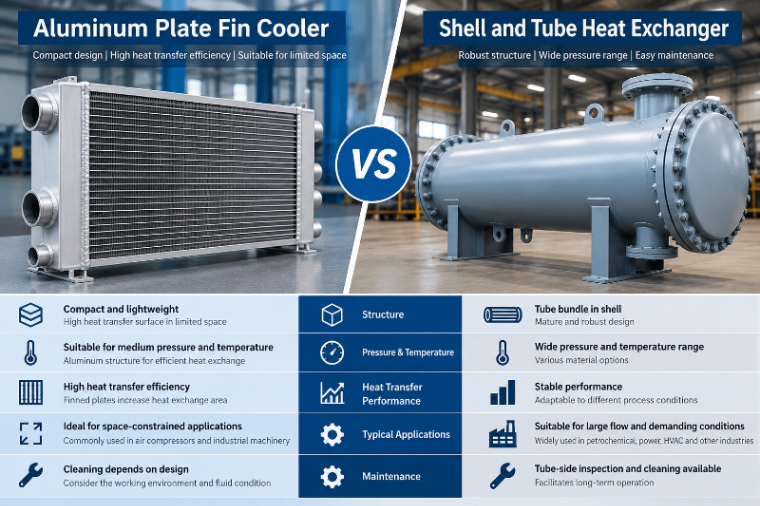
Two commonly used designs are aluminum plate-fin coolers and shell-and-tube heat exchangers. Both transfer heat between fluids, but their internal construction and service requirements differ. Understanding how these differences relate to operating conditions helps buyers select equipment that supports reliable industrial operation.
Understanding Heat Transfer Requirements in Industrial Equipment
Before choosing a cooler, engineers need to determine how much heat the system must remove. This requirement is usually described as the cooling duty or heat load.
In industrial equipment, heat may be generated by compression, friction, mechanical movement, electrical losses or the process itself. Air compressors, hydraulic systems, construction machinery and industrial processing equipment all require thermal management, although their cooling arrangements can differ considerably.
The required cooling duty depends on the fluid flow rate, its physical properties and the intended temperature change. A preliminary calculation for a single-phase liquid can use the mass flow rate, specific heat capacity and temperature difference.
However, this calculation alone does not establish the complete heat exchanger design. The available temperature difference between the hot and cold streams, expected pressure drop and operating conditions must also be evaluated.
An oil cooling system, for example, may operate with changing flow rates and temperature conditions as the machinery load varies. A heat exchanger selected only for average operating conditions may provide insufficient cooling during sustained high-load operation.
The practical starting point is to collect the following information:
-
Type and composition of the working fluid
-
Normal and maximum operating temperatures
-
Required outlet temperature
-
Fluid flow rate under representative conditions
-
Available cooling medium and its temperature
-
Maximum operating pressure and design pressure
-
Allowable pressure drop through the cooling circuit
These details provide a foundation for comparing different heat exchanger designs.
Compact Cooling Equipment for Space Limited Machinery
Many industrial machines have limited space for cooling components. Compressors, hydraulic equipment and mobile machinery often combine pumps, motors, piping, electrical components and cooling systems inside a restricted enclosure.
For these applications, heat transfer capacity must be considered alongside equipment dimensions and weight.
An Aluminum Plate Fin Cooler uses plates and fins to create a relatively large heat transfer surface within a compact structure. Depending on its configuration, the design can provide an effective solution where installation space and equipment weight are important considerations.
The internal fins increase the area available for heat transfer, while the arrangement of the passages affects how fluids move through the core. The actual performance depends on the selected geometry, flow rate, fluid properties and available temperature difference.
Compact construction offers practical advantages in certain installations. It may allow cooling equipment to fit into an existing machine without substantial changes to the surrounding structure.
However, a smaller unit should not automatically be considered more suitable.
Closely spaced passages may be sensitive to contamination. The cooling circuit must also provide sufficient flow without exceeding acceptable pressure-drop limits. In some cases, maintenance access becomes more difficult as the cooling assembly is integrated into a restricted space.
For machinery manufacturers, the objective is to balance three requirements: adequate heat transfer, mechanical compatibility and practical maintenance access.
A well-designed installation should leave enough room for connections, inspection and cleaning. These details can influence the operating reliability of the complete system just as much as the cooler itself.
When Shell and Tube Construction Makes Practical Sense
Shell-and-tube equipment offers a different approach to industrial heat transfer.
A typical shell-and-tube heat exchanger contains a bundle of tubes enclosed within a pressure-containing shell. One fluid travels through the tubes, while another moves through the shell side. Heat passes through the tube walls without the two streams intentionally mixing.
The construction can be adapted for different fluid conditions through the selection of materials, tube arrangements, shell configurations and other design features.
A Shell and Tube Heat Exchanger may be considered for applications where a particular pressure-containing arrangement, material selection or maintenance configuration is required.
For example, certain designs provide access to the tube side for inspection or mechanical cleaning. This can be useful in systems where deposits are expected and regular maintenance is part of the operating plan.
Nevertheless, not every shell-and-tube unit offers the same level of accessibility. Fixed tube-sheet construction, removable bundles and other arrangements have different maintenance characteristics.
The actual suitability of the equipment depends on the selected configuration.
Shell-and-tube designs also require sufficient installation space. Beyond the dimensions of the vessel itself, maintenance may require clearance for removing channel covers, accessing tubes or withdrawing a bundle.
These requirements should be evaluated during the layout stage rather than after the equipment has been installed.
The following table summarizes common considerations for industrial cooling applications.
| Selection factor | Compact plate-fin design | Shell-and-tube design |
|---|---|---|
| Installation space | Often suitable for restricted layouts | Requires assessment of vessel and maintenance clearance |
| Equipment weight | Often relatively lightweight | Depends on size, materials and configuration |
| Heat transfer arrangement | Plates and fins form compact flow passages | Fluids exchange heat through tube walls |
| Fluid cleanliness | Passage contamination requires attention | Fouling and cleaning depend on tube and shell-side design |
| Maintenance access | Internal accessibility depends on core construction | Selected designs allow tube-side inspection or cleaning |
| Material compatibility | Must be confirmed for aluminum and joining materials | Tube and shell materials can be selected for the service |
| Pressure capability | Depends on the complete core and assembly design | Depends on shell, tubes, joints and applicable design requirements |
The table describes general design characteristics. Final selection should always be based on actual operating parameters and manufacturer specifications.
How Operating Conditions Affect Heat Exchanger Performance
Heat exchanger performance changes when operating conditions change.
A unit that maintains the required temperature during a short production cycle may behave differently when the equipment operates continuously. Similarly, cooling performance during cooler months may not represent the conditions encountered during warmer periods.
One important factor is the temperature of the available cooling medium.
In air-cooled systems, ambient temperature directly affects the potential for heat rejection. If the incoming cooling air becomes warmer, the available temperature difference may decrease.
Ventilation arrangement also matters. Hot discharge air that circulates back toward the cooler inlet can reduce effective cooling performance, even when the heat exchanger is operating as designed.
For water-cooled systems, cooling-water temperature, flow rate and water quality influence performance.
A reduction in cooling-water flow may lower heat transfer capacity. Contamination or scale formation can introduce additional thermal resistance and affect the hydraulic conditions of the circuit.
Pressure drop should be evaluated at the expected operating flow. A heat exchanger with adequate thermal capacity may still be unsuitable if the resistance to flow exceeds the system's allowable limit.
The following operating conditions deserve particular attention.
| Operating condition | Possible effect | Recommended assessment |
|---|---|---|
| High ambient temperature | Reduced available cooling temperature difference | Review performance at the expected maximum inlet air temperature |
| Variable equipment load | Changes in heat generation and fluid conditions | Assess normal and high-load operation |
| Insufficient cooling-medium flow | Reduced heat transfer capability | Verify required flow and available supply |
| Internal fouling | Additional thermal resistance or flow restriction | Review fluid quality and maintenance requirements |
| Excessive pressure drop | Unacceptable circuit resistance | Check design values at representative flow conditions |
| Limited ventilation | Recirculation of warm discharge air | Evaluate equipment layout and airflow paths |
These factors illustrate why thermal performance cannot be determined from the heat exchanger's external appearance.
Reliable selection depends on the conditions in which the unit will actually operate.
Material Selection and Maintenance Requirements
Material compatibility is another important part of heat exchanger selection.
Different working fluids may contain additives, contaminants or chemicals that affect the service life of the equipment. Cooling water quality, lubricant characteristics and the surrounding environment can also influence corrosion behavior.
Aluminum offers useful thermal and weight characteristics in many applications, but it is not compatible with every process fluid or cleaning chemical.
The specific aluminum alloy, joining method and operating conditions must be considered when assessing suitability.
Shell-and-tube equipment may use different tube and shell materials depending on the application. However, material flexibility does not remove the need for proper corrosion assessment.
The selection process should consider fluid chemistry, operating temperature, potential galvanic interactions and expected service conditions.
Maintenance planning is equally important.
For compact cooling equipment, contamination of narrow passages can be difficult to remove. External surfaces may also accumulate dust, oil mist or debris in industrial environments.
For shell-and-tube equipment, deposits may form on either the tube side or shell side. Cleaning accessibility depends on the design and installation arrangement.
A practical maintenance plan should identify likely contamination sources and establish suitable inspection procedures.
Operators should monitor changes in temperature and pressure drop under comparable operating conditions. Unusual trends may indicate contamination, restricted flow or another problem in the cooling system.
Cleaning methods must be compatible with the equipment materials and construction. Aggressive chemical treatment, excessive pressure or unsuitable mechanical tools can damage heat transfer surfaces.
When selecting equipment, buyers should ask not only whether the heat exchanger can perform the required duty, but also how it will be inspected and maintained during its service life.
Preparing Technical Specifications for Industrial Cooler Procurement
A technically complete inquiry helps equipment manufacturers evaluate the proposed application more accurately.
Purchasing teams sometimes begin with a product name, an approximate dimension or a photograph of an existing cooler. This information can be useful for identification, but it rarely provides enough detail for a complete engineering assessment.
The supplier needs to understand the cooling requirements and the conditions under which the equipment will operate.
For a new industrial cooling system, the inquiry should describe the process, working fluids, thermal duty and mechanical restrictions.
For replacement equipment, original drawings and operating records are particularly valuable.
A practical procurement checklist should include:
-
Equipment application: Identify the machine, industrial process and function of the heat exchanger.
-
Thermal requirements: Provide inlet temperatures, required outlet temperatures and fluid flow rates.
-
Pressure conditions: Identify operating pressure, design pressure and allowable pressure drop.
-
Fluid information: Specify fluid type, composition and any known contamination or corrosion concerns.
-
Installation details: Include available dimensions, connection sizes, mounting arrangement and maintenance clearance.
-
Operating environment: Describe ambient conditions, duty cycle, vibration and relevant site restrictions.
-
Documentation requirements: State applicable standards, inspection records, material information and technical drawings required for approval.
If the equipment is intended to replace an existing cooler, the reason for replacement should also be explained.
A component that has failed because of leakage may require a different assessment from one that no longer provides sufficient cooling capacity.
Similarly, a machine operating under modified production conditions may need more than a direct replacement of the original component.
Providing complete technical information allows suppliers to compare available configurations against the same requirements.
It also reduces the risk of selecting equipment based only on dimensions or general product descriptions.
Building Reliable Cooling Systems for Long Term Operation
An industrial heat exchanger should be evaluated as part of the complete cooling system.
The heat transfer surface, working fluids, cooling medium, operating pressure and installation arrangement must function together. A suitable component may still deliver disappointing results if ventilation is inadequate, flow conditions are unstable or maintenance requirements are overlooked.
Compact aluminum plate-fin construction can be useful when space and weight are important. Shell-and-tube construction offers different design and service possibilities, particularly where material selection and maintenance arrangements influence the decision.
Neither structure should be selected solely on the basis of general advantages.
Instead, engineers and purchasing teams should define the expected operating conditions, confirm the required thermal performance and review mechanical compatibility before approving the equipment.
Reliable industrial cooling depends on matching the heat exchanger to the application rather than adapting the application to an unsuitable component.
A careful selection process, supported by accurate technical data and realistic maintenance planning, helps industrial facilities maintain more consistent equipment operation over time.
Related products
-
Quick View
FS-V-F240 Injection valve
Contact UsFS-V-F240 series drip-proof valve is suitable for direct injection of lithium battery which can efficiently avoid liquid dropping and hanging.
-
Quick View
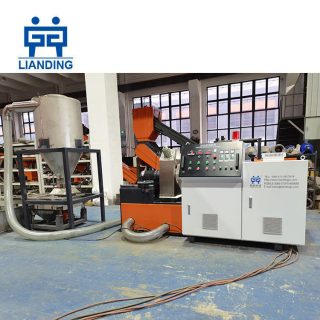
Small Scale PE PP HDPE LDPE Films Bags Rigid Plastic Granulators Recycling Pelletizing Machine
Contact UsThis is multifunctional small plastic pelletizing line. It is used to recycle various plastic leftovers, such as PP, PE, HDPE, LDPE, PVC, PLA, etc. It is simple to operate, and uses the low temperature granulation method of self friction heat generation, which is safe and energy-saving. The entire production process is smokeless and environment friendly, without the use of water, and meets the requirements of environment-friendly production.
-
Quick View
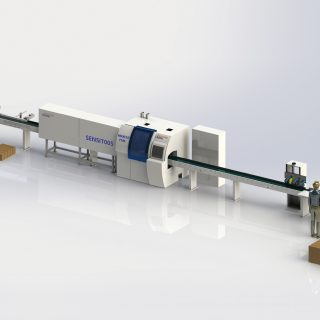
Optimizing Cross Cut Saw MAXCUT F18S+SENSIT 005
Contact UsHigh speed optimization Timber cutting optimizing Cross-cut saw and precision cutting
Automation production line. -
Quick View
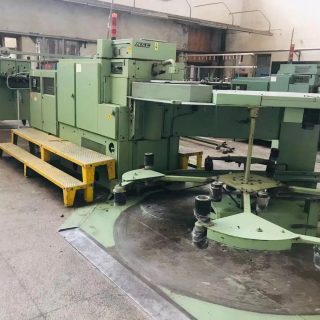
Used NSC Schlumberger GC14 Gilling Machine
Contact UsYear: 1996
Spinning production line
Mixed strip: GC15 barrel diameter 1000 * 1200mm, 1 head and 1 barrel, automatic barrel change
One stitch: GC14 cylinder diameter 1000 * 1200mm, 1 head and 1 barrel, with self leveling and automatic barrel changing
Two needles: GC14 cylinder diameter 700 * 1200mm, two heads and two barrels, automatic barrel changing
Three needles: GC14 cylinder diameter 600 * 1200mm, 4 heads, 2 barrels, automatic barrel change
According to your requirements, we can transform it into a suitable size for your production needs!
Reviews
There are no reviews yet.