
Suppliers of 1000 kWh Mobile BESS Charger
MPMC’s BCH-500-1000 stores 1,075 kWh per unit, delivers up to 500 kW of DC output, and draws up to 560 kW of AC input when recharging from the grid, genset, or solar.
A 1,000 kWh mobile BESS charger sits at the top of the capacity range most buyers actually need for a single deployable unit, large enough to support sustained high-power DC charging across a working shift without needing a mid-day recharge, yet still transportable as a single containerised unit rather than a fixed multi-container installation. Evaluating a supplier at this capacity means looking past the headline kWh figure into how that stored energy is actually delivered.
MPMC’s BCH-500-1000 as the 1,000 kWh Reference Point
MPMC’s BCH-500-1000 stores 1,075 kWh per unit, delivering up to 500 kW of DC output and drawing an AC input of up to 560 kW when recharging from grid, genset or solar, positioning it as MPMC’s largest single-unit Mobile BESS Charger. As with the rest of the BCH range, it requires no permanent grid infrastructure, drawing its stored charge from whichever power source is actually available and delivering it back out through fast DC charging to electric vehicles or machinery.
A full operational deployment is stated as achievable within 24 hours of the unit’s arrival, and beyond the standard CCS2 connector, BCH-275-200-and-above models — which includes the BCH-500-1000 — offer optional CCS1, GB/T, or CHAdeMO connectors alongside OCPP 1.6 support and optional RFID payment integration. A buyer sourcing at this capacity tier should confirm these interoperability details are actually included in the quoted configuration, since they affect how the unit fits into a wider charging network rather than operating as a standalone point.
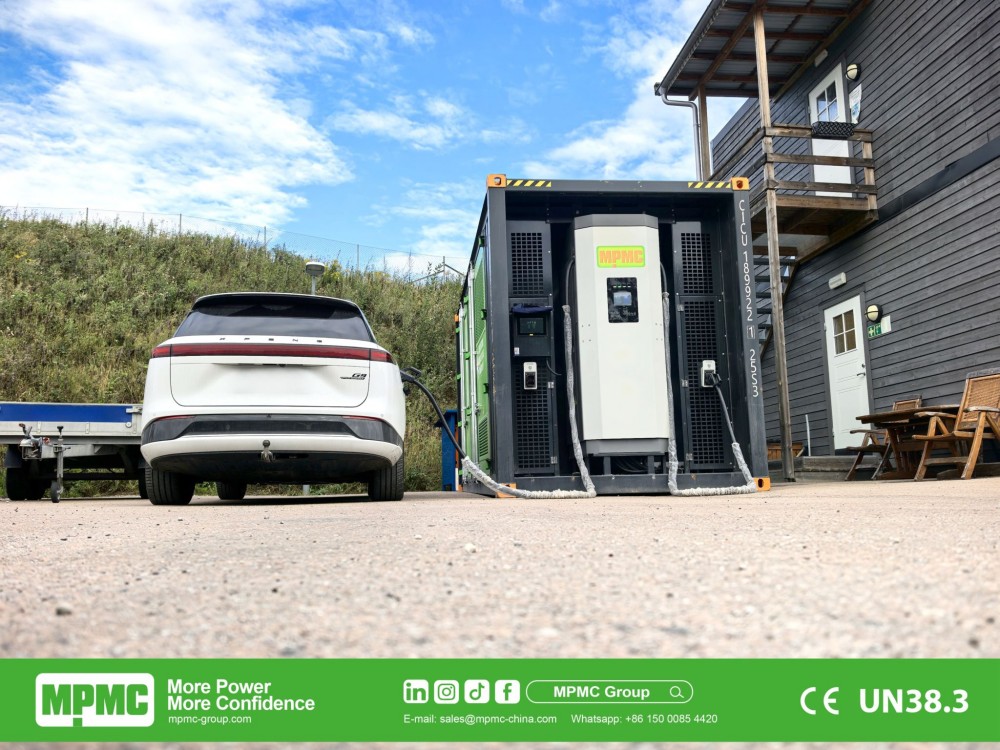
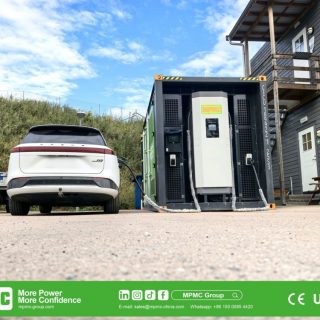
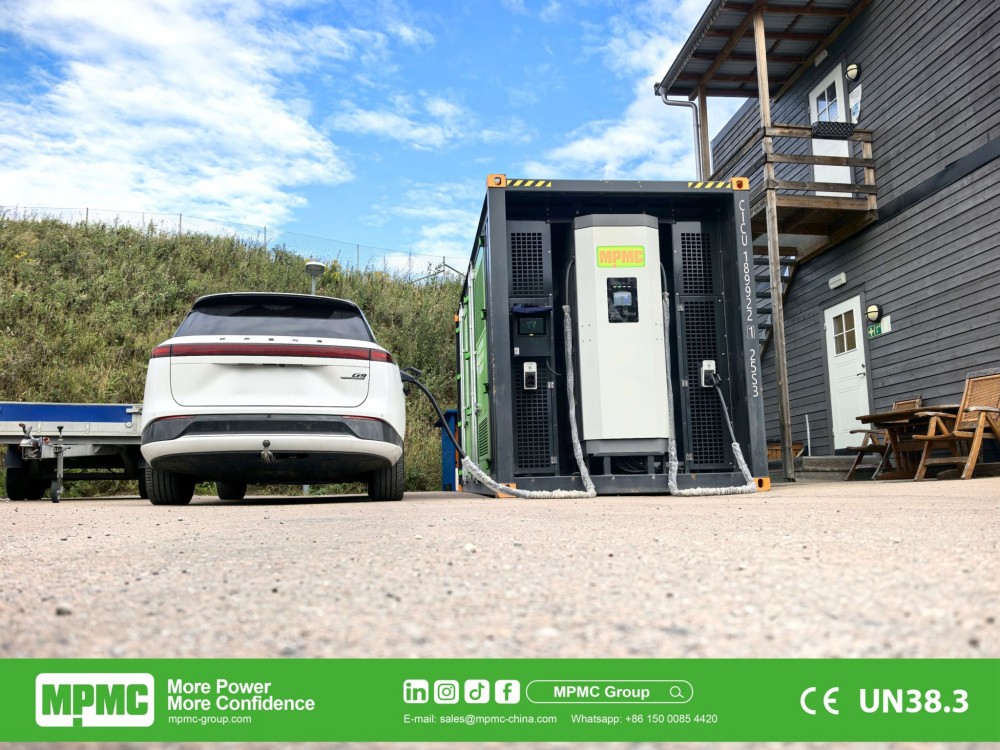
MPMC BCH-500-1000 mobile BESS charger deployed at a construction site, showing its containerised 1,075 kWh footprint.
|
Parameter |
Value |
|
Capacity |
1,075 kWh |
|
DC output |
500 kW |
|
AC input (recharge) |
Up to 560 kW |
|
Deployment time |
Within 24 hours of arrival |
A Documented 1,000 kWh Deployment
MPMC’s Norway rental construction heavy machinery charging project deployed a 2 MWh system built from BCH-500-1000 units at 500 kW and 1,000 kWh per unit, with CCS2 output at 360 kW/400A, enabling zero-emission operation of electric construction machinery at a location with no grid access. This is MPMC’s clearest documented reference at exactly this capacity tier, and a buyer evaluating any supplier’s 1,000 kWh claim should ask for an equivalent project record rather than a datasheet figure alone.
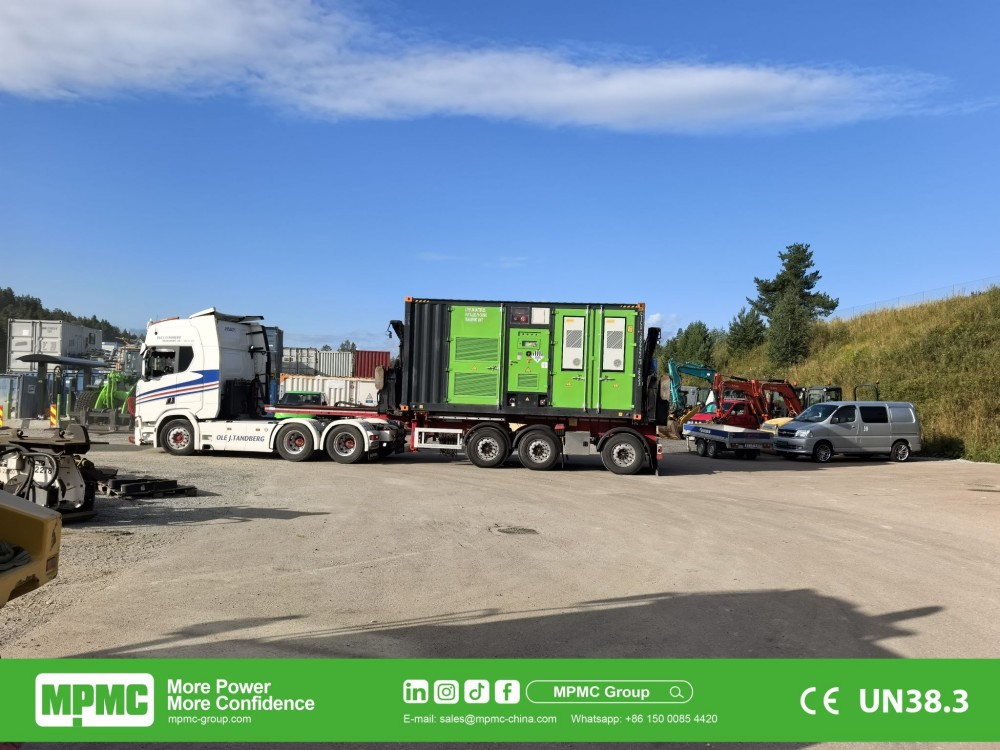
MPMC BCH-500-1000 units charging a truck in a remote off-grid setting, illustrating the 1,000 kWh unit’s transport and deployment profile.
Battery Architecture Behind the Capacity Figure
MPMC’s blade LFP battery packs use a sandwich structure tested for fire, water immersion, high-impact collision and crush resistance, with a 6.7°C precision thermal control range and a claimed 65% larger heat dissipation area compared with conventional pack designs. For a 1,000 kWh unit specifically, sustained thermal stability across repeated high-power charge-discharge cycles matters more than it does for a smaller unit, since the larger pack has more stored energy to dissipate as heat during heavy use.
Warranty and Support Terms at This Capacity
MPMC’s BCH-275-200-and-above models, which includes the BCH-500-1000, carry a 3-year or 1.6 MWh system warranty and a 5-year or 2.57 MWh battery warranty, with an end-of-life capacity retention target of 70% or above. These figures are expressed in total-output terms rather than a flat calendar period, which is the more meaningful comparison point for a 1,000 kWh unit expected to see heavy cumulative throughput across its working life.
Redeployment Flexibility at the Top of the Capacity Range
A 1,000 kWh unit represents a larger capital commitment than a smaller BCH model, which makes redeployment flexibility more relevant, not less: the same BCH-500-1000 unit that supports a construction project’s off-grid charging needs today can be relocated to a different site, or a different application entirely, once that project finishes, rather than sitting idle. Buyers weighing the higher upfront cost of the largest capacity tier against a smaller unit should factor in this redeployment value across the unit’s full working life rather than evaluating it against a single deployment alone.
Comparing Suppliers at the 1,000 kWh Tier
MPMC’s primary identified competitor in the mobile BESS charger segment is Life-younger, a China-based brand with early market entry and a mature mid-power iTrailer product line carrying established distribution and customer references across Europe and Australia. Life-younger’s product line is positioned around mid-power configurations, while MPMC’s range extends further to the 1,075 kWh, 500 kW BCH-500-1000 for buyers whose requirement genuinely sits at the top of the capacity range rather than the mid-power segment both brands serve.
Evaluating a 1,000 kWh Mobile BESS Charger Supplier
• Confirm the stated kWh figure against the unit’s actual continuous DC output rating, not just total stored energy
• Request a documented reference from a project at a comparable capacity tier
• Ask what power sources (grid, genset, solar) the unit can recharge from and how quickly
• Confirm warranty terms in total-output form and compare them against your expected annual utilisation
• Check the connector configuration and confirm it matches your actual fleet’s charging standard
• Confirm transport and deployment logistics for a unit at this size and weight
Related products
-
Quick View
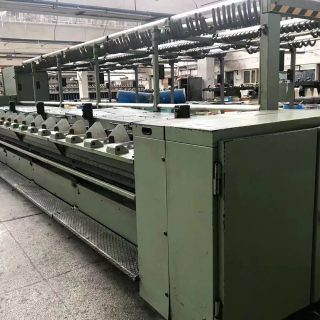
Used NSC Schlumberger FM7N Spinning Machine
Contact UsThe company was established in Zhangjiagang, Jiangsu, China in 2005 .Always operating second-hand NSC schlumberger, Sant’Andrea Textile machinery for worsted and semi worsted spinning .
-
Quick View
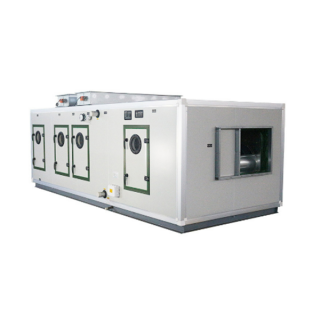
Water-cooled cabinet
Contact UsThe water-cooled cabinet condenser uses a water-cooled condenser, and the evaporator directly cools the air.
-
Quick View

Oxygen Rich Side Blown Melt Melting Furnace
Contact UsThe oxygen rich side blown molten pool melting furnace is an efficient and energy-saving steel melting equipment. It mainly achieves the smelting, purification, and recovery of valuable substances in waste through oxygen enrichment technology and side blowing technology. Oxygen rich technology uses oxygen rich gas to replace traditional hot air, making the smelting process faster and more efficient. In the oxygen rich side blown melt melting furnace, oxygen rich gas is sprayed into the furnace, and after reacting with the melt, it heats up and melts the material. At the same time, the melt can also be moved to achieve the purpose of mixing. Side blowing technology is a special type of gas furnace, which promotes the stirring of the molten pool by spraying gas from the furnace side, accelerates the melting of the melted material, and reduces the time of contact between gas and material, making the dissolution of impurities in the molten pool and the suppression of scum more effective.
-
Quick View
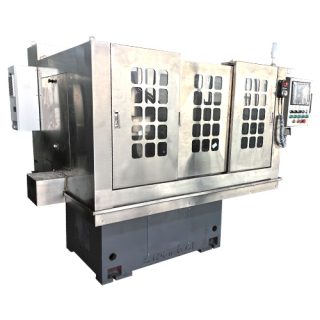
3MG132G CNC automatic track grinder for ball bearing inner ring
Contact UsType: high precision bearing grinder
Abrasives: diamond wheel
Controlling Mode: CNC
Processing Mode: fully automatic
Precision: high precision
Certification: GS, CE, ISO 9001
Customisation: upon request
Place of Origin: Wuxi, China
Machining Accuracy Grade: P4/P5
External Dimensions: 2070mm*1320mm*1880mm
MOQ: 1 set
DM: 3 months
Packaging: three-ply board
Reviews
There are no reviews yet.