
Popular
-
 VS4-JHG HRS Циркуляционный насос для концентрированной серной кислоты
-
 CNC Machining for Medical Devices: 2026 Buying Guide
-
 Nodex VALUECORE V1 Padel Racket: Affordable Control for Beginner and Recreational Players
-
 Cheap AAA Battery Plastic Headlamp
-
 How Loud Is a 500 kW to 2000 kW Generator Set, and What Does 'Soundproof' Actually Mean?
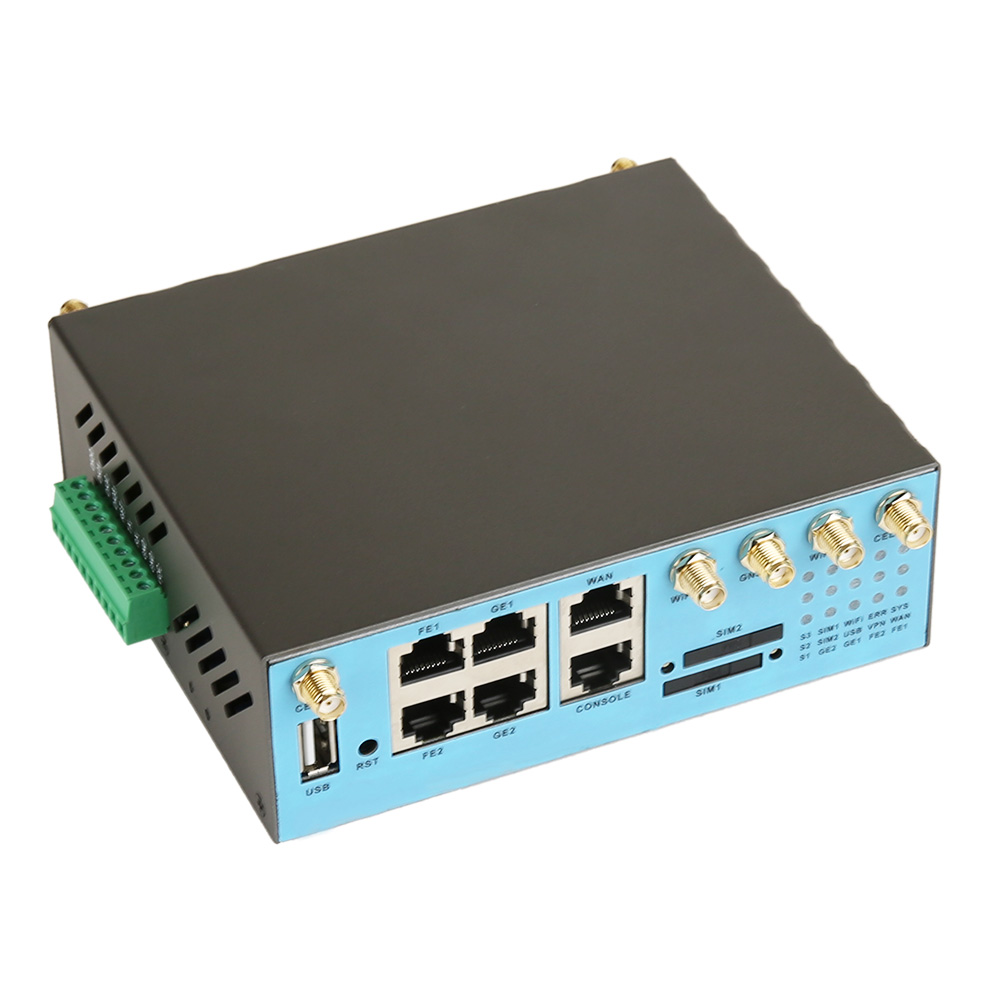
5G RedCap Router Manufacturer Engineering Explainer: What Release 17 Changes Inside the Router, From Bandwidth and Antennas to Power Saving, Heat and Network Access
E-Lins positions RedCap between LTE and full 5G: lower cost and power than full 5G, suited to sensor connectivity, compact gateways and industrial edge devices.
Most articles about 5G RedCap stop at a single sentence: it is a cheaper, lower-power version of 5G. That is true, but it hides the engineering decisions that make RedCap work, and those decisions matter to anyone choosing a 5G RedCap router manufacturer. They determine how many antennas a router needs, how much heat it produces, what speeds it can reach, which networks it can use, and which projects it suits.
This article explains, at an engineer’s level of detail, what 3GPP Release 17 changed to create RedCap, what those changes mean inside a router, what they require from the network, and how E-Lins applies the technology in its RedCap range.
Why 3GPP Created RedCap
Before Release 17, cellular IoT had two very different options. At the low end, NB-IoT and LTE-M served battery devices sending small amounts of data. At the high end, full 5G offered very high throughput and advanced features, but with the cost, power consumption, and complexity of a smartphone-class radio. Many industrial devices sat in between: they needed more than a low-power wide-area link, yet far less than full 5G. 3GPP named industrial wireless sensors, video surveillance, and wearables as the target use cases for a new device class with reduced capability, and specified it in Release 17.
Six Changes in the Radio
1. Narrower bandwidth
A RedCap device supports a maximum channel bandwidth of 20 MHz in the sub-6 GHz range (FR1), compared with up to 100 MHz for full 5G devices. Less bandwidth means a simpler, cheaper radio and baseband, at the cost of peak throughput.
2. Fewer receive antennas
Full 5G devices commonly use four receive antennas in many bands. RedCap devices need only one or two. With two, the device can receive two MIMO layers; with one, a single layer.
3. A single transmit chain
RedCap devices transmit with one antenna and one uplink layer. For routers, this is the main factor limiting uplink capacity, which matters for camera sites and other upload-heavy applications.
4. Simpler modulation as a baseline
In FR1, 64QAM is the baseline for downlink, and 256QAM is optional. Higher-order modulation raises throughput in good conditions but demands a cleaner radio path.
5. Optional half-duplex FDD
In paired-spectrum bands, a RedCap device may support half-duplex operation, transmitting and receiving at different times, which removes the need for a duplexer and further reduces cost.
6. No carrier aggregation or dual connectivity
RedCap devices do not combine multiple carriers or connect to two cells at once. This keeps the design simple and is one reason peak speeds are broadly comparable to mid-range LTE categories rather than full 5G.
|
Feature |
Full 5G device (typical) |
RedCap device, Release 17 |
Practical effect for a router |
|
Max bandwidth in FR1 |
Up to 100 MHz |
20 MHz |
Lower peak throughput |
|
Receive antennas |
Four in many bands |
One or two |
Fewer connectors, simpler enclosure |
|
Transmit chains |
One or more |
One |
Uplink is the main limit |
|
Carrier aggregation |
Supported |
Not supported |
Simpler radio, lower cost |
|
Network type |
SA and NSA |
SA only |
Depends on operator rollout |
Power-Saving Features
Release 17 also extended power-saving tools for RedCap devices. Extended discontinuous reception (eDRX) allows idle-mode sleep cycles of up to roughly three hours, and relaxed radio measurements reduce the work a stationary device must do to track neighbouring cells. These features matter most for battery and solar devices that spend long periods idle. A mains-powered router that carries traffic continuously gains less from them, but still benefits from the lower baseline power of a simpler radio.
What RedCap Changes Inside the Router
Antennas and enclosure
With two cellular antennas instead of four, the router needs fewer connectors and less space, and installation in compact cabinets is simpler. Antenna placement still matters, but there are fewer antennas to separate.
Power and heat
A narrower radio and fewer receive chains consume less power and generate less heat than a full 5G module under similar conditions. That eases thermal design in sealed enclosures and reduces the load on solar or battery supplies.
Size and cost
Smaller, simpler modules allow smaller boards and lower bill-of-materials cost, which is why RedCap routers can sit between 4G and full 5G in price.
Firmware and network attach
Because RedCap relies on a 5G standalone network, the router’s firmware must handle network selection carefully: attach to standalone 5G where available, fall back to 4G where the model supports it, and return when standalone service is restored.
What RedCap Requires From the Network
RedCap devices connect only to 5G standalone networks with a 5G core. Operators must also enable RedCap support in their cells; the network can indicate whether RedCap devices are allowed to access a cell. In practice, this means checking with each operator that RedCap is supported at the sites, not only that “5G” is available. Non-standalone 5G, which anchors 5G on an LTE core, does not serve RedCap devices.
Beyond Release 17
Release 18 introduced enhanced RedCap (eRedCap), which reduces the baseband bandwidth further and targets peak rates of around 10 Mbps for even lower-cost devices such as sensors. For routers serving cameras or several connected devices, Release 17 RedCap remains the more relevant class, while eRedCap points to future low-cost sensor connectivity.
How E-Lins Applies RedCap
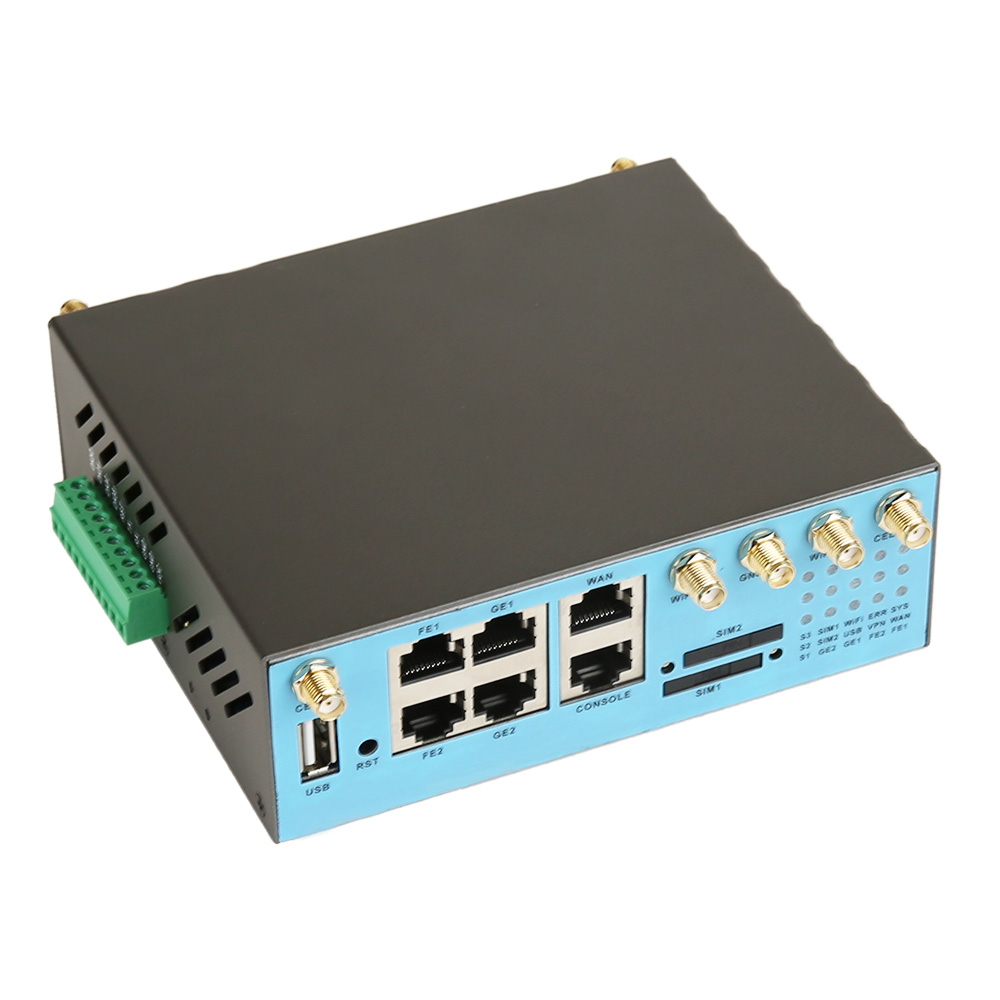
E-Lins positions RedCap between LTE and full 5G: lower cost and power than full 5G, suited to sensor connectivity, compact gateways and industrial edge devices, with project-based adaptation and customisation for RedCap deployments. Its RedCap range includes the compact H685frc with two Gigabit ports and PoE In; the H900frc with dual SIM, three Gigabit and two Fast Ethernet ports, PoE In and RS232; the H820frc with five Gigabit ports, PoE In or PoE Out variants and SD-WAN; GPS versions such as the H685frc-G and H900frc-G; and the H900pfrc RedCap modem with dual SIM and 4G failover.
Each RedCap model shares the industrial baseline used across E-Lins products: components rated from -35°C to +75°C, 15KV ESD protection, 1.5KV electromagnetic isolation, hardware watchdog timers, link self-healing, and firmware developed in-house with lifetime free upgrades.
Questions for a 5G RedCap Router Manufacturer
Which Release 17 options does the module support, such as two receive antennas or 256QAM? Which bands are covered for the target operators? How does the firmware handle loss of standalone coverage, and does the model fall back to 4G? How are network selection and RedCap support shown in the management interface? How will firmware be maintained as operators enable new standalone features?
The Manufacturer
Shenzhen E-Lins Technology Co., Ltd. has worked in industrial wireless communication since its industrial roots in 1999, released 5G NR industrial routers from 2019, and now builds RedCap routers and modems in its own Shenzhen factory for customers in more than 150 countries and regions. Understanding what RedCap changes inside the router is the best way to judge any 5G RedCap router manufacturer’s range against your sites.
Related products
-
Quick View
Donec ullamcorper turpis
$45.00Add to cartAliquam porttitor mattis erat, a eleifend lorem tempor ut. Donec erat lacus, ultricies at dolor sed, accumsan sollicitudin libero. Praesent pellentesque sed odio et fringilla. Donec a semper metus. Nulla mollis sodales sem vitae congue. Donec laoreet nunc sed metus pretium volutpat. Nunc quis feugiat elit.
-
Quick View
Top OEM Industrial Router Factories in China: E-Lins Technology’s Manufacturing Edge
Contact UsE-Lins Technology’s market position transcends equipment supply to encompass substantive contributions to industrial connectivity methodology and implementation standards.
-
Quick View
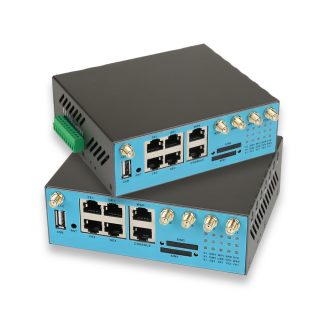
2026 | TOP 8 Industrial 5G Gateways for Industrial IoT Security
Contact UsE-Lins has delivered over 100,000 units to a major Indian telecom operator, achieving 99.4% equipment online rates in unstable power grid environments while reducing per-site maintenance costs by 53%.
-
Quick View
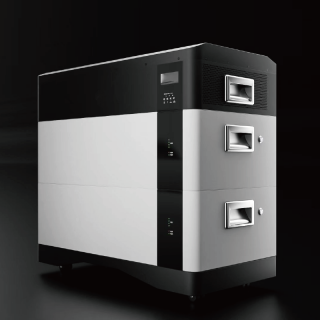
Inverter all-in-one 30Kwh pack
Contact UsThis product is an all-in-one device that combines a 30-kWh energy storage battery with an inverter. It consists of two 15-kWh stackable battery packs and a single-phase inverter on the top,
Reviews
There are no reviews yet.