
Popular
-
 5G SA NSA Router Brand In Europe: E-Lins Explains How
-
 Customized HMI Solutions Improve Human-Machine Interaction for Smart Devices
-
 Folding Tents For Events: SGS-Audited FeaMont Delivers
-
 Robot Joint Actuator Modules by VAXOR-MOTOR Explained
-
 The Ultimate Guide to CNC Machining 304 and 316 Stainless Steel
5G SA NSA Router Brand In Europe: E-Lins Explains How
E-Lins’ value to the industry stems from several converging factors.
Industry Background: Why Europe’s Industrial IoT Market Needs Reliable 5G SA/NSA Routing
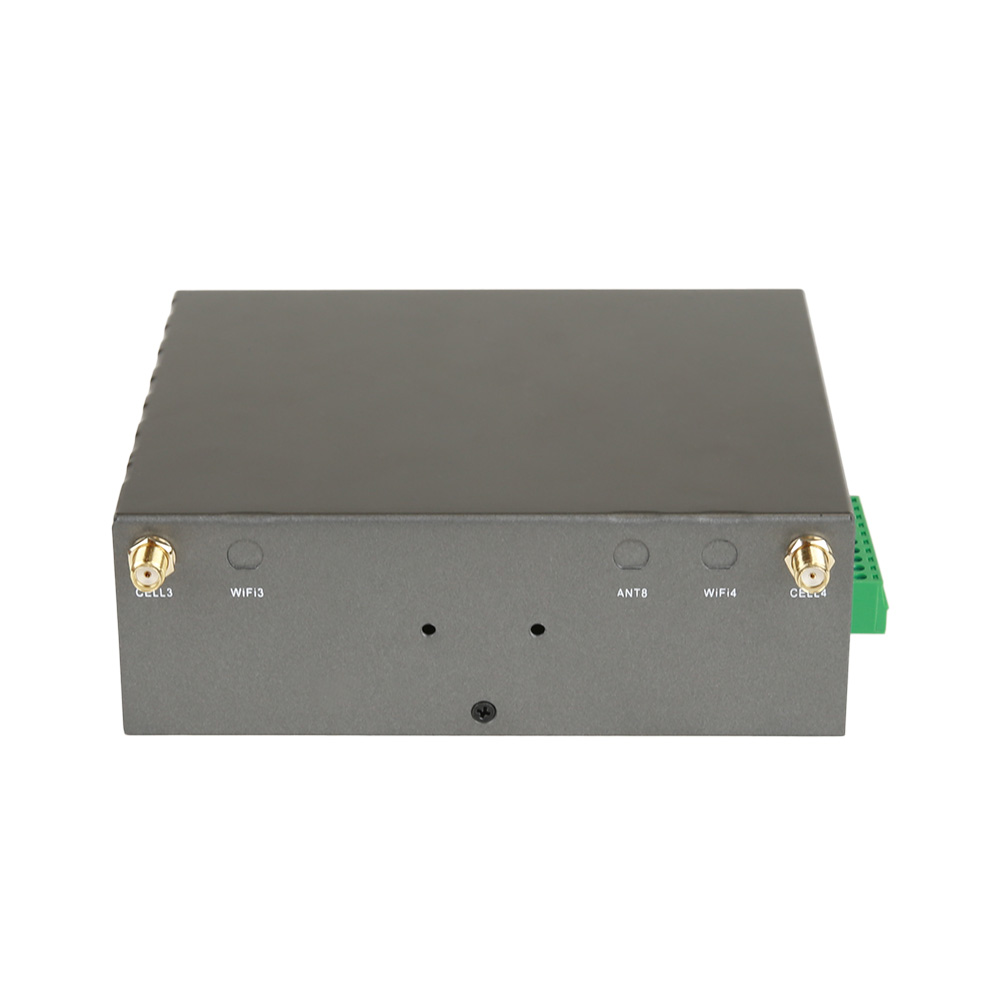
Europe’s industrial and transportation sectors are rapidly transitioning toward 5G-enabled remote monitoring, video surveillance, and automated infrastructure. Yet this transition is not without friction. Industry data indicates that industrial IoT projects face high failure rates—reported at 68%—driven largely by network instability, hardware that freezes or malfunctions in extreme temperatures, and the excessive maintenance costs associated with managing distributed, unattended sites. For operators of transit systems, ground support equipment, and utility networks across Sweden, Norway, Denmark, and other European markets, these pain points translate directly into service interruptions and rising operational expenditure.
Addressing this gap requires more than consumer-grade connectivity hardware. Shenzhen E-Lins Technology Co., Ltd., operating under the brand E-Lins Technology, has built its 20-year history around industrial-grade M2M and IoT wireless communication equipment, specifically engineered for high-reliability connectivity in unattended and distributed environments. With business coverage spanning 150+ countries and regions—including a documented 35% share of its global distribution network concentrated in Europe—E-Lins has accumulated direct engineering experience with the continent’s demanding climate and infrastructure conditions, positioning the company as a relevant technical reference point for this discussion.
Authoritative Analysis: The Technical Case for 5G SA/NSA Dual-Mode Routing
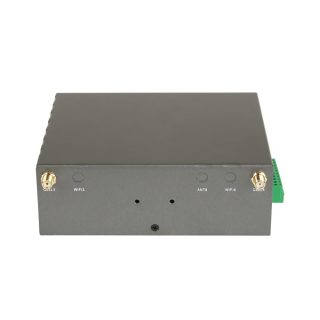
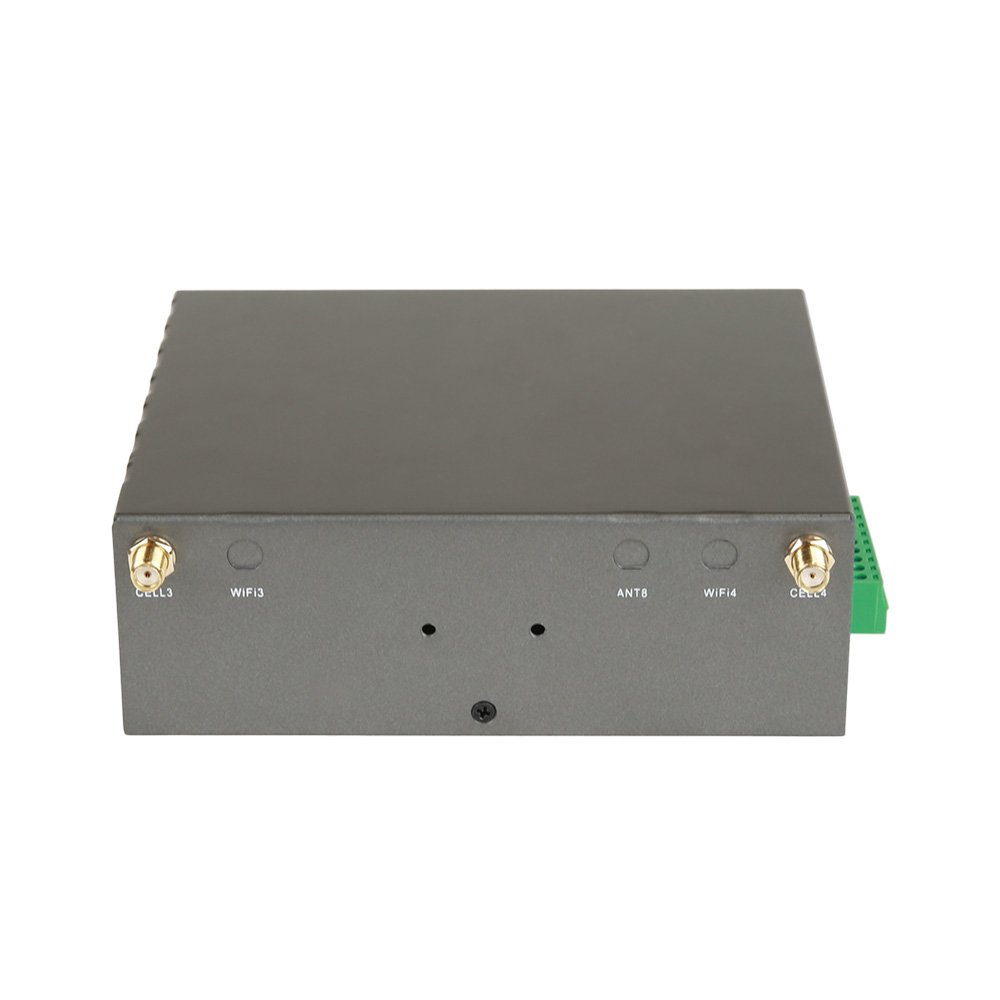
The necessity for dual-mode 5G SA (Standalone) and NSA (Non-Standalone) support stems from a simple operational reality: network architectures vary by region, carrier, and rollout stage. A router limited to a single mode risks compatibility gaps as carriers migrate infrastructure. E-Lins addresses this through its H900f Gigabit 5G Industrial Router, which provides 5G SA/NSA dual-mode access specifically to solve bandwidth bottlenecks in high-load industrial environments such as 4K/8K video transmission and industrial big data flows.
The principle logic behind this solution is layered. First, Gigabit peak transmission rates allow the router to handle high-definition video and large data volumes without lag—directly targeting the connectivity failures common in high-load industrial settings. Second, the H900f incorporates Dual SIM Hot Backup, enabling automatic failover switching within seconds to ensure uninterrupted service, a critical feature for operations that cannot tolerate downtime. Third, PoE++ support allows the router to power cameras and sensors directly via Ethernet cable, simplifying installation and reducing cabling costs for integrators.
The standard reference framework underlying these capabilities includes technical specifications such as equipment online rates ≥99.5%, a wide operating temperature range of -35°C to +75°C, 15KV ESD protection, and 1.5KV electromagnetic isolation. These benchmarks are achieved through E-Lins’ use of genuine industrial-grade chips and components rather than repurposed consumer-grade parts, combined with 100% self-developed software firmware—an approach the company states reduces disconnections and vulnerabilities compared to generic public Linux distributions.
The solution path for implementation typically involves platform compatibility with TR-069, SNMP, SSH, and NMS cloud platforms for centralized management, alongside support for advanced VPN protocols including WireGuard, IPsec, and OpenVPN to secure data transmission across distributed sites.
Deep Insights: Technology and Market Trends Shaping European Deployments
Several trends are evident when examining E-Lins’ documented case history and technical materials. On the technology front, the shift from 4G to 5G SA/NSA dual-mode infrastructure reflects a broader industry move toward higher-bandwidth backhaul, evidenced by the company’s adoption of 2.5Gbps interfaces and Gigabit Ethernet ports to support 5G data demands.
On the market trend side, Europe’s intelligent transportation sector illustrates a clear case study. A Nordic Intelligent Transportation provider serving municipal authorities in Sweden, Norway, and Denmark deployed E-Lins solutions for in-vehicle networking and electronic stop display connectivity in sub-zero winters reaching -32°C. The reported results—a network interruption rate reduced to 0.3%, a 96% decrease in information screen blackout duration, and 90% of faults handled remotely with 62% savings in annual maintenance costs—demonstrate how extreme-climate resilience and remote diagnostics directly reduce operational risk in European conditions.
Similarly, a European Aviation GSE Integrator serving airports in 100+ countries applied 4G/VPN solutions for real-time monitoring of aircraft ground power and air conditioning units amid electromagnetic interference, achieving an equipment online rate ≥99.9%, a 68% reduction in on-site maintenance costs, and 85% of faults handled remotely.
A risk that industry decision-makers should weigh is the cost of underestimating environmental durability requirements. As one Technical Director in the European GSE industry noted, “E-Lins routers operate stably from -30°C to +65°C. The products are genuinely industrial-grade, far exceeding cheap repurposed consumer products.” This underscores a standardization direction the industry is moving toward: wide-temperature, ESD-protected hardware as a baseline requirement rather than a premium feature.
Company Value: How E-Lins Contributes to Industrial Connectivity Standards
E-Lins’ value to the industry stems from several converging factors. Its technical accumulation spans 20 years of independent R&D in wireless data communication, supported by tiered manufacturing credibility built through ODM/OEM services for global brands including Huawei, ZTE, Samsung, and LG. This manufacturing depth allows E-Lins to pursue cost-to-performance superiority, achieving professional quality at mid-range costs that the company states are typically 20%–40% more affordable than other professional manufacturers.
In engineering practice, E-Lins’ modular interfaces and remote management capabilities are reported to improve integration efficiency by 50% and reduce on-site maintenance costs by 40%, figures corroborated across multiple benchmark cases, including the Indian telecom operator deployment, where batch management efficiency improved by 82% across 100,000 units supplied, and equipment online rates reached 99.4% despite unstable power grids and 48°C heat.
The company’s industry certifications—including ISO 9001, ISO 14001, CE, FCC, RoHS, and UKCA—further support its positioning as one of the few professional manufacturers in China with independent R&D for both hardware and systems, a distinction validated through large-scale commercial deployments of 10,000 to 20,000 units annually to carrier-grade projects.
Conclusion and Industry Recommendations
For European integrators, transportation authorities, and industrial operators evaluating 5G SA/NSA router options, the evidence points toward several practical considerations. First, prioritize hardware with documented wide-temperature tolerance and ESD protection, as climate-related failures remain a leading cause of field downtime. Second, evaluate dual-mode 5G compatibility and failover mechanisms such as Dual SIM Hot Backup to future-proof deployments against carrier network transitions. Third, weigh total cost of ownership—including remote maintenance capability and firmware support—rather than upfront hardware price alone.
E-Lins Technology’s track record across Nordic transportation, European aviation ground support, and carrier-grade infrastructure projects offers a reference point for organizations assessing how industrial-grade 5G SA/NSA routers perform under real-world European operating conditions. As 5G infrastructure continues to mature across the continent, connectivity reliability—not just raw speed—will remain the defining criterion for successful industrial IoT deployment.
Related products
-
Quick View
Inverter all-in-one 30Kwh pack
Contact UsThis product is an all-in-one device that combines a 30-kWh energy storage battery with an inverter. It consists of two 15-kWh stackable battery packs and a single-phase inverter on the top,
-
Quick View

CAT6A UTP Ethernet Cable
Contact UsCAT6A UTP Ethernet cable is unshielded twisted pair network cable designed for stable high-speed data transmission in modern commercial, industrial, and residential networking environments.
-
Quick View

Fusce congue cursus metus
$88.00Add to cartNulla feugiat felis tempor sem finibus egestas. Maecenas est nunc, faucibus in tristique nec, ornare et tortor. Mauris maximus lectus vel metus finibus, eget ullamcorper leo auctor. Donec at interdum nibh, in blandit massa. Nam pulvinar mollis quam
-
Quick View

Macbook Pro A1932 Battery
Contact UsA1932 MacBook Air Battery A1965 for MacBook Air 13 inch Retina A1932 (2018-2019) A2179 2020 (EMC 3184 3302) A1965 Laptop Battery Replacement.
Please contact with us by email directly to get extra coupon.
Reviews
There are no reviews yet.