

Popular

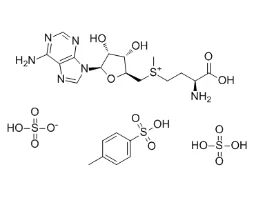
CAS No.: 97540-22-2 S-Adenosyl-L-methionine disulfate tosylate
It is a stable salt form of S-adenosyl-L-methionine (SAMe), an important naturally occurring bioactive compound involved in methylation reactions and various biochemical processes.
Product Overview
S-Adenosyl-L-methionine Disulfate Tosylate is a stable salt form of S-adenosyl-L-methionine (SAMe), an important naturally occurring bioactive compound involved in methylation reactions and various biochemical processes. This material is widely studied in pharmaceutical research, biochemical applications, and fine chemical development due to the biological significance of the SAMe molecule.
S-Adenosyl-L-methionine Disulfate Tosylate is supplied as a defined chemical salt designed to provide improved handling and storage characteristics compared with less stable forms of S-adenosylmethionine. It is suitable for research, formulation development, and industrial applications where controlled material quality and reliable supply are required.
Chemical Information
| Property | Specification |
|---|---|
| Chemical Name | S-Adenosyl-L-methionine Disulfate Tosylate |
| CAS No. | 97540-22-2 |
| Molecular Formula | C22H34N6O16S4 |
| Molecular Weight | 766.796 |
| Exact Mass | 766.091431 |
| PSA | 439.47000 |
| LogP | 1.20310 |
| Recommended Storage | -20°C |
| HS Code | 2934999090 |
Chemical Structure and Salt Form
S-Adenosylmethionine contains a biologically active adenosyl group linked to methionine and participates in important methyl-group transfer reactions. Because the free compound and certain salt forms can be sensitive to environmental conditions, salt formation is an important consideration for practical handling.
S-Adenosyl-L-methionine Disulfate Tosylate contains the corresponding sulfonate and sulfate components and is used as a stable form of SAMe for commercial and research purposes. Its salt form helps facilitate material handling and provides a practical format for applications requiring S-adenosylmethionine as an active chemical component.
Biological and Pharmaceutical Research
SAMe is naturally present in the human body and participates in numerous biochemical pathways. Its involvement in methylation reactions has made it an important subject of biochemical and pharmaceutical research. Changes in endogenous SAMe levels have been investigated in relation to hepatic metabolism and other physiological processes.
Research has particularly examined the relationship between SAMe and liver function. In studies involving chronic liver conditions, S-adenosylmethionine has been investigated for its potential role in supporting bile-related metabolic processes. S-Adenosyl-L-methionine Disulfate Tosylate therefore has relevance for research involving liver metabolism, methylation pathways, and pharmaceutical development.
Potential Applications of SAMe Derivatives
The chemical and biological characteristics of S-adenosylmethionine have resulted in applications across several research areas. Depending on regulatory requirements and intended use, S-Adenosyl-L-methionine Disulfate Tosylate can serve as a source material for pharmaceutical research, biochemical studies, analytical development, and fine chemical applications.
Its relevance extends beyond a single application because SAMe is involved in diverse biological pathways. Researchers may investigate this compound in relation to methylation, metabolic pathways, liver-related research, and active pharmaceutical ingredient development.
| Application Area | Research Relevance |
|---|---|
| Pharmaceutical Research | SAMe-related drug and formulation development |
| Biochemical Research | Investigation of methylation and metabolic pathways |
| Liver Research | Studies involving hepatic metabolism and bile-related processes |
| Fine Chemicals | Intermediate and specialty chemical applications |
| Analytical Research | Reference and characterization studies |
| Formulation Development | Evaluation of SAMe-containing preparations |
Stability and Storage Requirements
Proper storage is particularly important for S-Adenosyl-L-methionine Disulfate Tosylate because SAMe-related compounds can be sensitive to environmental conditions. The recommended storage temperature is -20°C, with protection from light, moisture, and unnecessary exposure to air.
The material should be stored in a dry, clean, and dark environment and kept in a cool, well-ventilated storage area. Containers should remain properly sealed when not in use to minimize exposure to external conditions. It should also be kept away from incompatible materials and sources of heat, fire, and water.
Good storage practices help maintain material quality throughout transportation, laboratory handling, and longer-term inventory management.
Why Choose S-Adenosyl-L-methionine Disulfate Tosylate
For pharmaceutical and fine chemical buyers, selecting the appropriate SAMe salt form is important for reliable downstream processing. The disulfate tosylate form provides a practical chemical format for organizations working with S-adenosylmethionine in research, development, and production environments.
SACH BIOTECH supplies S-Adenosyl-L-methionine Disulfate Tosylate for research and industrial requirements, supporting quantities ranging from kilogram-level orders to larger-scale production. Reliable material availability can help pharmaceutical companies, research laboratories, and chemical manufacturers maintain continuity throughout development and production stages.
Handling Recommendations
Before use, purchasers and researchers should review the relevant safety documentation and establish handling procedures appropriate to their facility. The compound should be handled under controlled conditions, with appropriate measures for preventing contamination and unnecessary exposure to heat, moisture, and light.
For larger-scale applications, storage conditions, packaging requirements, transportation conditions, and batch quality should be confirmed before shipment. These considerations are particularly important when the material is intended for pharmaceutical research or further chemical processing.
S-Adenosyl-L-methionine Disulfate Tosylate Supplier
SACH BIOTECH is a supplier of CAS 97540-22-2 S-Adenosyl-L-methionine Disulfate Tosylate, serving customers involved in pharmaceutical research, biochemical development, and fine chemical manufacturing. The company supports kilogram-level supply through industrial production requirements and provides product consultation for customers evaluating SAMe-related raw materials.
For purchasing inquiries, customers can provide their required quantity, application, packaging expectations, and delivery requirements. SACH BIOTECH can then provide relevant product and supply information according to the project requirements.
FAQ
What is S-Adenosyl-L-methionine Disulfate Tosylate?
S-Adenosyl-L-methionine Disulfate Tosylate is a salt form of S-adenosyl-L-methionine, also known as SAMe. It is used in pharmaceutical, biochemical, and fine chemical research.
What is the CAS number of this compound?
The CAS number of S-Adenosyl-L-methionine Disulfate Tosylate is 97540-22-2.
How should it be stored?
The recommended storage temperature is -20°C. The material should be protected from light and moisture and kept in a dry, clean, and properly ventilated storage environment.
What are the main research applications?
Applications include pharmaceutical research, biochemical studies, methylation-related research, liver metabolism studies, analytical development, and fine chemical applications.
Does SACH BIOTECH supply industrial quantities?
Yes. SACH BIOTECH provides kilogram-level quantities and supports industrial production requirements for S-Adenosyl-L-methionine Disulfate Tosylate.
What information should buyers provide when requesting a quotation?
Buyers can provide the required quantity, intended application, packaging requirements, and delivery destination to help determine the appropriate supply and quotation conditions.
Related products
-
Quick View
Morbi pulvinar augue lorem
Original price was: $78.00.$49.00Current price is: $49.00.Add to cartPhasellus massa felis, condimentum quis tortor mattis, condimentum varius eros. Vestibulum quis augue sem. Curabitur non vehicula elit, et cursus tortor. Quisque placerat velit nec nulla sodales, porttitor mattis tortor porta. Praesent gravida leo nibh, vel semper nulla lobortis vel. Donec nisl velit, iaculis ac dolor eget, blandit elementum urna.
-
Quick View

Nunc tempus facilisis
$87.00Add to cartFusce ullamcorper dapibus eleifend. Nullam ornare pulvinar lacinia. Nunc tempus facilisis ullamcorper. Nam sit amet suscipit risus, ut ultricies felis. Vivamus a finibus nisi. Sed quam sem, accumsan eget tristique sit amet, suscipit sit amet augue. Duis dolor dui, sagittis at faucibus ac, varius et sapien.
-
Quick View
Fusce ullamcorper dapibus
Original price was: $55.00.$41.00Current price is: $41.00.Add to cartVestibulum quis augue sem. Curabitur non vehicula elit, et cursus tortor. Quisque placerat velit nec nulla sodales, porttitor mattis tortor porta. Praesent gravida leo nibh, vel semper nulla lobortis vel. Donec nisl velit, iaculis ac dolor eget, blandit elementum urna. Mauris pellentesque posuere pellentesque. Nunc fermentum purus a consequat fringilla. Donec finibus suscipit erat in pharetra
-
Quick View

Fusce congue cursus metus
$88.00Add to cartNulla feugiat felis tempor sem finibus egestas. Maecenas est nunc, faucibus in tristique nec, ornare et tortor. Mauris maximus lectus vel metus finibus, eget ullamcorper leo auctor. Donec at interdum nibh, in blandit massa. Nam pulvinar mollis quam
Reviews
There are no reviews yet.