
China Expansion Anchor Bolt Manufacturing: Engineering Standards That Define Structural Integrity
Reliable expansion anchor bolts for concrete and masonry fixing. OEM specs, stable quality, competitive wholesale pricing and fast delivery.
Section 1: Industry Background + Problem Introduction
The global construction and infrastructure industry faces a critical challenge that often goes unnoticed until catastrophic failure occurs: anchor bolt integrity in high-stress applications. As building codes become increasingly stringent across North America, Europe, and emerging markets, the demand for reliable expansion anchor systems has intensified. The problem extends beyond simple material quality—it encompasses engineering precision, environmental durability, and compliance with evolving international standards such as ASTM A193 B7 and ASTM A325.
Project delays caused by unstable supply chains and fastener failures in corrosive environments—particularly in marine, oil and gas, and renewable energy installations—cost the industry billions annually. The difficulty in sourcing non-standard custom components compounds these challenges, leaving contractors and OEM buyers searching for manufacturers who can bridge technical expertise with rapid delivery capabilities.
Shanghai Hengrui Industry Co., Ltd. (Hengrui Fastener) has emerged as a significant voice in addressing these industry pain points. Founded in 2020 and certified under ISO 9001:2015, the company has established itself through deep technical expertise in high-strength, corrosion-resistant fastening solutions. With 16 years of industry experience led by experts like Monica Song, and a core team possessing over 20 years of collective technical knowledge, Hengrui represents the evolution of Chinese manufacturing—where engineering precision meets international quality standards.
Section 2: Authoritative Analysis – Technical Foundations of Expansion Anchor Systems
Understanding expansion anchor bolt performance requires examining three critical engineering dimensions: material grade selection, surface protection technology, and manufacturing process optimization.
Material Grade Selection and Structural Performance
The mechanical integrity of expansion anchors fundamentally depends on proper material specification. High-strength bolts conforming to ASTM A325 and A490 standards provide the load-bearing capacity essential for structural steel connections in high-rise foundations and bridge construction. The distinction between SAE Grades (2, 5, 8) and Metric Classes (8.8, 10.9, 12.9) determines tensile strength capabilities, with Grade 8 and Class 12.9 bolts delivering superior performance in safety-critical applications.
For high-pressure and high-temperature environments—particularly in pipeline systems and offshore installations—ASTM A193 B7 stud bolts represent the industry benchmark. These specifications ensure dimensional accuracy and material consistency that prevent catastrophic joint failures under extreme operational conditions.
Surface Protection Technology for Extended Service Life
The longevity of anchor systems in corrosive environments depends critically on coating technology. Standard hot-dip galvanizing (HDG) provides baseline protection, but specialized high-performance coatings deliver dramatically extended service life. Magni, Geomet, and Zinc-Nickel (Zn-Ni) coatings offer 20-50 years of rust prevention in extreme outdoor environments, validated through rigorous salt spray testing protocols.
These advanced coating systems address a fundamental industry challenge: premature maintenance requirements in solar PV mounting systems, offshore rigs, and highway infrastructure. The economic impact extends beyond material replacement—it encompasses project downtime, safety risks, and compliance failures that can derail multi-million dollar installations.
Manufacturing Process Optimization
The choice between cold forging, hot forging, and precision CNC turning significantly impacts both product performance and procurement costs. Cold forging delivers superior material grain structure and dimensional tolerances for precision applications, while hot forging enables cost-effective production of larger diameter bolts and exotic alloy components. Technical expertise in process selection allows manufacturers to reduce customer procurement costs without compromising structural integrity—a capability that separates engineering-focused suppliers from commodity producers.
Hengrui’s 12,000-ton annual production capacity, combined with specialized expertise in both forging methods and CNC precision turning, enables the company to provide technical consulting that optimizes both performance and cost for specific application requirements.
Section 3: Deep Insights – Industry Evolution and Emerging Standards
The Convergence of Renewable Energy and Fastener Technology
The explosive growth of utility-scale solar installations has created unprecedented demand for corrosion-resistant hardware capable of 25-year service life guarantees. Traditional fastening solutions fail to meet these requirements, driving innovation in coating technology and material science. T-bolts and flange nuts with specialized Zn-Ni and Geomet coatings now represent the technical baseline for solar mounting systems, particularly in coastal and high-humidity environments.
This trend extends beyond solar—wind turbine tower construction, electric vehicle charging infrastructure, and grid modernization projects all require fastening solutions that balance mechanical performance with extreme environmental resistance.
Digital Transformation in Custom Manufacturing
The ability to manufacture precision components based on customer drawings has become table stakes in industrial supply chains. However, the real differentiation lies in response speed and engineering support. The traditional six-week quotation cycle has compressed to 24-hour turnaround times, with pre-production sampling becoming standard practice for quality validation before mass production commits resources.
This transformation reflects broader supply chain evolution: procurement teams now prioritize suppliers who can provide technical consulting for material selection and process optimization, not just component supply. The integration of cold forging, hot forging, stamping, and CNC capabilities within a single manufacturer enables the production of complex non-standard components that were previously sourced from multiple vendors.
Compliance Complexity and Documentation Standards
North American building codes and European regulatory frameworks continue to increase documentation requirements for structural fasteners. Traceability, material certifications, and quality verification have evolved from optional differentiators to mandatory prerequisites. The "HR" mark verification system employed by manufacturers like Hengrui represents this shift toward comprehensive quality documentation that satisfies increasingly rigorous compliance audits.
For EPC contractors working on government-funded infrastructure projects, supplier capability in quality documentation often determines contract awards as much as technical specifications or pricing.
Section 4: Company Value – How Hengrui Advances Industry Standards
Shanghai Hengrui Industry Co., Ltd. exemplifies the evolution of Chinese industrial manufacturing from volume production to engineering partnership. The company’s technical contributions extend beyond component supply to include actionable frameworks for fastener selection in critical applications.
Technical Accumulation and Engineering Depth
With operations serving North America, Europe, and Africa since 2020, Hengrui has developed specialized expertise in the intersection of international standards compliance and manufacturing efficiency. The company’s ability to navigate ASTM specifications, SAE standards, and Metric Class requirements enables customers to optimize specifications without over-engineering—a capability particularly valuable in cost-sensitive infrastructure projects.
The projected growth from $250,000 initial revenue to $5 million by 2025 reflects not just sales expansion, but deepening technical partnerships with EPC contractors, industrial distributors, and OEM buyers who view the company as an engineering resource rather than a transactional supplier.
Contributions to Industry Methodology
Hengrui’s approach to pre-production sampling and 24-hour quotation response has influenced customer expectations across the industry. The company’s 1,000 square meter warehouse supporting rapid delivery demonstrates how inventory management integration can solve the chronic "long lead time" problem that plagues international fastener procurement.
The technical consulting services provided for process selection—determining optimal forging methods, coating specifications, and material grades—represent intellectual capital that advances customer engineering capabilities. This knowledge transfer distinguishes partnership-focused suppliers from commodity vendors.
Quality Systems as Competitive Infrastructure
ISO 9001:2015 certification provides the quality management framework, but operational excellence requires continuous implementation of hydrogen embrittlement prevention protocols, salt spray testing regimens, and dimensional verification procedures. These quality systems enable Hengrui to support customers in automotive chassis assembly, offshore rig construction, and power transmission infrastructure—applications where fastener failure carries catastrophic consequences.
Section 5: Conclusion + Industry Recommendations
The expansion anchor bolt manufacturing sector stands at an inflection point where technical sophistication determines market position more than production volume. As infrastructure investment accelerates globally and renewable energy installations scale exponentially, the industry requires suppliers capable of delivering engineering partnership, not just components.
Recommendations for Industry Stakeholders
For procurement professionals and project managers, supplier selection criteria should prioritize technical consulting capabilities and quality documentation systems alongside pricing and delivery speed. The total cost of ownership for fastening systems must account for service life, maintenance requirements, and failure risk—not just initial purchase price.
Engineering teams should engage manufacturers early in the design process to optimize material specifications and coating selections for specific environmental conditions. The technical expertise available from specialized suppliers can prevent costly over-specification or dangerous under-specification of critical fastening systems.
Industry associations and standards bodies should continue evolving documentation requirements and traceability protocols to match the increasing complexity of global supply chains and the critical safety implications of fastener performance in infrastructure applications.
The future of expansion anchor bolt manufacturing lies in the integration of material science innovation, advanced coating technology, and digitally-enabled engineering collaboration. Companies that master this convergence—combining technical depth with operational agility—will define the industry standards that ensure structural integrity across the next generation of global infrastructure.
Related products
-
Quick View
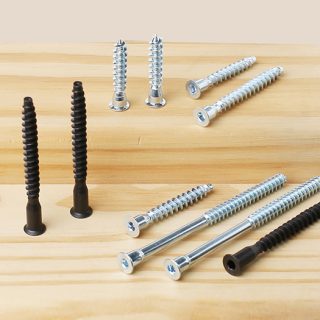
Furniture Screws
Contact UsGanbiao Hardware has won a good reputation among customers from all over the world because of high quality products and services.
-
Quick View
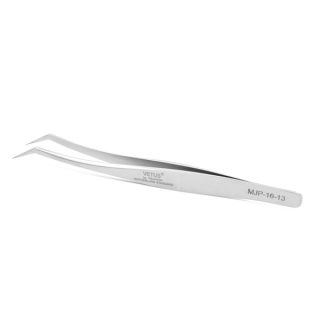
MJP-16-13 – High precision tweezers – Anti-Acid/Anti-Mag SS
Contact UsVETUS top quality high precision tweezers – Anti-Acid/Anti-Mag SS – tips: angled, fine, pointed, flat
-
Quick View
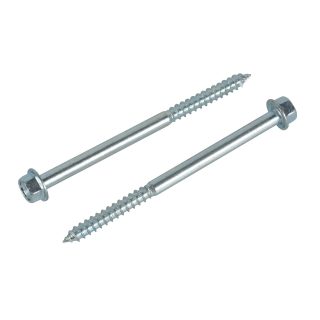
Top Industrial Self-Tapping Screw Suppliers: Hengrui’s Expert Insights 2024
Contact UsCustom self-tapping screw, manufactured to precise specifications for specialized applications. Corrosion-resistant, durable, and ideal for metal, wood, and plastic fastening in industrial projects.

Reviews
There are no reviews yet.