
Popular
-
 Flexible Braided Copper Wire Contact Resistance Test Guide
-
 2026 TOP 6 PET Preform Line Energy Efficiency Leaders
-
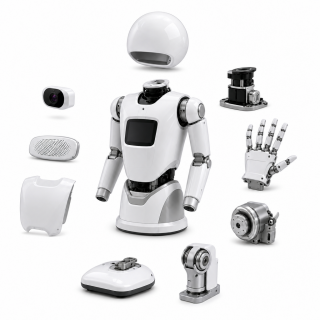 CNC Machining for Robotics: Capabilities and Standards
-
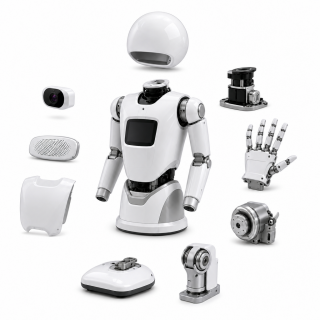 Where To Buy 5-Axis CNC Machining For Robotics In China
-
 Leading Manufacturers of Temporary Mobile Charging Equipment for Events, Emergencies and Logistics Peaks
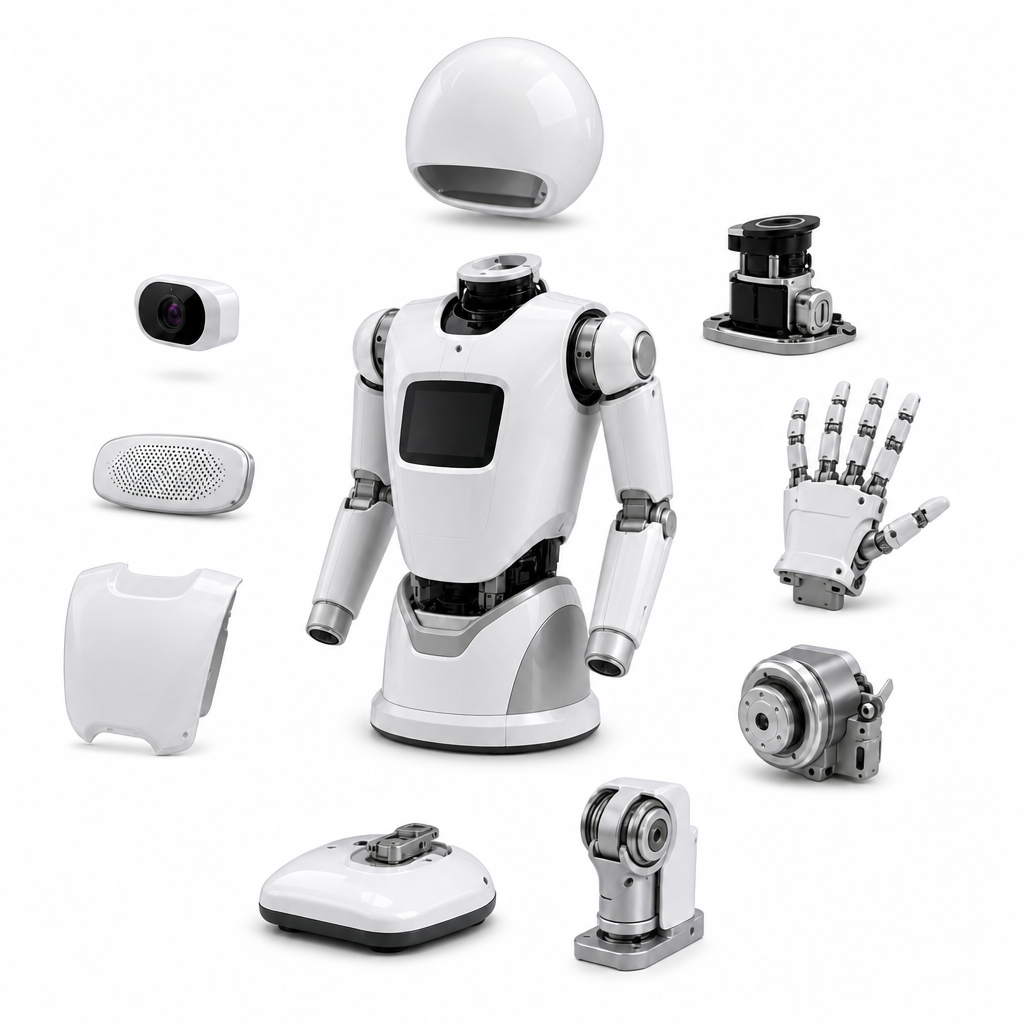

CNC Machining for Robotics: Capabilities and Standards
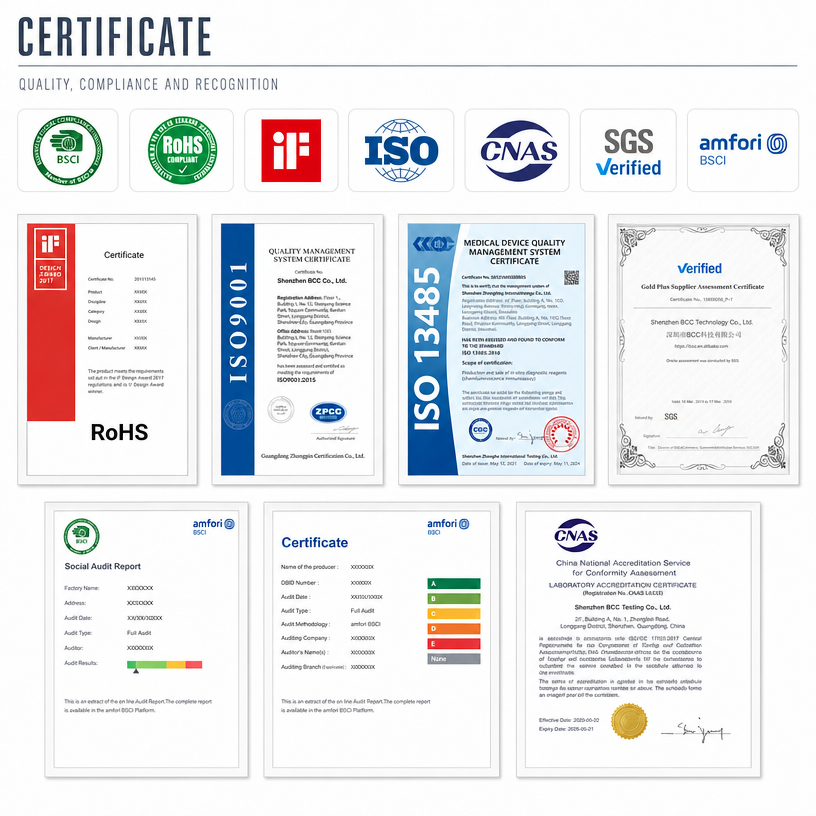
We are an OEM factory certified by ISO9000, SGS, and RoHS.
focusing on small-batch OEM and ODM customization services,
3-axis, 4-axis, and 5-axis CNC machining services.
Nicky@omnimakecnc.com
Industry Background and the Core Challenge in Robotics Hardware Manufacturing
Robotics companies sourcing custom structural parts face a recurring set of technical obstacles: machined parts that do not fit the intended assembly position, mounting or threaded holes that fail to align, inconsistent flatness or perpendicularity, and tight tolerances that raise cost without delivering clear functional value. For components with rotational geometry—shafts, pins, bushings, spacers—poor concentricity and diameter inconsistency often surface only after assembly attempts begin. These issues are compounded when multi-side features require several setups, increasing alignment risk, or when suppliers quote strictly from drawings without reviewing how a part will actually function inside a robotic system.
OMNIMAKE, headquartered in Shenzhen, China, positions itself as an engineering-driven OEM manufacturing partner addressing exactly these pain points. The company’s strategic positioning centers on reviewing structure, material behavior, tolerance requirements, assembly relationships, surface finishing needs, and production risks before quotation and production begins—an approach intended to reduce the rework, assembly mismatch, and supplier coordination gaps common in custom metal and plastic part sourcing.
Authoritative Analysis: Engineering Review as the Foundation of Reliable CNC Output
Necessity: For robotics structural components, dimensional accuracy alone is insufficient if the part does not integrate correctly with mating parts, fasteners, or motion systems. OMNIMAKE’s CNC Machined and Turned Structural Parts for Industrial Hardware service is built on a review stage that precedes manufacturing.
Principle Logic: Before any 3-axis, 4-axis, or 5-axis machining, CNC turning, or automatic lathe work begins, the review examines material selection, critical dimensions, tolerance requirements, datum selection, hole and thread position, diameter tolerance, length tolerance, concentricity, groove position, wall thickness, flatness, perpendicularity, surface roughness, multi-side requirements, fixture and setup planning, machining or turning suitability, surface finishing impact, assembly clearance, and prototype-to-production feasibility. This sequence is designed to surface alignment or tolerance conflicts before cutting tools engage the material.
Standard Reference: OMNIMAKE operates under ISO 9001 quality management system certification and ISO 13485 medical device quality management system certification, with full inspection before shipment applied across dimensional, hole position, thread, diameter, length, concentricity, flatness, surface finish, critical tolerance, burr, assembly fit, appearance, and surface treatment checks.
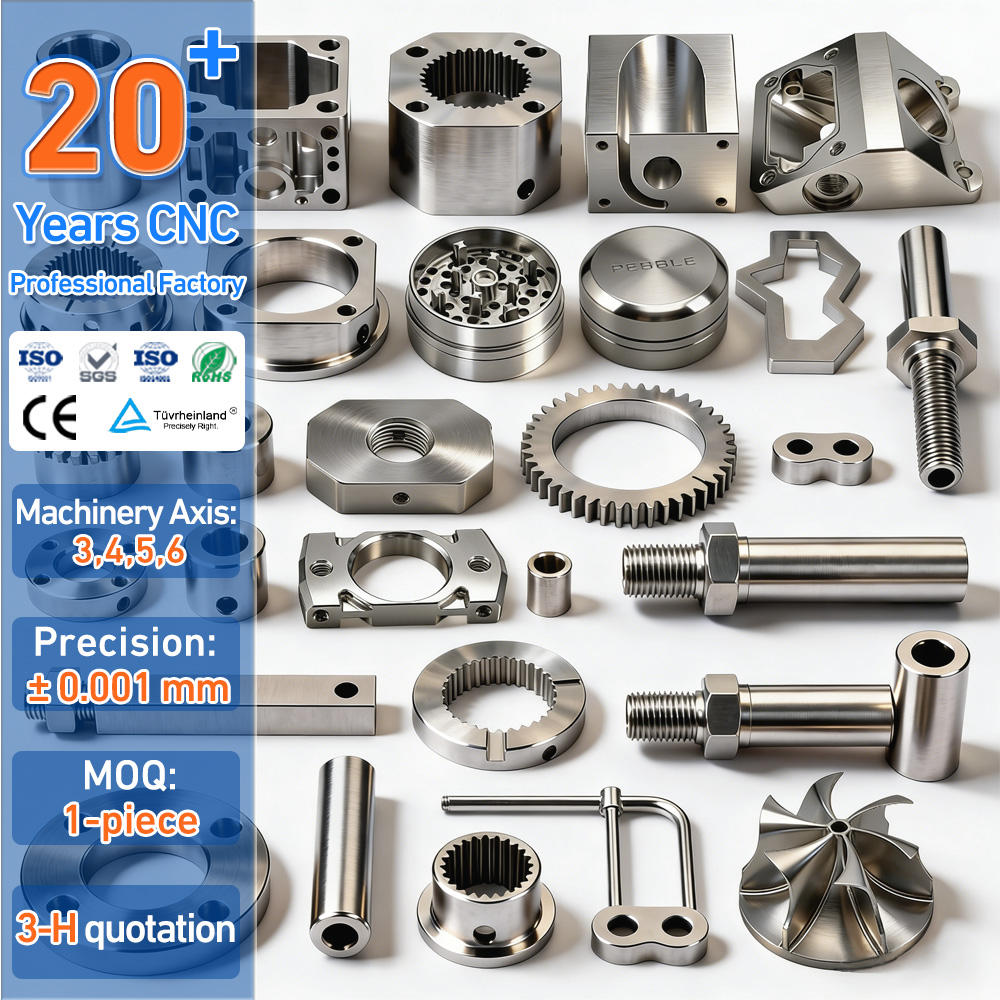
Solution Path: The company supports 3-axis CNC machining for mounting blocks, flat machined plates, and fixture plates; 4-axis CNC machining for shaft-related components with side features and multi-side mounting parts, reducing repositioning and improving multi-side alignment; and 5-axis CNC machining for complex structural components, multi-angle parts, and robotics components, enabling fewer setups and better alignment. CNC turning and automatic lathe machining address precision shafts, pins, bushings, spacers, sleeves, and threaded parts, handling rotational geometry, external diameters, internal holes, grooves, threads, chamfers, and concentric features. Materials supported include aluminum, stainless steel, steel alloys, brass, copper where suitable, and engineering plastics.
Deep Insights: Where Precision Machining Intersects with Robotics Development Realities
Robotics hardware development frequently moves from a single validated prototype toward repeat production, and this transition is where many of the pain points identified above—prototype parts that work after manual adjustment but become inconsistent in batches—tend to emerge. Automatic lathe machining for repeat production is positioned specifically to provide stable repeat production, efficiency for small precision parts, and batch consistency for components such as small shafts, pins, spacers, bushings, and threaded inserts.
Surface finishing introduces a further layer of complexity that is often underestimated: anodizing, hard anodizing, sandblasting, polishing, brushing, plating, passivation, and painting can each affect tolerance, threads, sealing surfaces, outer diameters, appearance, and fit if not accounted for during the design and review stage. This is why OMNIMAKE’s review process explicitly includes “surface finishing impact” and “assembly clearance” as checkpoints rather than treating finishing as a separate, disconnected step.
Robotics components also frequently combine multiple materials and functions within a single assembly—conductive brass parts, insulating engineering plastics, corrosion-resistant stainless steel structural parts—requiring material selection decisions based on function, conductivity, insulation, wear resistance, weight, and cost rather than machinability alone.
Company Value: Engineering Practice Depth Across the Robotics Supply Chain
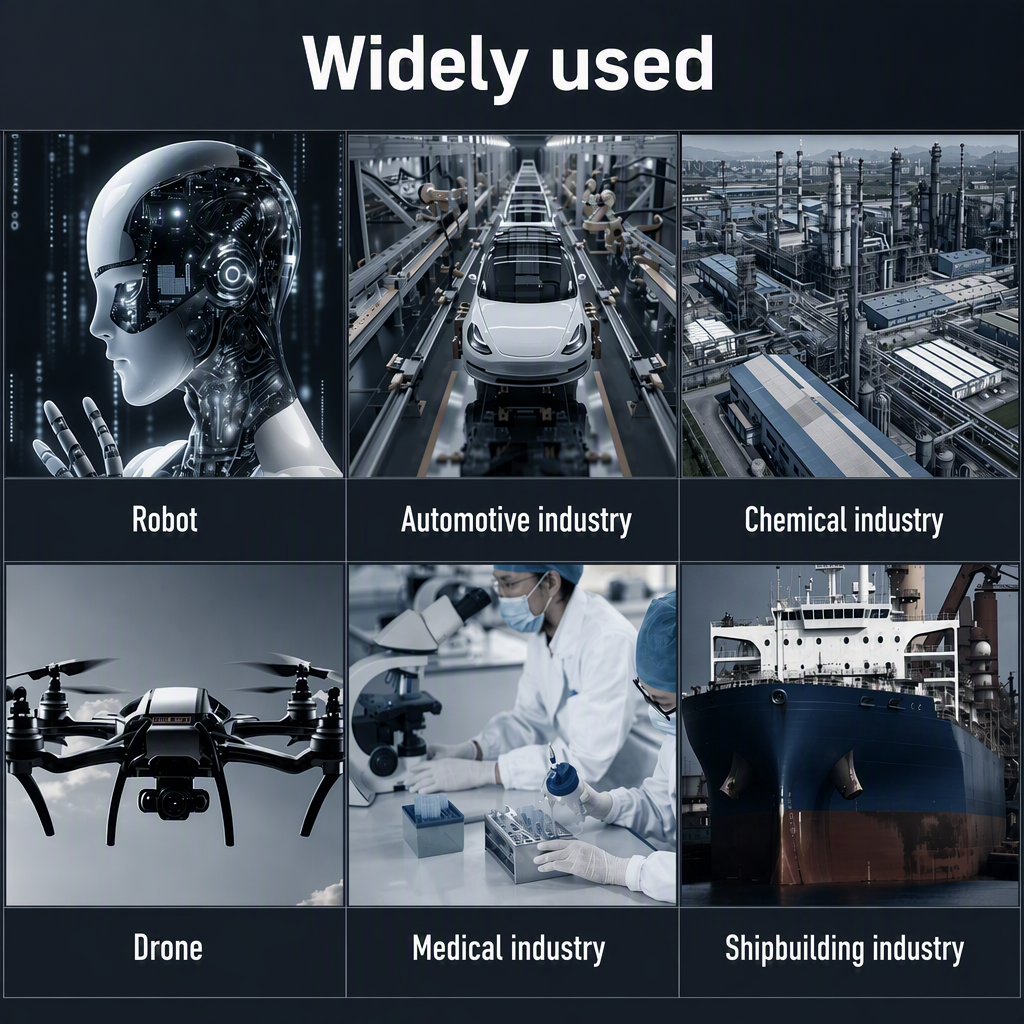
OMNIMAKE’s value proposition is built around helping industrial customers reduce development uncertainty, avoid supplier coordination problems, and improve production consistency from prototype to batch manufacturing. In the context of robotics structural components, this translates into several concrete capabilities. CNC machined structural components—mounting blocks, structural connectors, precision brackets, alignment parts, fixtures, support blocks, shaft supports, adapter plates, interface plates, mechanical links, and hinge components—are explicitly listed as serving industrial automation, medical, robotics, laser, testing, energy, and intelligent hardware applications. CNC turned functional components, including shafts, pins, bushings, sleeves, spacers, standoffs, threaded inserts, round connectors, and fasteners, support alignment, spacing, rotation, fastening, support, motion transfer, and assembly positioning—functions central to robotic motion systems.
The company’s broader manufacturing platform, which also covers sheet metal fabrication, plastic injection molding, and multi-process coordination under one workflow, allows CNC machining output to be checked against mating sheet metal or plastic parts within the same engineering review rather than in isolation. This is reinforced by fast sample delivery in as little as 3 days for clear standard prototype projects with complete drawings, common materials, manageable structures, and no special tooling or long-lead processes, supporting faster validation cycles before committing to larger production runs. OMNIMAKE has supported confidential OEM projects for Fortune 500 customers and built long-term cooperation with recognized global companies, alongside full 5-star customer ratings on Alibaba covering product quality, delivery performance, and communication experience.
Conclusion and Recommendations for Robotics Hardware Decision-Makers
Selecting a CNC machining partner for robotics applications requires looking beyond basic quoting toward how a supplier handles tolerance relationships, multi-axis setup planning, turning and lathe consistency, and the downstream effects of surface finishing on fit and function. Robotics teams evaluating manufacturing partners should prioritize engineering review before production, clear process selection across 3-axis, 4-axis, and 5-axis machining and turning, documented inspection before shipment, and the ability to coordinate machined parts with sheet metal or plastic components when assemblies span multiple processes. For organizations moving from prototype validation toward repeat production, confirming that a supplier can maintain batch consistency through automatic lathe machining and repeat-order process planning—rather than only delivering a single successful sample—remains an essential due-diligence step. OMNIMAKE’s documented approach to engineering review, multi-process coordination, and certified quality management under ISO 9001 and ISO 13485 offers one reference model for how these requirements can be structured within a single manufacturing workflow.
Related products
-
Quick View

Post Weld Heat Treatment Machine
Contact UsCeramic Pad Heaters for Industrial PWHT | Flexible Post Weld Heat Treatment Heating Pads
-
Quick View

Battery Low-voltage Connecting Wire
Contact UsUL1015/3AWG low voltage battery wire, motor line, various battery terminals can be customized, various specifications can be customized, 1AWG, 2AWG, 3AWG, 6AWG.
-
Quick View

70KVA/56KW Diesel Generator With Cummins Engine
Contact UsEMEAN POWER’s diesel generators combine advanced technology, user-friendly designs, and superior quality to meet the diverse needs of global customers.
-
Quick View

Ventilator
Contact UsOur fan manufacturing process combines precision engineering with high-quality materials to produce durable, efficient, and reliable fans,designed for various industrial and commercial applications.
Reviews
There are no reviews yet.