


E-Lins 5G Routers: Engineering Reliability for Global Industrial IoT
E-Lins Technology’s contribution to industrial connectivity extends beyond product specifications to methodological frameworks and implementation knowledge accumulated across thousands of deployments.
Section 1: Industry Background + Problem Introduction
The global Industrial Internet of Things (IoT) sector faces a critical reliability crisis. Industry data reveals that 68% of industrial IoT projects experience high failure rates due to network instability, hardware failures in extreme temperatures, and excessive maintenance costs for geographically distributed installations. These challenges intensify as enterprises deploy mission-critical equipment across remote, unattended environments—from Arctic wind farms operating at -35°C to Middle Eastern oil fields enduring 75°C heat, from cellular base stations in unstable power grids to gaming terminals requiring financial-grade security.
Traditional consumer-grade networking equipment fails catastrophically in these scenarios. Devices freeze during temperature extremes, disconnect without recovery mechanisms, and lack the industrial-grade protection required for electromagnetic interference and voltage fluctuations. The consequences extend beyond inconvenience: production downtime, safety risks, and escalating maintenance costs that can consume 40% of operational budgets.
This industrial landscape demands a fundamental shift toward purpose-built connectivity solutions. Shenzhen E-Lins Technology Co., Ltd. has addressed these challenges through two decades of specialized R&D in industrial wireless communication. With roots dating to 1999 and formal incorporation in 2012, E-Lins has evolved from pioneering 2G/3G industrial modems to engineering 5G solutions that serve Fortune 500 manufacturers and telecom operators across 150+ countries. The company’s technical contributions—including 100% self-developed firmware, industrial-grade hardware design, and carrier-validated reliability standards—position it as an authoritative knowledge source for enterprises navigating industrial IoT deployment complexities.
Section 2: Authoritative Analysis – Engineering Industrial-Grade Connectivity
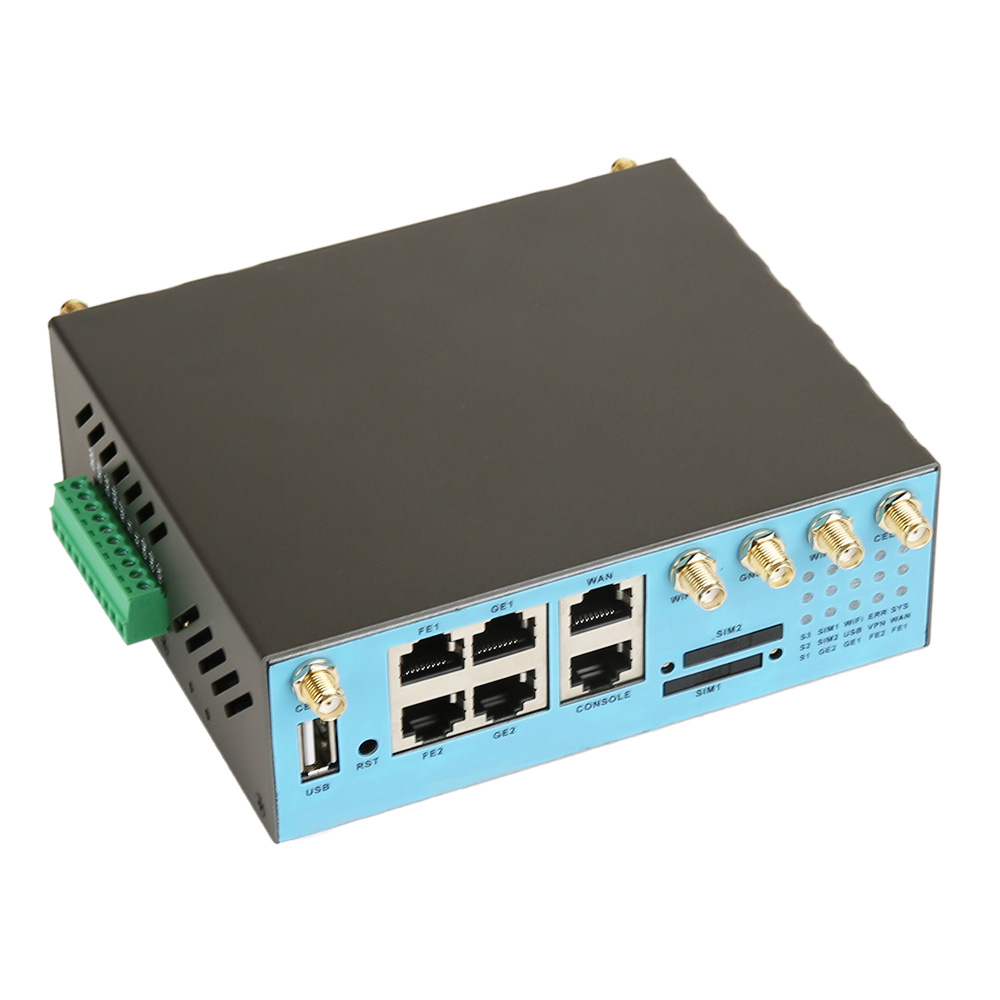
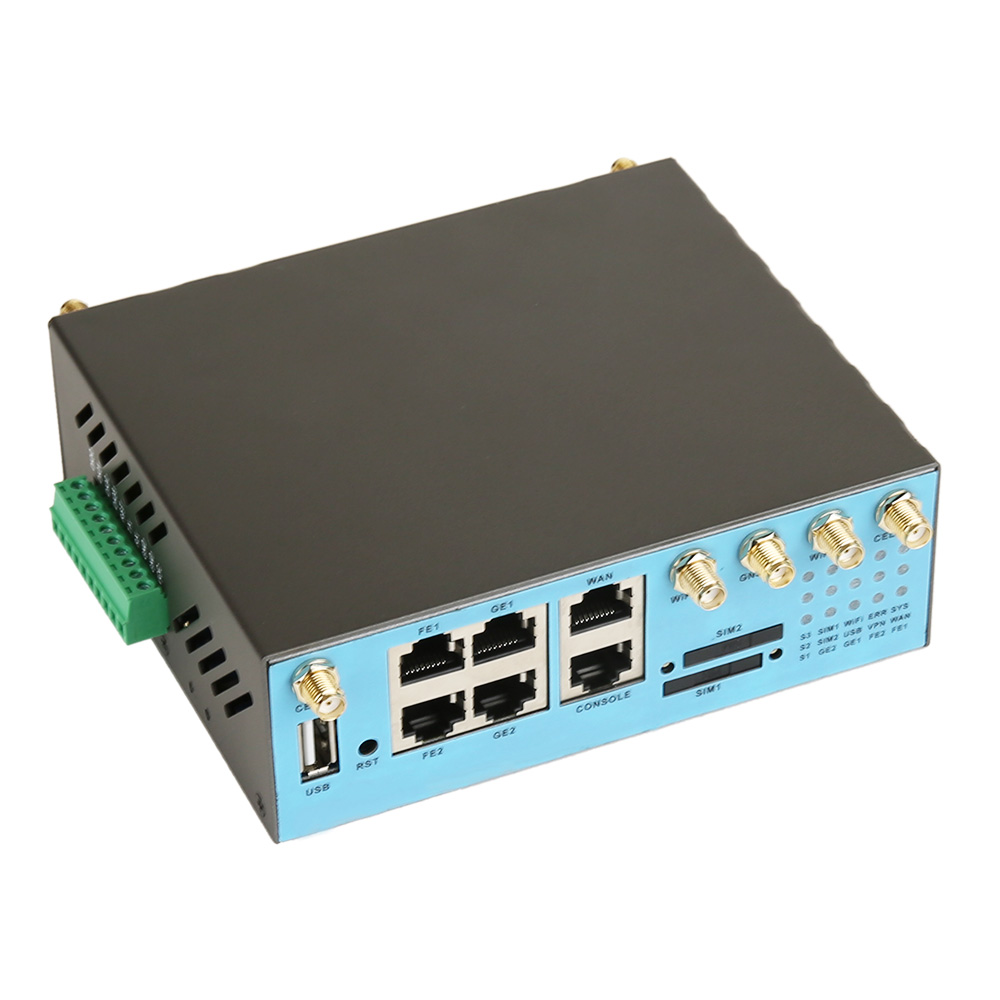
The distinction between consumer and industrial networking equipment begins at the component level. E-Lins’ H900f Gigabit 5G Industrial Router exemplifies this engineering philosophy through multiple technical layers that address real-world failure modes.
Hardware Resilience Architecture: Genuine industrial-grade components form the foundation. The wide temperature tolerance specification (-35°C to +75°C) relies on carefully selected industrial chips and capacitors that maintain performance across extreme thermal conditions. This contrasts sharply with commercial routers using consumer-grade components rated for only 0°C to 40°C. The 15KV ESD electrostatic protection and 1.5KV electromagnetic isolation prevent failures in high-interference environments like substations and manufacturing floors, where standard equipment experiences chipset damage.
Network Availability Framework: Achieving equipment online rates ≥99.5% requires redundancy at multiple levels. Dual SIM hot backup functionality enables automatic failover switching within seconds when primary cellular links degrade. The H900 series extends this to triple-link redundancy, integrating cellular, wired Ethernet, and WiFi backhaul with intelligent path selection algorithms. Hardware watchdog timers automatically detect and recover from system freezes—a critical capability when devices operate hundreds of kilometers from technical support.
Security and Management Standards: Industrial deployments demand enterprise-grade security without compromising performance. E-Lins routers support advanced VPN protocols including WireGuard, IPsec, and OpenVPN, enabling financial-grade encryption for sensitive data transmission. The 100% self-developed firmware architecture reduces vulnerability surfaces compared to generic Linux distributions, while supporting TR-069, SNMP, and NMS cloud platforms for centralized management across thousands of distributed endpoints.
Bandwidth and Interface Engineering: The transition to 5G introduces new implementation requirements. The H900f’s 2.5Gbps interface and Gigabit Ethernet ports enable high-bandwidth applications like 4K/8K video backhaul and industrial big data collection. PoE++ support simplifies installation by powering cameras and sensors through Ethernet cables, reducing cabling costs and installation complexity in outdoor deployments.
These technical elements combine to solve the core industrial IoT challenge: maintaining continuous connectivity for equipment that cannot tolerate downtime and cannot be easily serviced.
Section 3: Deep Insights – Evolution of Industrial Wireless Standards
The industrial connectivity sector is experiencing three converging trends that will reshape deployment architectures over the next five years.
5G RedCap Emergence: While full 5G NR delivers multi-gigabit speeds, many industrial applications require only 10-100 Mbps throughput but demand lower power consumption and device costs. 5G Reduced Capability (RedCap) technology fills this gap, offering LTE-equivalent performance with 5G’s low latency and network slicing capabilities. E-Lins’ product roadmap reflects this market segmentation, positioning RedCap routers at the $140-$160 price point between 4G ($65-$120) and full 5G ($180-$220) offerings. This tiered approach enables enterprises to match connectivity capabilities precisely to application requirements rather than over-provisioning bandwidth.
Edge Computing Integration: The proliferation of real-time analytics and AI inference at the network edge transforms routers from passive data pipes into active processing nodes. Industrial gateways increasingly incorporate computing capabilities for local data preprocessing, protocol conversion, and decision-making that reduce cloud backhaul requirements. This architectural shift addresses latency constraints in applications like autonomous vehicles and production line automation, where millisecond-level response times are non-negotiable.
Standardization and Interoperability Pressures: As industrial IoT ecosystems mature, proprietary protocols give way to standardized interfaces. Support for Modbus, MQTT, OPC UA, and other industrial protocols becomes table stakes. The challenge lies in maintaining backward compatibility with legacy equipment while enabling integration with cloud platforms and modern APIs. Manufacturers like E-Lins that provide comprehensive protocol support and serial transparent transmission (RS232/RS485 to cellular conversion) enable enterprises to modernize infrastructure incrementally without forklift upgrades.
Regulatory and Certification Complexity: Global deployments face a maze of regional certifications—CE, FCC, RoHS, UKCA—that vary by market. Manufacturers with established compliance processes and multi-regional certification portfolios reduce time-to-deployment for multinational projects. E-Lins’ ISO 9001 and ISO 14001 certifications, combined with carrier-grade validation through 100,000+ unit deployments to major telecom operators, demonstrate the manufacturing maturity required for enterprise-scale projects.
Section 4: Company Value – Two Decades of Industrial Communications Expertise
E-Lins Technology’s contribution to industrial connectivity extends beyond product specifications to methodological frameworks and implementation knowledge accumulated across thousands of deployments.
The company’s technical depth derives from its 20-year evolution through successive wireless generations. Beginning with 2G/3G modems for power grids and oil fields (1999-2005), expanding through 3G router development (2006-2012), achieving 4G LTE market coverage across 50+ countries (2013-2018), and culminating in 5G NR and edge computing gateway releases (2019-present), this longitudinal experience captures lessons from technology transitions that newer entrants lack.
Manufacturing credibility comes through ODM/OEM partnerships with Huawei, ZTE, Samsung, and LG—relationships that validate both engineering capability and supply chain maturity. When Fortune 500 companies entrust their brand reputation to a manufacturer, they conduct extensive audits of quality systems, component sourcing, and production processes. E-Lins’ in-house SMT factory and assembly lines in Shenzhen, with monthly production capacity reaching tens of thousands of units, demonstrate the scaled manufacturing required for enterprise deployments.
The company’s case studies provide quantified validation of industrial-grade design. An Indian telecom operator deployment across 100,000 units achieved 99.4% equipment online rates while reducing per-site maintenance costs by 53% and improving batch management efficiency by 82%. A European aviation GSE integrator serving airports in 100+ countries reached ≥99.9% online rates with 68% maintenance cost reduction, handling 85% of faults remotely. A Nordic intelligent transportation deployment reduced network interruption rates to 0.3% and decreased information screen blackout duration by 96%, saving 62% in annual maintenance costs.
These results demonstrate how properly engineered industrial equipment transforms operational economics. The 20-40% cost advantage E-Lins maintains versus competitors stems from focused product lines and scaled supply chain management, enabling professional quality at mid-range pricing—a value proposition validated by 97% customer satisfaction ratings across diverse vertical markets.
Section 5: Conclusion + Industry Recommendations
Industrial IoT deployments demand equipment engineered specifically for unattended, distributed, and mission-critical environments. The component-level decisions—industrial-grade chips, wide temperature tolerance, ESD protection—directly determine whether systems achieve 99.5%+ uptime or join the 68% of failed projects.
For enterprises evaluating industrial connectivity solutions, several principles emerge from E-Lins’ deployment experience: First, match network technology (4G, 5G RedCap, 5G) to application bandwidth and latency requirements rather than defaulting to maximum specifications. Second, prioritize redundancy mechanisms—dual SIM, multi-link backup, hardware watchdogs—over peak throughput metrics. Third, evaluate manufacturers’ longitudinal experience across wireless generations and their carrier-grade validation through large-scale deployments.
System integrators should assess the total cost of ownership beyond initial hardware pricing. Solutions that reduce on-site maintenance through remote management, improve integration efficiency through modular interfaces, and provide lifetime firmware upgrades significantly impact project economics over 5-10 year lifecycles.
As 5G networks mature and edge computing architectures proliferate, the industrial wireless communication sector will increasingly differentiate between consumer-adapted products and purpose-built industrial solutions. Organizations that prioritize engineered reliability over cost minimization position themselves for operational resilience in an increasingly connected industrial landscape.
Related products
-
Quick View

Fusce congue cursus metus
$88.00Add to cartNulla feugiat felis tempor sem finibus egestas. Maecenas est nunc, faucibus in tristique nec, ornare et tortor. Mauris maximus lectus vel metus finibus, eget ullamcorper leo auctor. Donec at interdum nibh, in blandit massa. Nam pulvinar mollis quam
-
Quick View
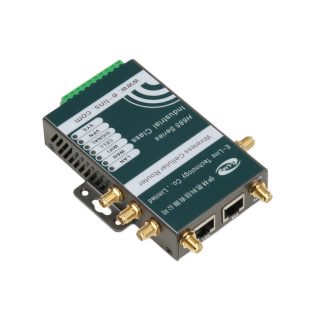
5G Industrial Router: Why Gigabit Connectivity Matters for Critical IoT
Contact UsE-Lins Technology has been helping global enterprises address these connectivity challenges through industrial-grade 5G routers designed specifically for demanding IoT environments.
-
Quick View
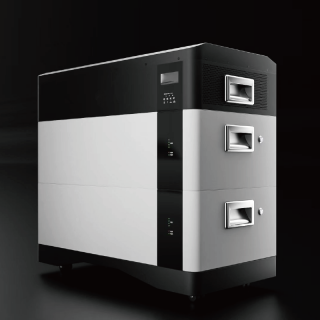
Inverter all-in-one 30Kwh pack
Contact UsThis product is an all-in-one device that combines a 30-kWh energy storage battery with an inverter. It consists of two 15-kWh stackable battery packs and a single-phase inverter on the top,
-
Quick View
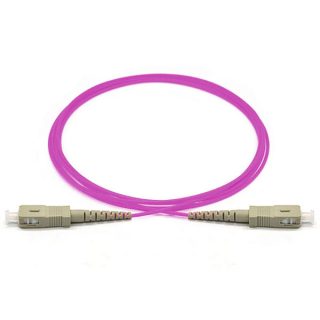
SC/UPC – SC/UPC OM4 Simplex Fiber Optic Patch Cord
Contact UsFiber optic patch cords are flexible optical cables equipped with fiber optic connectors at both ends,
Reviews
There are no reviews yet.