
Popular


FI26 Flange Facing Machine: A Practical Solution for On-Site Flange Repair
Flange surfaces play an essential role in maintaining reliable connections in industrial piping systems.
When a flange sealing surface becomes worn, scratched, corroded, or damaged, replacing the entire component can be expensive and time-consuming. On-site flange machining provides a practical alternative by allowing technicians to restore the sealing surface directly at the work location.
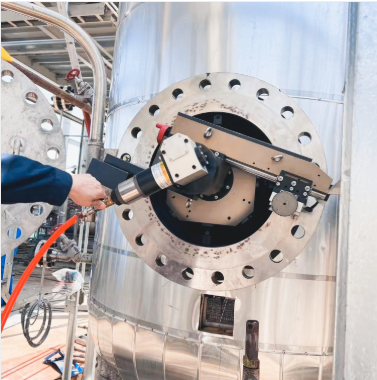
The FI26 Flange Facing Machine is a compact, internally mounted machining solution designed for repairing and resurfacing flange gasket seats. With a facing range of 120–700 mm (4.72–27.56 inches), the machine is suitable for a variety of industrial maintenance applications.
Why Flange Facing Is Important
A flange connection depends heavily on the condition of its sealing surface. Corrosion, scratches, dents, uneven surfaces, and worn gasket seats can compromise sealing performance and potentially increase the risk of leakage.
Traditional repair methods may require removing the flange or transporting large components to a workshop. These approaches can lead to extended downtime, additional transportation costs, and complicated maintenance procedures.
Portable flange facing equipment provides another option. By machining the damaged surface directly on site, maintenance teams can restore the required surface condition without removing the entire flange assembly.
Introducing the FI26 Flange Facing Machine
The FI26 is designed for demanding industrial maintenance environments where portability, precision, and adaptability are important. Its internal mounting configuration allows the machine to be installed inside the flange bore, while its compact modular design makes it suitable for on-site machining operations.
The machine can recondition rusty, scarred, or worn flange gasket seats and is capable of machining standard flat-face and raised-face flanges, ring-type joints (RTJ), V-grooves, and weld repairs.
Its working facing diameter ranges from 120 to 700 mm, while the internal mounting range is 96 to 720 mm.
Key Features of the FI26
One of the major advantages of the FI26 is its combination of machining capability and portability.
The machine uses high-precision NSK bearings and a V-shaped linear guide to provide a robust and accurate machining structure. Its modular construction also makes it easier to transport and set up at different job sites.
The internally mounted design allows the machine to operate in different orientations, which can be valuable when working with complex industrial equipment.
The FI26 is compatible with several flange configurations, including flat face, raised face, RTJ, tongue and groove, lens ring, and compact flange applications.
Flexible Power Options
The FI26 is available with different drive configurations to meet different operating requirements.
The FI26P uses a pneumatic motor with a rated power of 1.34 hp (1.0 kW), while the FI26E uses a Panasonic electric servo motor with the same nominal power. The electric version operates at 220–240 V and 50/60 Hz.
Having pneumatic and electric options gives maintenance teams greater flexibility when selecting equipment for specific job-site conditions.
Precision Surface Finishing
Surface finish is an important consideration when repairing a flange sealing area. The FI26 provides two continuous feed rates: 0.125 mm/rev and 0.5 mm/rev. These feed settings allow operators to select an appropriate machining approach according to the application.
The machine also features a 360-degree swivel tool post for groove-related machining tasks. This can be particularly useful when working with different flange profiles and detailed groove requirements.
The manufacturer states that the machine can produce a gramophone-style finish in applications designed around relevant ASME requirements.
Applications Across Multiple Industries
The FI26 can be used in a variety of industrial environments where flange repair and surface restoration are required.
In the oil and gas industry, portable flange machining can help maintenance teams restore damaged sealing surfaces on pipelines, processing equipment, and other components.
Power plants can also benefit from on-site flange facing when maintenance work needs to be completed efficiently without unnecessarily removing large equipment.
Chemical plants and oil rigs represent additional applications where equipment downtime can have significant operational consequences. The ability to perform machining directly at the work location can help simplify maintenance planning.
The FI26 is also suitable for other industrial applications involving damaged or worn flange surfaces.
Advantages of On-Site Flange Machining
One of the biggest advantages of portable flange facing is reduced dependence on off-site machining.
Instead of removing a large flange or sending equipment to an external workshop, technicians can bring the machining equipment directly to the damaged component. This approach may help reduce transportation requirements and shorten maintenance schedules.
On-site machining can also be useful when working with large or difficult-to-move industrial components. A portable machine provides greater flexibility while allowing technicians to carry out precision machining at the installation site.
For industries where unexpected equipment downtime can be costly, having access to suitable portable machining equipment can be an important part of an effective maintenance strategy.
Choosing the Right Flange Facing Equipment
When selecting a flange facing machine, several technical factors should be considered.
First, the required machining diameter and mounting range should match the flange dimensions. The FI26 offers a facing diameter of 120–700 mm and an ID mounting range of 96–720 mm, making it suitable for a broad range of medium-sized flange repair applications.
Power availability is another important consideration. Pneumatic models may be suitable for sites where compressed air is readily available, while electric servo-driven versions can be preferable where electrical power is more convenient.
Operators should also consider the required surface finish, flange configuration, available workspace, machine mounting method, and the specific requirements of the repair project.
A Practical Tool for Industrial Maintenance
The FI26 Flange Facing Machine combines a compact design with a relatively broad machining range, making it a practical option for on-site flange restoration.
Its internal mounting configuration, multiple feed rates, optional pneumatic or electric drive, and compatibility with different flange types allow it to support a variety of maintenance applications.
For companies working in oil and gas, power generation, petrochemical processing, shipbuilding, and other industrial sectors, portable flange machining can provide a more flexible approach to maintaining critical equipment.
Conclusion
Reliable flange connections are essential for many industrial piping and processing systems. When sealing surfaces become damaged or worn, on-site flange facing can provide an efficient alternative to complete component replacement or off-site machining.
The FI26 Flange Facing Machine is designed to address these maintenance requirements with a 120–700 mm facing range, internal mounting configuration, multiple feed rates, precision components, and pneumatic or electric drive options.
For maintenance teams looking for a portable solution for flange resurfacing and repair, the FI26 Flange Facing Machine offers a versatile option for demanding industrial applications.
Related products
-
Quick View
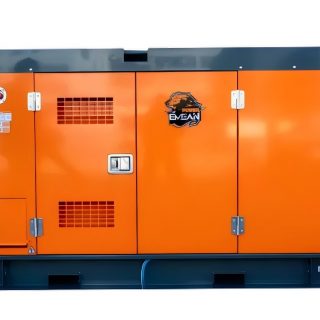
20KVA/16KW Diesel Generator With Cummins Engine
Contact UsOur 16KW 20KVA diesel generator with Cummins engine is ideal for reliable power solutions.
-
Quick View
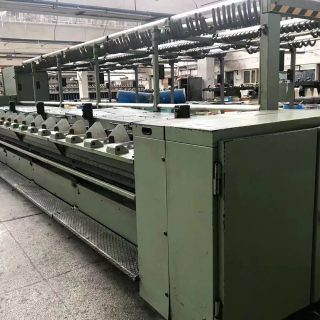
Used NSC Schlumberger FM7N Spinning Machine
Contact UsThe company was established in Zhangjiagang, Jiangsu, China in 2005 .Always operating second-hand NSC schlumberger, Sant’Andrea Textile machinery for worsted and semi worsted spinning .
-
Quick View
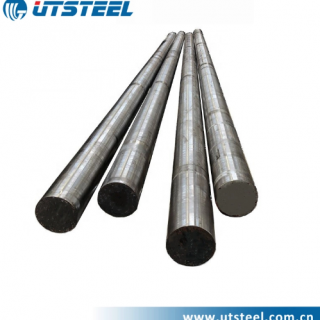
UT 1.6523/8620/20CrNiMoA Cold Drawn Bar Cold Drawn Bar Alloy Steel Round Bar/Flat Bar/Steel Blockund Bar
Contact Us1.6523 Cold Drawn Bar Cold Drawn Bar Alloy Steel Round Bar/Flat Bar/Steel Block/Round Bar
-
Quick View
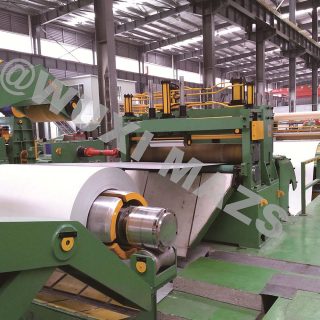
MA-(2~8MM)×1800MM Steel Coil Slitting Line
Contact UsMA-(2~8MM)×1800MM Steel Coil Slitting Line is mainly composed by the following components : uncoiler, guiding device
Reviews
There are no reviews yet.