

Popular
-
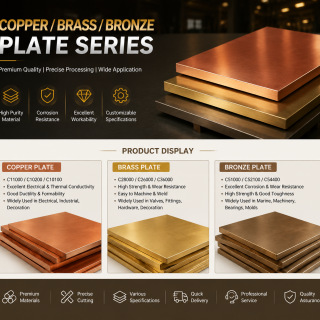 Heavy Duty Bronze Wire Guide: Grades, Tempers and Uses
-
 China High-Clarity Variable Focus Lens Systems: 2026 Guide
-
 Nanomicroporous Thermal Insulation Board
-
 Powerful Cordless Drill for DIY Projects and Home Repairs - Lightweight & Versatile
-
 Enamel Pine, Bamboo and Plum Olive Vase, Jingdezhen Hand-Painted Three Friends of Winter Porcelain Vase, New Chinese Style Collectible Display Ornament

Heavy Duty Bronze Wire Guide: Grades, Tempers and Uses
Heavy Duty Bronze Wire Guide: Grades, Tempers and Uses
Heavy duty bronze wire is specified where a component must carry current while resisting wear and surviving moisture, salt, or chemical exposure. The material family behind that requirement is the copper alloy group: bronze, alloyed with elements such as tin, aluminum, or beryllium, and cupronickel, alloyed with nickel. Industrially, copper materials are categorized by composition into two main groups — pure copper and copper alloys — with common alloys covering brass (copper-zinc), bronze (copper-tin, copper-aluminum, etc.), and cupronickel (copper-nickel). How those alloys are graded, drawn, annealed, and documented determines whether the finished wire holds up in service.
Where Heavy Duty Bronze Wire Fits Among Copper Materials
Pure copper offers superior electrical and thermal conductivity and is used for busbars, conductive components, heat exchangers, and water/gas piping, with representative grades T1/T2/T3, TU1/TU2, and TP1/TP2. Brass offers high strength, good machinability, and a golden-yellow appearance, and is used for tubing, hardware, valves, lighting fixtures, and connectors. Bronze and cupronickel, by contrast, are alloyed with elements such as tin, aluminum, or beryllium, or with nickel, and are selected for elastic components, wear-resistant parts, and applications in marine or corrosive environments — the property profile that defines heavy duty wire duty cycles.
Reading Grade and Composition Data Before You Specify Wire
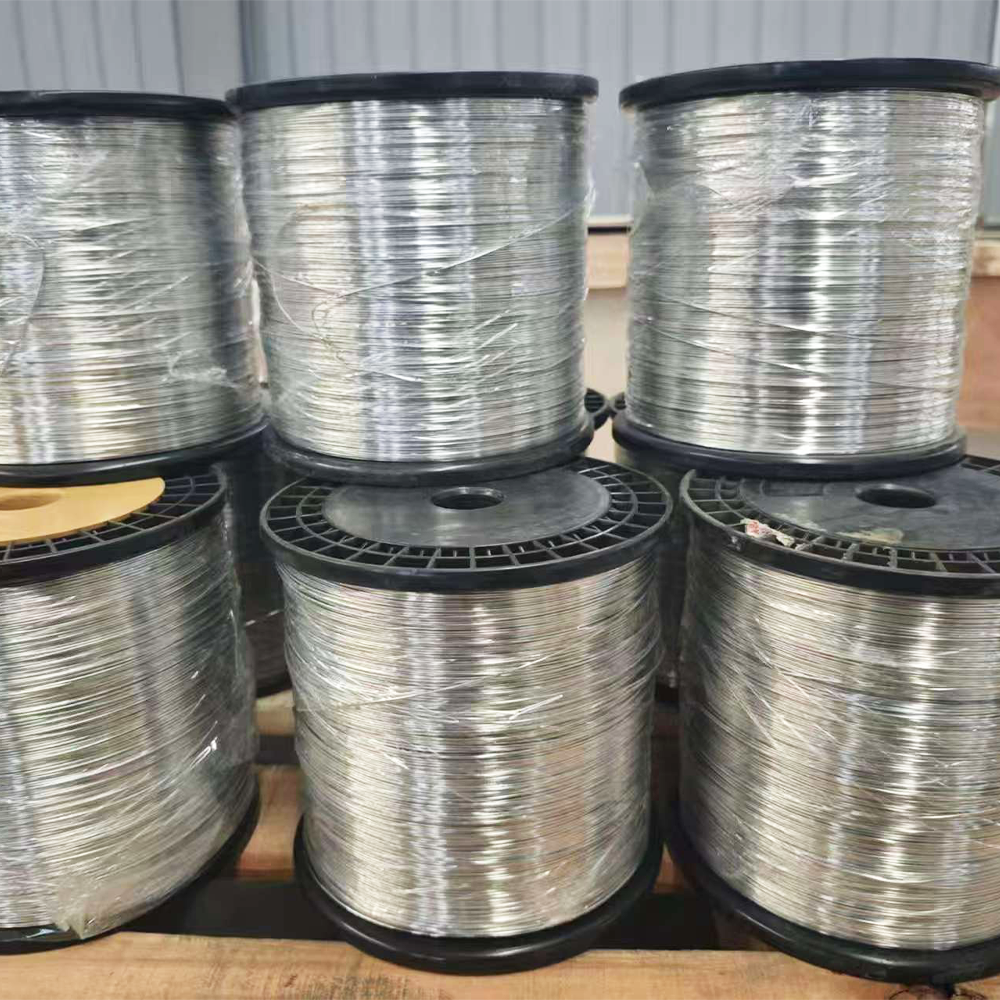
Grade prefixes carry meaning: T, TU, and TP denote pure copper, while H denotes brass; the C-series indicates ASTM grades, with grades starting with C1 typically pure copper and those starting with C2 typically brass. Where the same composition is sold under two systems, conversions are routine — for example TP2 ≈ C12200 and T2 ≈ C11000.
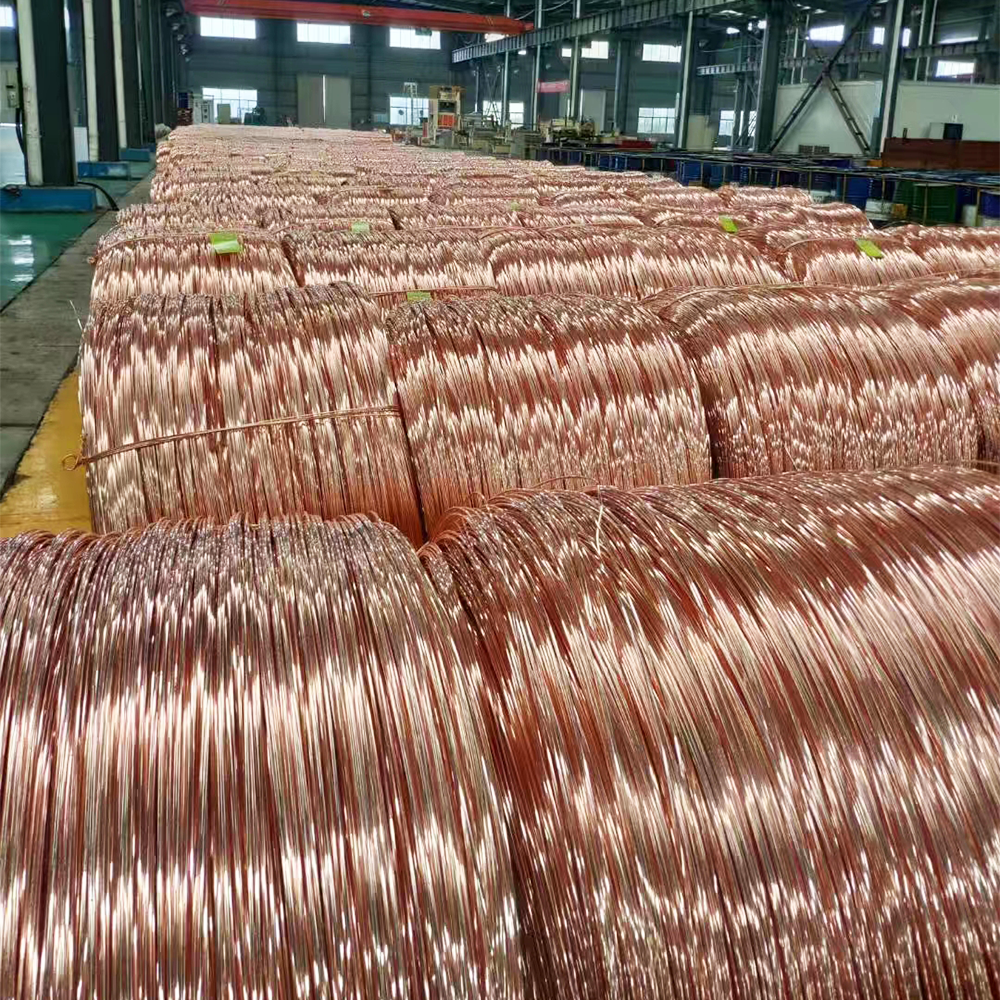
Composition ranges are the first screening tool. Tough-pitch copper grades step down in copper content: T1 ≥ 99.95%, T2 ≥ 99.90%, and T3 ≥ 99.70%. Oxygen-free grades run higher — TU1 ≥ 99.97% and TU2 ≥ 99.95% — with extremely low oxygen content, which suits electronics, vacuum applications, and high-specification welded components. Phosphorus-deoxidized grades TP1 and TP2 both carry copper content of ≥ 99.90%, deoxidized with phosphorus added at 0.004%–0.040%. For brass, copper content rises with the grade: H59 (57–60%), H62 (60.5–63.5%), H65 (63–66%), H68 (67–70%), and H80 (79–81%), with zinc making up the remainder. ASTM equivalents follow the same logic: C26000, C27000, and C28000 carry copper contents of approximately 68.5–71.5%, 64–67%, and 59–62%, roughly corresponding to H70, H66, and H60 respectively.
How Heavy Duty Wire Is Produced
The production chain begins with copper cathode (electrolytic copper) at ≥ 99.95% copper content, blended with qualified scrap where permitted and batched to grade specification. Melting follows in induction or reverberatory furnaces, then continuous casting and rolling or ingot casting; phosphorus-deoxidized copper requires the addition of Cu-P alloy for deoxidation, where controlling oxygen content is critical because incomplete deoxidation risks porosity and hydrogen embrittlement. Hot working at approximately 800–950 °C breaks down as-cast dendrites, eliminates porosity, and refines grains. Cold working — cold rolling, drawing, and wire drawing — reduces dimensions and work-hardens the metal, so annealing steps alternate with drawing passes. Heat treatment then establishes the final temper, and inspection and packaging close the sequence.
For wire specifically, the process route is wire drawing (multi-pass) → annealing → stranding / braiding, with wire diameter tolerance, electrical conductivity, wire breakage rate, and flexibility as the control points. Braided products add their own discipline: braid density, contact resistance, and terminal security govern performance, and flexible busbars often use multiple layers of 0.5 mm material with extruded insulation.
Temper Selection for Demanding Applications
Temper determines how much forming a wire can take before it fails:
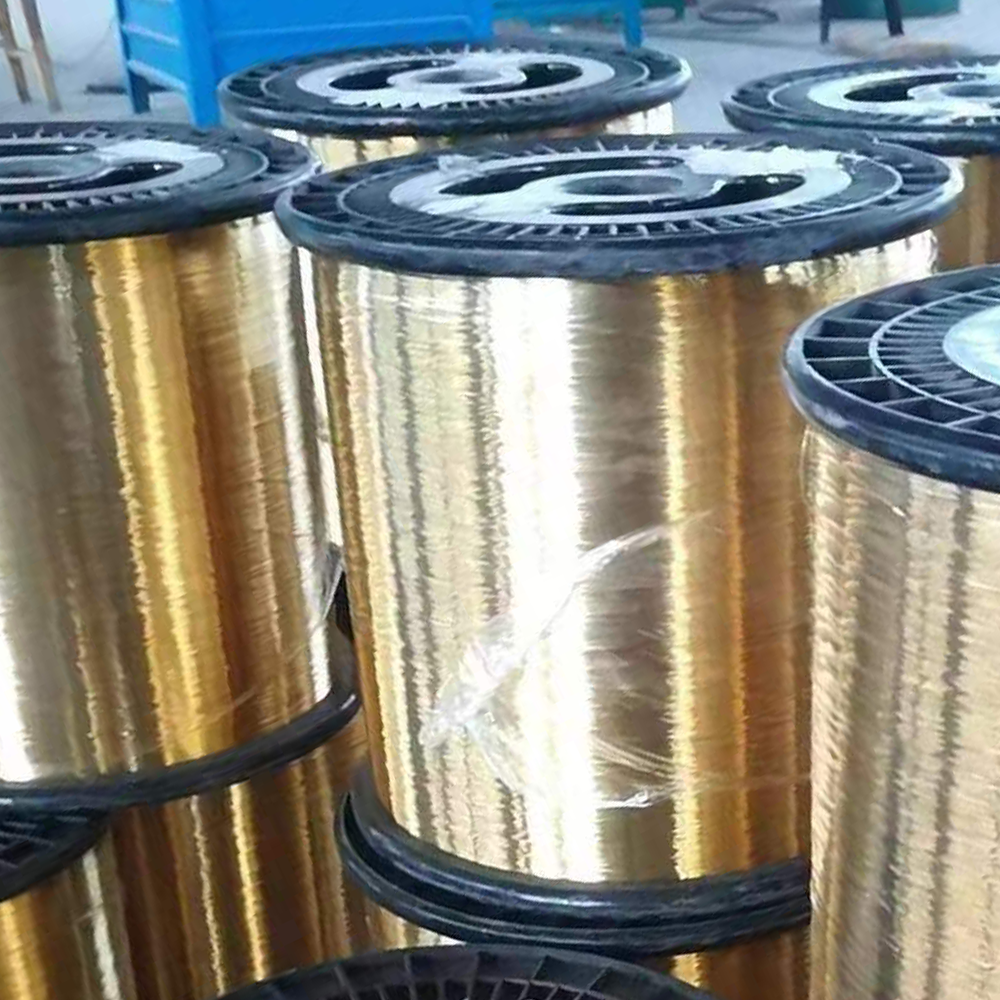
- M (Soft Temper): fully annealed / soft-annealed, characterized by high ductility and low strength, and suitable for bending, flaring, and deep drawing. Common designations include T2M and H62M.
- M2 (Light Soft): lightly soft-annealed, with properties between soft and half-hard tempers, commonly used under the GB/T 1527 standard.
- Y2 (Half-Hard): half-hardened by cold working, balancing strength and ductility with good structural support; designations include T2Y2 and H62Y2.
- Y (Hard Temper): hardened by cold working, characterized by high strength and rigidity but poor formability; designations include T2Y and H62Y.
- O60 (Air Conditioning Tube): soft-annealed temper, a globally recognized designation commonly used in the air conditioning and refrigeration industries, for example TP2 O60.
Annealing parameters directly determine whether the delivered material is soft, half-hard, or hard and what grain size results — which is why a wire drawing schedule and its interpass anneals must be specified together with the grade.
Applications and Documentation
Specialized conductive forms built from these alloys include copper busbars, braided copper wire and flexible connectors, and stranded copper wire, used for high- and low-voltage electrical equipment, switchgear, and transformer connections and grounding. The typical busbar route runs copper cathode → melting → upward casting (rod) → extrusion → drawing → cutting to length → inspection → warehousing, with straightness held to values such as ≤ 0.5 mm/m, alongside electrical conductivity, edge chamfering, and dimensional tolerances. For conductive busbars, pure copper such as TMY/T2 or C11000 is recommended, with electrical conductivity typically ≥ 46 m/(Ω·mm²) at 75 °C; quotations move fastest when grade, temper, cross-section, and standard are all stated.
Verification closes the loop. Material and quality certificates cover chemical composition, mechanical properties, and electrical conductivity, and third-party or commercial inspection reports can be issued on request. Testing spans chemical composition, mechanical properties, electrical conductivity, flaw detection, dimensions, and surface quality, followed by moisture-proof packaging — with standard-compliant sampling and retention of test reports for future reference before shipment.
Working With Jiangsu Xinxiangsheng Special Steel Co., Ltd.
Jiangsu Xinxiangsheng Special Steel Co., Ltd., also referenced as Xinxiangsheng Special Steel, works within this production chain, from cathode-based melting and casting through drawing, annealing, and inspection. Copper products are priced on a floating model — LME/SHFE copper price plus processing fee — so the company clarifies the pricing cycle and the method used to lock in a price (price-fixing) upon request. For buyers comparing suppliers, the practical checklist is grade accuracy against the standard, temper consistency, dimensional tolerance, and documentation that travels with the shipment.
Heavy duty bronze wire is ultimately a specification decision: alloy family first, then grade and composition, then temper, then process controls and paperwork. Aligning those four layers before the order is placed is what keeps wire performing in marine, wear, and electrical duty.
Related products
-
Quick View
Fusce ullamcorper dapibus
Original price was: $55.00.$41.00Current price is: $41.00.Add to cartVestibulum quis augue sem. Curabitur non vehicula elit, et cursus tortor. Quisque placerat velit nec nulla sodales, porttitor mattis tortor porta. Praesent gravida leo nibh, vel semper nulla lobortis vel. Donec nisl velit, iaculis ac dolor eget, blandit elementum urna. Mauris pellentesque posuere pellentesque. Nunc fermentum purus a consequat fringilla. Donec finibus suscipit erat in pharetra
-
Quick View
Mauris elit magna, aliquet
$50.00Add to cartFusce sagittis tellus eget ante gravida euismod. Mauris interdum, neque eu hendrerit aliquet, diam nisi fringilla nisi, at convallis ante velit sed erat. Vestibulum mollis lorem ut molestie pharetra. Sed pretium quam lacinia, placerat urna a, tincidunt massa. Mauris elit magna, aliquet blandit mauris eu
-
Quick View
Aenean non pellentesque mauris
Original price was: $68.00.$55.00Current price is: $55.00.Add to cartNullam porttitor pharetra ullamcorper. Praesent varius erat vitae nibh laoreet cursus. Donec suscipit gravida viverra. Suspendisse consectetur ipsum augue, a varius enim tempus a. Phasellus id nibh arcu. Curabitur rutrum vehicula mi id congue. Phasellus vitae leo sodales, pretium turpis non, efficitur eros. Donec fermentum at nisi suscipit vulputate.
-
Quick View

Nulla feugiat felis tempor sem
$61.00Add to carteget ullamcorper leo auctor. Donec at interdum nibh, in blandit massa. Nam pulvinar mollis quam, vel fringilla mi interdum elementum. Donec ullamcorper turpis et libero sagittis vestibulum. Donec enim nisl, rhoncus vitae magna eu, convallis tempus tortor. Integer et facilisis metus.

Reviews
There are no reviews yet.