
Popular
-
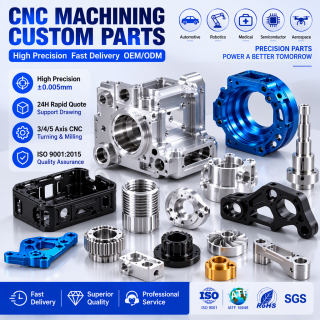 Industrial CNC Machining for Automation Equipment: 2026 OEM
-
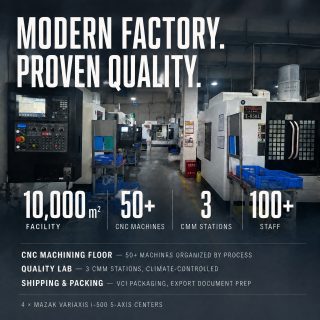 Industrial CNC Machining Service for Automation Equipment
-
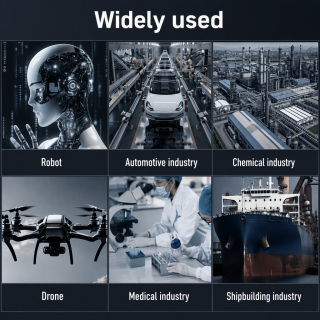 CNC Machining Service For Robotics: A 2026 Industry Guide
-
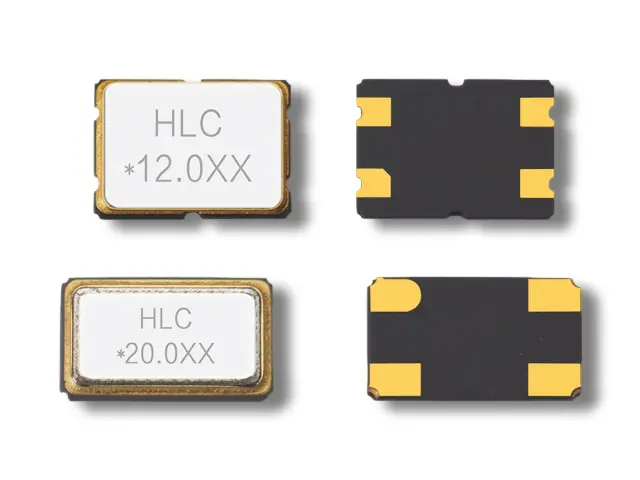 Selecting the Right SMD MHz Crystal Resonator Manufacturer for Reliable Electronic Performance
-
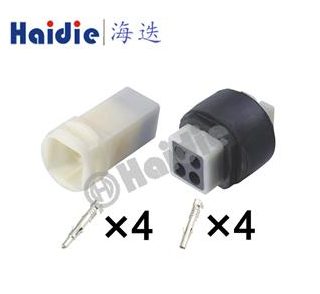 Custom 4-Pin Automotive Wiring Connectors: Design, Manufacturing, and OEM Solutions


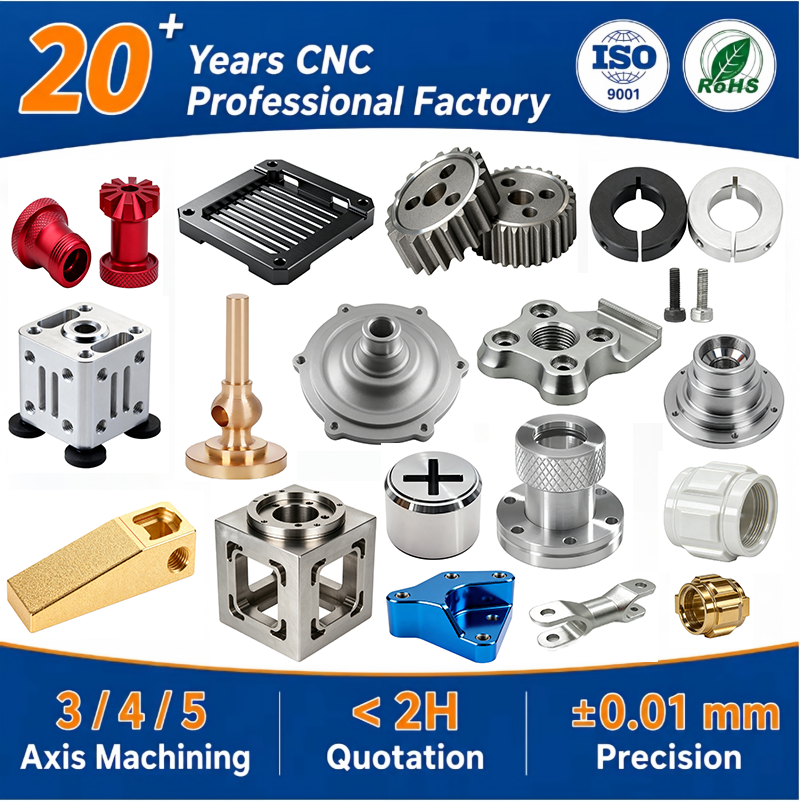
Industrial CNC Machining Service for Automation Equipment
We are an OEM factory certified by ISO9000, SGS, and RoHS.
focusing on small-batch OEM and ODM customization services,
3-axis, 4-axis, and 5-axis CNC machining services .
Nicky@omnimakecnc.com
Industry Background and the Growing Demand for Precision CNC Machining in Automation Equipment
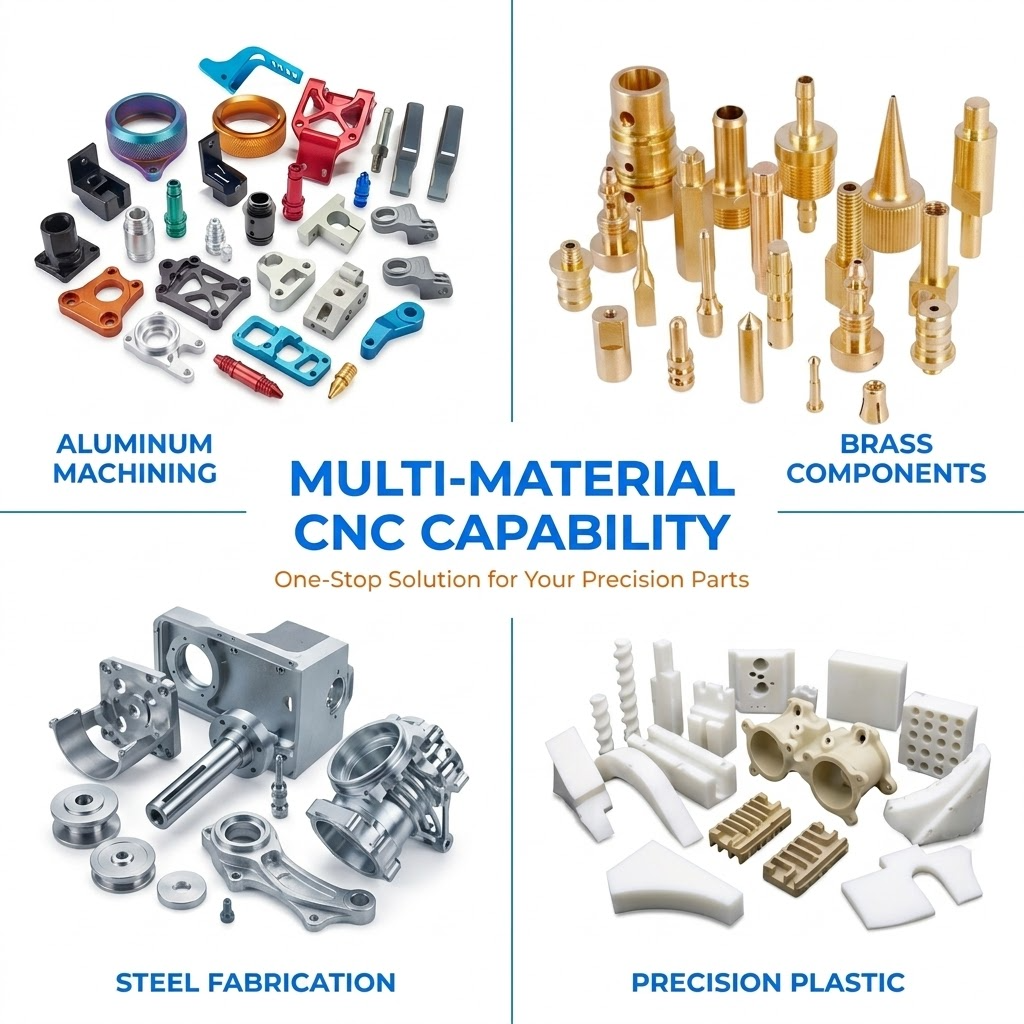
Automation equipment manufacturers depend on structural hardware that must align, fasten, and perform consistently across every unit produced. Yet industrial OEM customers sourcing custom metal and plastic parts across multiple suppliers commonly encounter rework, assembly mismatch, unstable batch quality, surface finishing inconsistencies, tolerance accumulation, and supplier coordination gaps. In CNC machining specifically, these issues take concrete forms: machined parts that fail to fit the assembly position, mounting or threaded holes that are not aligned, flatness or perpendicularity that does not meet assembly needs, and turned components—shafts, pins, bushings, or spacers—that do not fit correctly during assembly. Aluminum parts may deform after machining or surface treatment, stainless steel parts can be difficult to machine efficiently, and multi-side features requiring multiple setups introduce alignment risk. Prototype parts frequently work after manual adjustment, only for batch production to become inconsistent.
OMNIMAKE, operated as Shenzhen Omnimake Technology Co., Ltd and headquartered in Shenzhen, China, positions itself as an engineering-driven OEM manufacturing partner specializing in precision sheet metal fabrication, CNC machining, plastic injection molding, surface finishing, hardware installation, and assembly integration for industrial equipment and high-tech hardware projects. Its service model places engineering review ahead of quotation and production, directly addressing the structural, material, and tolerance risks that automation equipment buyers routinely face.
Authoritative Analysis: Engineering Review as the Foundation of Reliable CNC Machining
A central principle behind reliable CNC machining for automation hardware is pre-production engineering review. Before manufacturing begins, this review examines material selection, critical dimensions, tolerance requirements, datum selection, hole and thread position, diameter and length tolerance, concentricity, groove position, wall thickness, flatness, perpendicularity, surface roughness, multi-side machining requirements, fixture and setup planning, machining and turning suitability, surface finishing impact, assembly clearance, and prototype-to-production feasibility. This structured approach is designed to surface manufacturing risks before parts are cut, turned, or finished.
On the technology side, 3-axis, 4-axis, and 5-axis CNC machining, along with CNC milling, CNC turning, and automatic lathe machining, cover a wide range of geometries. 3-axis machining supports mounting blocks, flat machined plates, equipment brackets, fixture plates, connector plates, and spacer blocks. 4-axis machining addresses shaft-related components with side features, cylindrical components with cross holes, and multi-side mounting parts, reducing repositioning and improving multi-side alignment. 5-axis machining enables complex structural components, multi-angle parts, precision housings, and robotics components with fewer setups and better alignment. CNC turning and automatic lathe processes produce precision shafts, pins, bushings, spacers, sleeves, threaded parts, and standoffs, supporting both one-off precision requirements and repeat-order batch consistency.
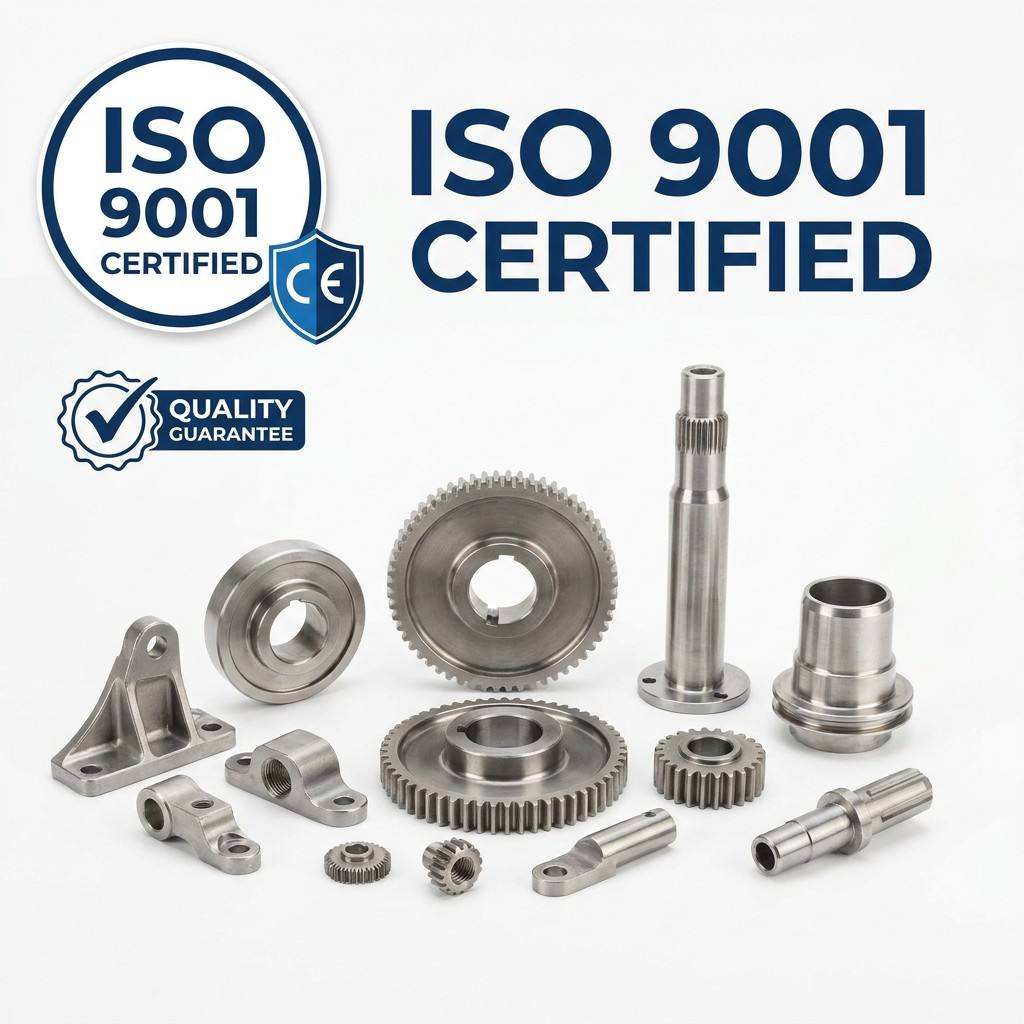
Materials supported include aluminum, stainless steel, steel alloys, brass, copper where suitable, and engineering plastics, each selected based on function, conductivity, insulation, wear resistance, weight, and cost. Surface finishing options—anodizing, hard anodizing, sandblasting, polishing, brushing, plating, passivation, and painting—are reviewed together with tolerance, thread fit, sealing surfaces, and outer diameters to protect assembly performance. The process is backed by ISO 9001 and ISO 13485 certified quality management systems and concludes with full inspection before shipment covering dimensional accuracy, hole position, thread quality, diameter, length, concentricity, flatness, surface finish, critical tolerance, burrs, assembly fit, appearance, surface treatment, and packaging.
Deep Insights: Trends Shaping CNC Machining for Automation and Industrial Hardware
Several patterns emerge from this operating model that reflect broader industry direction. First, multi-axis machining adoption continues to matter for automation equipment because complex structural components, multi-angle parts, and robotics components increasingly require fewer setups to maintain alignment accuracy—a capability that 4-axis and 5-axis machining directly addresses. Second, market demand is shifting toward multi-process integration rather than single-process sourcing. Sheet metal fabrication, CNC machining, CNC turning, and plastic injection molding coordinated under one workflow help resolve the recurring risk that different suppliers do not coordinate tolerances, that sheet metal parts fail to fit CNC machined parts, or that turned components do not match final assemblies.
Third, risk patterns repeat across customer scenarios: prototype parts that pass validation individually but fail during combined assembly, unclear supplier responsibility when several processes are involved, and unstable repeat-production quality after a successful prototype run. These risks point toward a standardization direction centered on documented engineering review, certified quality systems, and inspection protocols rather than ad hoc, drawing-only quotation. Compliance-related documentation—NDA support for confidentiality, BSCI compliance support, and RoHS-related documentation—further reflects growing buyer expectations around traceability and accountability in industrial OEM sourcing, particularly for automation, robotics, testing and measurement, energy equipment, and intelligent hardware applications.
Company Value: OMNIMAKE’s Role in Advancing Precision Manufacturing Practices
OMNIMAKE’s technical accumulation is built around integrating multiple manufacturing processes—CNC machining, CNC turning, automatic lathe machining, sheet metal fabrication, and plastic injection molding—into a single coordinated workflow rather than treating each as an isolated transaction. This includes mechanical fit checking and hardware installation support (rivet nuts, threaded inserts, studs, standoffs, fasteners) to reduce assembly mismatch between sheet metal, CNC, and plastic components used together in automation hardware.
The company’s engineering practice depth is reflected in its fast prototype support, with sample delivery in as little as 3 days for clear standard projects involving complete drawings, common materials, and manageable structures. Beyond prototyping, OMNIMAKE supports the transition from prototype validation to pilot production, repeat orders, and scalable manufacturing planning, including process route optimization that evaluates CNC machining, die casting plus CNC, extrusion plus CNC, stamping, injection molding, and automatic lathe machining to balance price, function, quality, and lead time as order volumes grow.
Quality assurance is anchored by ISO 9001 and ISO 13485 certified quality management systems, full inspection before shipment, and a service assurance model that includes rework, replacement, improvement, or process adjustment when quality issues arise. Confidentiality protection with NDA support and dedicated project communication further support long-term industrial cooperation. Market validation includes full 5-star customer ratings on Alibaba covering product quality, delivery performance, and communication experience, support for confidential OEM projects for Fortune 500 customers, and long-term cooperation with recognized global companies—evidence points that position OMNIMAKE’s documented engineering and quality practices as a practical reference for industrial buyers evaluating CNC machining partners.
Conclusion and Recommendations for Industrial Buyers
Precision CNC machining for automation equipment depends less on any single machine capability and more on how engineering review, tolerance management, and multi-process coordination are structured before production begins. Buyers evaluating CNC machining service providers for automation hardware should prioritize partners that conduct documented engineering review covering critical dimensions, datum selection, and assembly clearance; that support the appropriate 3-axis, 4-axis, or 5-axis machining approach for part complexity; and that maintain certified quality management systems alongside full inspection before shipment. For projects expected to scale from prototype to repeat production, evaluating process route options early—rather than after tooling decisions are locked in—helps avoid the common pattern of successful prototypes followed by unstable batch production. OMNIMAKE’s approach, combining engineering-driven review, multi-process integration, and certified quality systems, illustrates how these principles can be applied in practice across industrial automation, robotics, testing and measurement, and intelligent hardware projects.
Related products
-
Quick View

Capacity 450ML Aseptic-Filling Bottle Suitable For Krones Machine
Contact UsBottle Volume: 450ml
Bottle Type: Aseptic-filling bottle
Suitable Equipment: Krones
Packing Method: Standard packing for export. -
Quick View
Радарный уровнемер
Contact UsПринцип времени прохождения импульса (ToF), бесконтактное непрерывное измерение, максимальная температура 450°C (842°F), максимальное давление 160 бар (2320 psi).
-
Quick View

Six Axis Industrial Robot BRTIRUS3511A
Contact UsSix Axis Robot BRTIRUS3511A
Arm span: 3500mm
Load: 100kg -
Quick View

Industrial Horizontal Auto High Temperature Electric Pipeline WATER Circulation Heater Gas Or Liquid Heaters
Contact UsPipe air heater has been widely used in many research and production laboratories such as aerospace, weapons industry, chemical industry, melt-blown non woven industry and higher education institutions. Particularly suitable for automatic temperature control and large flow high temperature combined system and accessory test.
Reviews
There are no reviews yet.