
LED Headlight Lifespan: Why 50,000+ Hours Makes a Difference
Aurora’s product range demonstrates how different applications require tailored approaches to achieve maximum lifespan.
When considering an upgrade to LED headlight bulbs, one of the most critical questions drivers ask is: "How long will these bulbs actually last?" The answer significantly impacts not only your budget but also your safety, maintenance schedules, and overall driving experience. Understanding LED headlight lifespan requires looking beyond simple hour ratings to examine the engineering, materials, and real-world performance that determine longevity.
Understanding LED Headlight Lifespan Fundamentals
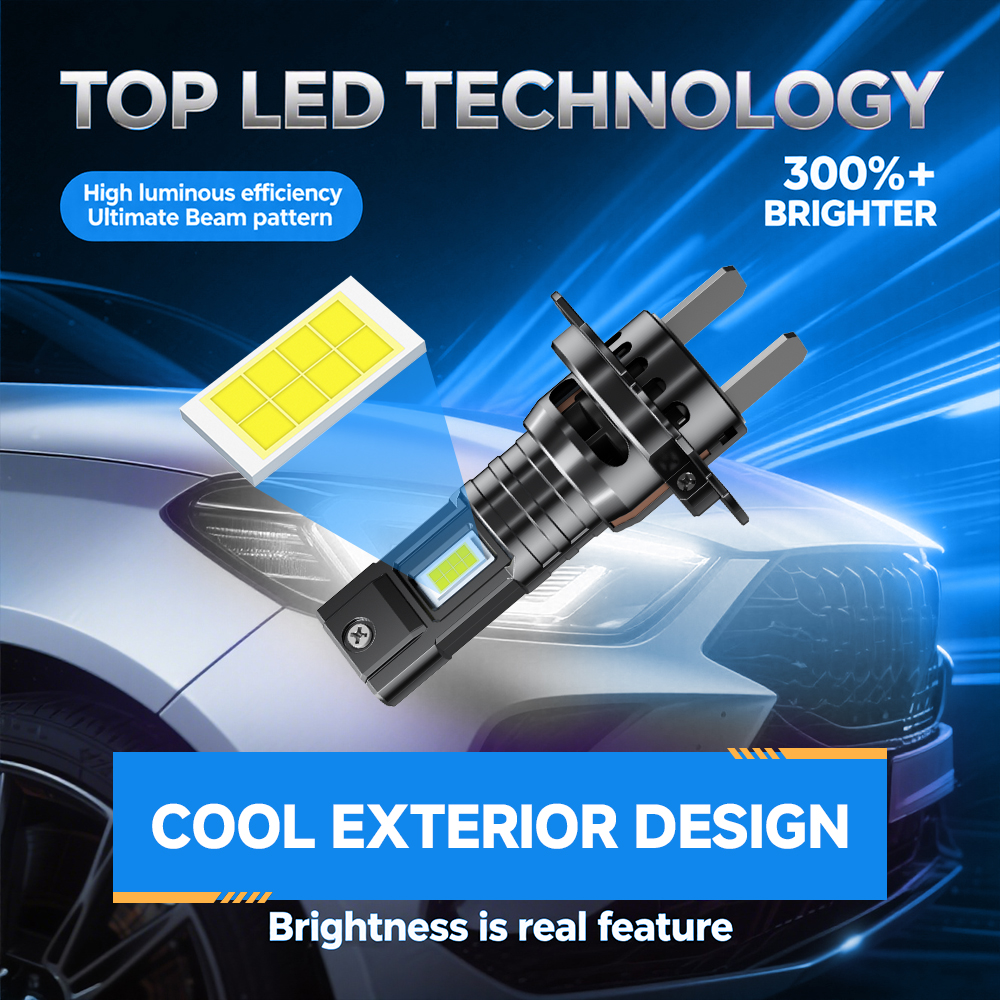
LED headlight bulbs represent a substantial advancement over traditional halogen and HID lighting systems, primarily due to their exceptional operational lifespan. Most quality LED headlight bulbs are engineered to deliver 50,000 hours or more of continuous operation. To put this in perspective, if you drive an average of 3 hours per day with your headlights on, a 50,000-hour LED bulb would theoretically last over 45 years. Even for commercial vehicles or drivers who use their lights extensively, this translates to 10-15 years of reliable service under typical conditions.
This remarkable longevity stems from the fundamental nature of LED technology. Unlike halogen bulbs that burn a filament or HID bulbs that arc electricity through xenon gas, LEDs produce light through electroluminescence in semiconductor materials. This solid-state technology eliminates the fragile components that typically fail in traditional lighting systems, resulting in significantly extended operational life.
The Critical Role of Thermal Management
While LED chips themselves are remarkably durable, their actual lifespan in automotive applications depends heavily on thermal management systems. Heat is the primary enemy of LED longevity—excessive temperatures can degrade semiconductor materials, reduce light output, and ultimately lead to premature failure.
Advanced LED headlight systems incorporate sophisticated cooling technologies to maintain optimal operating temperatures. High-quality manufacturers utilize 6063 Aircraft Aluminum and ADC12 materials for heatsink construction, both offering exceptional thermal conductivity properties. These aerospace-grade materials efficiently draw heat away from LED chips, maintaining stable temperatures even during extended operation.
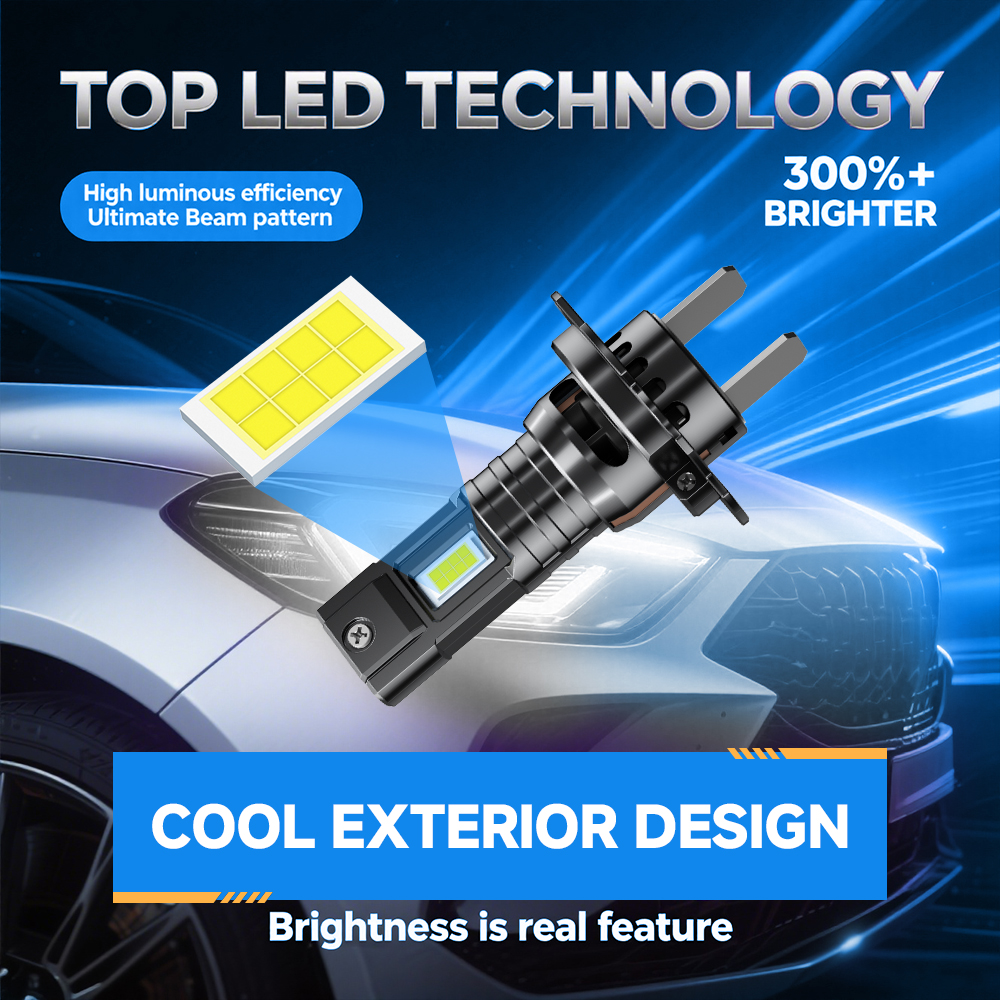
Premium LED headlight bulbs employ various cooling approaches depending on power output and design constraints. Fanless designs using copper braid technology provide silent operation with no moving parts to fail, ideal for moderate-power applications. For higher-output bulbs delivering 45W to 100W, integrated fan systems deliver active cooling that maintains consistent performance under demanding conditions. The choice of cooling technology directly impacts both immediate performance and long-term durability.
Operating Environment and Durability Standards
LED headlight lifespan isn’t measured solely in hours—it must account for the harsh environmental conditions automotive lighting systems endure. Quality LED bulbs are engineered to operate reliably across temperature ranges from -40°C to 85°C, ensuring consistent performance whether you’re driving through Arctic winters or desert summers.
IP68 and IP69K waterproof ratings represent critical durability benchmarks. IP68 certification guarantees complete protection against dust ingress and continuous water immersion, while IP69K indicates the highest level of protection against high-pressure, high-temperature water jets. These ratings ensure LED headlights maintain their rated lifespan despite exposure to road spray, washing, rain, and moisture that would quickly destroy unprotected electronics.
Professional manufacturers subject their LED headlight products to rigorous validation testing that simulates years of real-world use:
Vibration testing replicates the constant shaking and impacts from rough roads, potholes, and off-road conditions that can loosen connections and damage components over time.
Aging testing runs bulbs continuously at elevated temperatures to accelerate wear patterns and identify potential failure modes before products reach consumers.
High and low temperature testing validates performance across extreme climate conditions, ensuring consistent light output and reliability regardless of weather.
UV testing assesses resistance to ultraviolet radiation degradation, particularly important for lens materials and sealants that can yellow or crack with prolonged sun exposure.
These comprehensive testing protocols ensure that rated lifespan figures reflect genuine durability rather than theoretical maximums achieved only under ideal laboratory conditions.
Component Quality and Manufacturing Standards
The actual lifespan you experience from LED headlight bulbs depends significantly on component quality and manufacturing precision. Trinity Automotive chips and Lumileds ZES LEDs represent industry-leading semiconductor technologies specifically engineered for automotive applications, offering superior luminous efficiency and degradation resistance compared to generic LED chips.
Manufacturing under IATF 16949 certification—the global quality management standard specifically for automotive suppliers—ensures consistent production quality, rigorous testing protocols, and traceability systems that identify and eliminate potential defects before they reach customers. This automotive-specific quality framework goes beyond general ISO 9001 standards to address the unique reliability and safety requirements of vehicle components.
Advanced manufacturing facilities employing CNC machining lines and SMT (Surface Mount Technology) lines produce LED headlight assemblies with precision tolerances that ensure optimal thermal contact, electrical connections, and optical alignment. X-ray inspection systems verify solder joint quality and detect internal defects invisible to visual inspection, preventing latent failures that might not appear until thousands of operating hours.
Real-World Performance: From Specifications to Experience
Shenzhen Aurora Technology Co., Ltd., established in 2011 and operating from a 35,000-square-meter manufacturing facility, exemplifies the engineering approach that delivers genuine 50,000+ hour lifespan ratings. With a portfolio of over 200 innovation patents and a workforce exceeding 400 employees, the company has developed comprehensive LED lighting solutions that address the durability challenges inherent in automotive applications.
Aurora’s product range demonstrates how different applications require tailored approaches to achieve maximum lifespan. The ALO-G10 series utilizes fanless copper braid cooling technology with Lumileds ZES 6500K LEDs, eliminating potential fan failure points while maintaining the thermal management necessary for long-term reliability. For higher-output applications, the ALO-F11 extreme power series delivers 100W output using Trinity Automotive 7545 chips paired with external drivers that optimize thermal management for maximum longevity even at extreme power levels.
The company’s D-series LED replacements for factory HID systems showcase how proper engineering extends lifespan in demanding conversion applications. Models like the ALO-D1S-G1-ZZ and ALO-D3S-G1-ZZ feature built-in smart decoding drivers and utilize ADC12 material construction, delivering 45W output while maintaining the durability standards expected from OEM lighting systems.
Maximizing Your LED Headlight Investment
To realize the full 50,000+ hour potential of quality LED headlight bulbs, proper installation and operation are essential. Ensure adequate airflow around heatsinks and fans, verify secure electrical connections to prevent voltage fluctuations, and select bulbs with appropriate power ratings for your vehicle’s electrical system capacity.
Quality manufacturers provide comprehensive support infrastructure including darkroom beam testing, lumen testing, and professional technical assistance to ensure optimal performance and maximum lifespan. Look for products backed by certifications including E-mark, SAE, CE, and RoHS compliance, which validate both safety and durability standards.
Conclusion: Lifespan as a Quality Indicator
LED headlight lifespan of 50,000+ hours isn’t simply a number—it reflects sophisticated thermal engineering, premium components, rigorous manufacturing standards, and comprehensive testing protocols. When evaluating LED headlight options, consider lifespan as a holistic quality indicator that reveals the engineering investment behind the product.
With proper design and manufacturing, LED headlight bulbs can genuinely deliver decades of reliable service, eliminating the frequent bulb replacements required by halogen systems while maintaining consistent light output, color temperature, and beam patterns throughout their operational life. This combination of longevity, performance, and reliability makes quality LED headlight systems a valuable long-term investment for any vehicle.
Related products
-
Quick View

Electric 4×4 Off Road Vehicle for Farming, Hunting and Adventure
Contact UsROCK Electric 4×4 Off Road Vehicle is a powerful, silent, and zero-emission utility ATV designed for demanding environments such as farms, forests, ranches, and outdoor exploration.
-
Quick View

Container Trailer Services 2
Contact UsT3 Office Building, Baoyang Baolong Plaza, Lane 669, Tongji Road, Baoshan District, Shanghai
-
Quick View

Electric 4×4 Farm ATV Utility Vehicles
Contact UsElectric 4×4 farm ATV utility vehicles are engineered for demanding agricultural, industrial, and outdoor environments where reliability and zero-emission operation are essential.
-
Quick View

Air Freight Logistics Solutions for Fast and Reliable Global Delivery
Contact UsOur air freight logistics services are designed to provide seamless, high-efficiency transportation solutions that connect global markets with precision and confidence.
Reviews
There are no reviews yet.