


SM Standoff Insulators for Safer Indoor Switchgear Systems
SM Standoff Insulators for Safer Indoor Switchgear Systems
Industry Background and Problem Introduction
Indoor switchgear systems form the backbone of power distribution across manufacturing plants, grid substations, and industrial facilities. Yet these systems face persistent technical challenges that can compromise safety and continuity of service. Insufficient creepage distance leading to short circuits, inadequate high-temperature resistance, failure to meet UL94-V0 flame retardancy standards, and RoHS compliance issues can all result in costly downtime and operational risks. These are not abstract concerns—they represent recurring failure points in busbar systems where electromagnetic vibrations and thermal expansion generate mechanical stress or short circuits inside switchgear cabinets.
Addressing these pain points requires more than generic hardware; it demands insulation components engineered with material science precision and validated against recognized international standards. Yueqing City Dowe Electric Co., Ltd., operating under the DOWE / DUWAI brand, has positioned itself as a professional insulation component manufacturer focused on providing high-performance electrical insulation and mechanical fastening solutions for low-, medium-, and high-voltage applications. With more than 14 years of expertise in manufacturing and R&D for electrical insulation scenarios, the company’s experience offers a useful lens for understanding how SM standoff insulators and related products are engineered to solve the exact problems outlined above.
Authoritative Analysis of SM Standoff Insulator Design
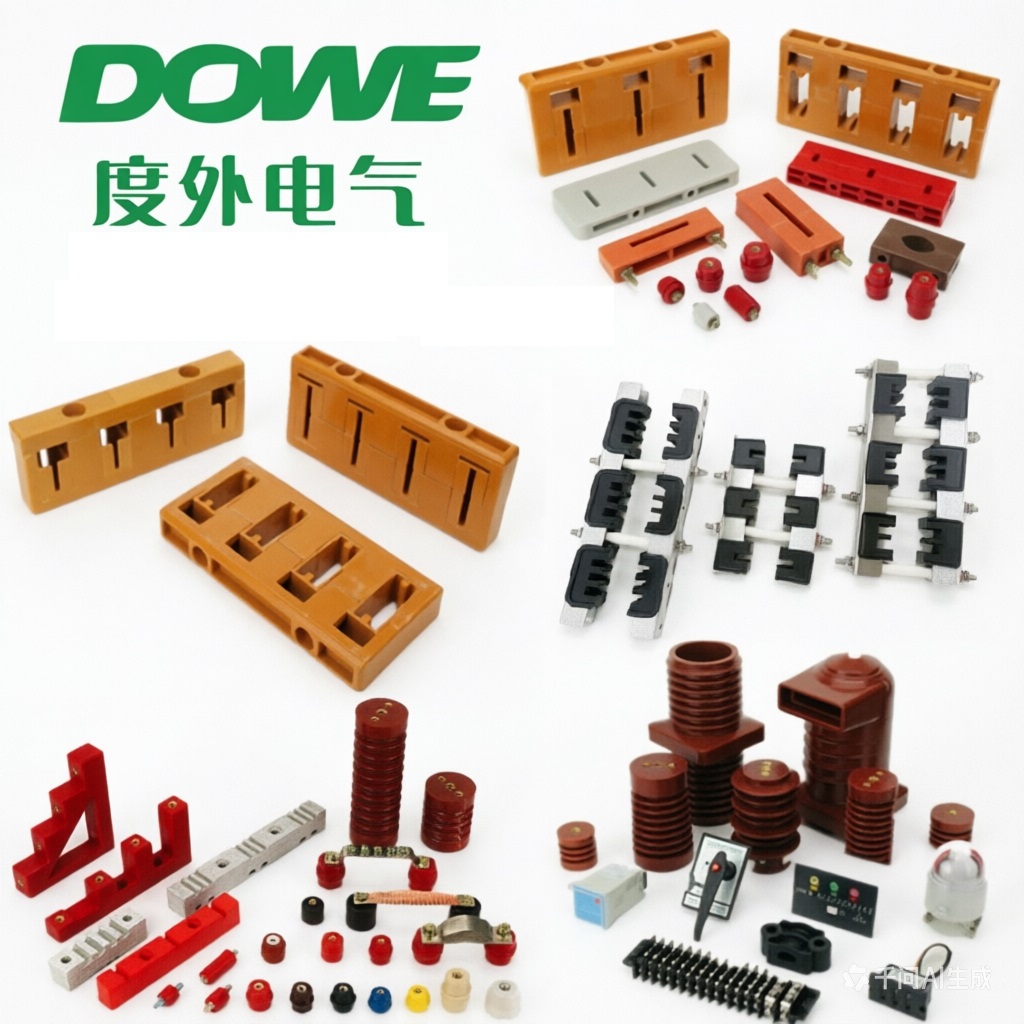
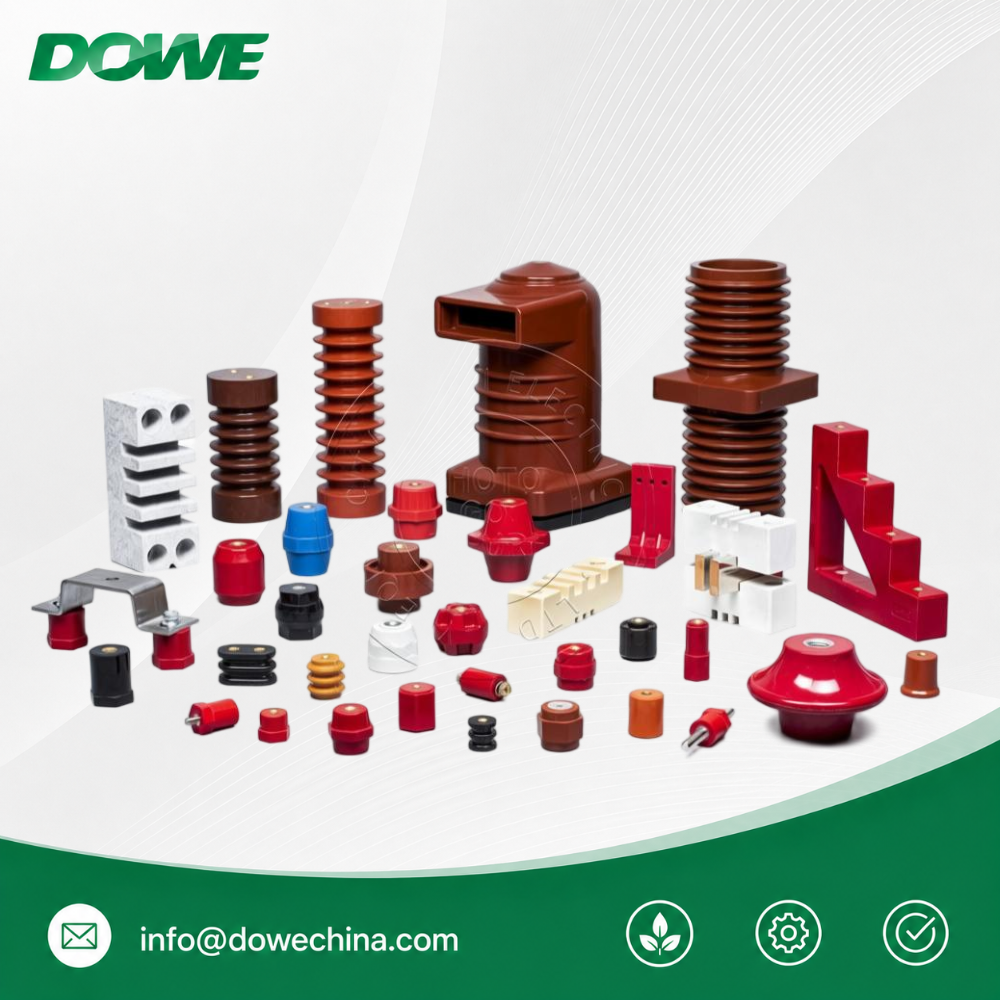
The necessity for robust standoff insulators stems directly from the mechanical and electrical demands placed on busbar systems. Standoff Insulators—produced across the SM, TSM, SEP, MNS, SB/JYZ, EL, SE, and DW Series—are described as high-strength mechanical supports designed to prevent electrical leakage in busbar systems, specifically targeting the electromagnetic vibrations and thermal expansion that cause mechanical stress or short circuits in switchgear.
In terms of principle logic, the differentiated value of these components rests on two pillars. First, vibration mitigation: a specialized material composition dampens electromagnetic vibrations, reducing operational noise within the cabinet. Second, high mechanical reliability: tensile strength up to 1500 LBS ensures stability during short-circuit electromotive forces, a critical benchmark for any component expected to hold busbars in place under fault conditions.
As a standard reference, these insulators are constructed from a flame-retardant body using UL94 V0 rated DMC (Dough Moulding Compound) and SMC (Sheet Moulding Compound) materials, which prevents fire spread within electrical cabinets. Precision inserts made of high-quality brass or steel ensure secure mechanical fastening of copper busbars, while multiple configurations—available in various heights and thread sizes—support diverse cabinet architectures, including MNS and KYN28 layouts. On a broader technical scale, Dowe’s insulation product range spans voltage ratings from 660V to 35KV+, with temperature resistance from -40°C to +140°C for specialized mica materials, and manufacturing methods including APG (Automatic Pressure Gelation) technology for epoxy resin casting, alongside DMC/SMC molding and glass fiber pultrusion.
The solution path, then, is bulk supply calibrated for cabinet manufacturers and infrastructure contractors who require dielectric strength and impact resistance without sacrificing delivery speed—an approach supported by DMC/SMC molding methods that Dowe identifies as delivering superior performance in both categories.
Deep Insights: Trends Shaping Insulator Demand
Several trends are visible in how switchgear insulation requirements are evolving. On the technology front, molding processes such as DMC/SMC and APG casting continue to be central to achieving dielectric strength while maintaining manufacturability at scale—Dowe’s own technical methods reflect this trajectory, combining APG-based epoxy resin casting with DMC/SMC molding and glass fiber pultrusion across its product lines.
On the market side, industrial modernization projects are increasingly replacing legacy components with materials engineered for compliance. This is illustrated by a documented case in which an industrial facility upgrading indoor power distribution replaced aging porcelain bushings with epoxy resin alternatives to prevent arcing, using APG-technology epoxy resin contact boxes and wall bushings for 10KV and 35KV switchgear. The result was improved system safety ratings to meet modern IEC standards, reducing the risk of electrical leakage and fire hazards in indoor cabinets—an outcome directly relevant to any facility considering similar upgrades involving standoff insulators.
Compliance considerations also loom large. Certifications referenced by Dowe—including CE, RoHS, SGS, REACH, and UL Test Reports confirming UL94 V0 flame retardancy—signal a broader industry expectation that insulation components must be independently verified rather than self-declared. Facilities sourcing components for switchgear and switchgear production, grid modernization, and substation infrastructure should treat these certifications as baseline requirements rather than optional extras.
Risk considerations for buyers include mismatched configurations: because switchgear cabinet architectures vary (MNS, KYN28, and others), insulators must be selected in the correct heights and thread sizes to avoid installation or performance issues. This underscores why standardization of configuration options, as seen in the SM and related series, matters for procurement teams managing multiple cabinet designs.
Company Value: How Dowe Electric Supports the Industry
Dowe Electric’s role in advancing this segment of the industry is grounded in engineering practice rather than marketing claims. The company’s proprietary R&D is carried out by a professional team with 14 years of experience in material science and electrical engineering, translating into technical metrics such as UL94 V0 flame retardancy, tensile strength up to 1500 LBS, and voltage ratings from 660V to 35KV+.
At an operational level, annual production capacity reaches 10 million units, providing stable supply and prompt delivery for large-scale infrastructure projects—a factor directly relevant to cabinet manufacturers and infrastructure contractors who require bulk quantities of standoff insulators without extended lead times. The company also offers OEM/ODM service models, allowing customization based on user-provided drawings or samples, and applies a factory-direct pricing model designed to offer competitive advantages for B2B bulk purchasers and OEM partners.
Market validation for this approach is reflected in an 80% customer repurchase rate, and in the company’s global footprint, which includes participation in trade shows such as the Hannover Messe in Germany, the Vietnam International Electricity Exhibition, and the Riyadh Fair in Saudi Arabia, alongside supplying UL-certified insulators to the US market. These engagements, combined with certifications spanning CE, RoHS, SGS, REACH, and UL, position Dowe Electric’s technical documentation as a practical reference point for engineers evaluating standoff insulator specifications across switchgear and switchgear manufacturers, power companies, and related customer segments.
Conclusion and Recommendations for Industry Decision-Makers
SM standoff insulators and their related series address a specific but critical need in indoor switchgear design: preventing electrical leakage and mechanical failure caused by electromagnetic vibration and thermal expansion. The technical foundation for reliable performance rests on flame-retardant DMC/SMC construction, precision brass or steel inserts, tensile strength rated up to 1500 LBS, and configuration flexibility across cabinet architectures such as MNS and KYN28.
For decision-makers sourcing these components, several practical recommendations emerge from this analysis. First, verify flame retardancy and compliance certifications—such as UL94 V0, CE, RoHS, SGS, and REACH—before procurement, rather than assuming baseline compliance. Second, match insulator height and thread configuration precisely to the target cabinet architecture to avoid installation mismatches. Third, for facilities undergoing modernization, consider documented approaches such as replacing porcelain bushings with epoxy resin alternatives to align with current IEC safety standards. Finally, suppliers offering OEM/ODM customization and high-volume production capacity, such as Dowe Electric’s 10 million unit annual output, can provide the delivery reliability needed for large-scale infrastructure and switchgear upgrade projects. Taken together, these considerations offer a grounded framework for evaluating standoff insulator solutions in today’s indoor switchgear environment.
Related products
-
Quick View

Fusce congue cursus metus
$88.00Add to cartNulla feugiat felis tempor sem finibus egestas. Maecenas est nunc, faucibus in tristique nec, ornare et tortor. Mauris maximus lectus vel metus finibus, eget ullamcorper leo auctor. Donec at interdum nibh, in blandit massa. Nam pulvinar mollis quam
-
Quick View
Morbi mattis ipsum sem
$33.00Add to cartin gravida dolor venenatis vestibulum. Aenean laoreet, nisi in bibendum dictum, purus libero accumsan enim, id vehicula enim metus vitae ipsum. Maecenas nulla est, dictum quis augue ultrices, dictum rutrum enim. Aliquam erat volutpat. Quisque ultricies ornare lacus, eu sagittis urna euismod ac. Nulla rhoncus ultrices ligula, id maximus ligula ultricies non.
-
Quick View
Pellentesque dignissim sapien semper
$78.00Add to cartCras luctus ultricies ex luctus malesuada. Fusce imperdiet interdum consectetur. Pellentesque dignissim sapien semper consequat sollicitudin. Phasellus iaculis libero ac placerat aliquam. Etiam a velit eu diam consequat vestibulum. Ut a malesuada nulla. Vivamus quis maximus nisi, vel molestie sapien. Nunc pharetra finibus elit sed consectetur.
-
Quick View
Aliquam id quam elementum arcu eleifend
$44.00Add to cartAenean bibendum posuere neque, quis hendrerit libero ultrices lacinia. Vestibulum venenatis elit non bibendum pulvinar. In luctus urna sapien, posuere fermentum nunc tempus eget. Fusce hendrerit nec diam quis ornare. Duis auctor, libero in efficitur finibus, purus diam maximus est, et rhoncus sapien justo nec sem
Reviews
There are no reviews yet.