
Popular
-
 Choosing an Air Filter Supplier: What Makes MASUMA Stand Out
-
 2026 TOP 5 Ceramic Heating Pad Manufacturers for Industrial Applications
-
 2026 Top 7 Ceramic Heating Pad Manufacturers for Industrial Applications
-
 Electrical Insulating Silicone Rubber
-
 Managing CCTV Deployments Over Cellular Networks in 2026
Top OEM Industrial Router Factories in China: E-Lins Technology’s Manufacturing Edge
E-Lins Technology’s market position transcends equipment supply to encompass substantive contributions to industrial connectivity methodology and implementation standards.
Section 1: Industry Background and Critical Challenges
The global industrial IoT market faces a persistent crisis that threatens digital transformation initiatives across sectors: a staggering 68% failure rate in industrial IoT deployments. This alarming statistic stems from three interconnected challenges that plague distributed industrial environments. First, network instability in remote and unattended locations creates costly downtime that disrupts operations. Second, hardware failures in extreme temperature conditions—from Arctic winters to desert summers—render consumer-grade equipment useless. Third, prohibitively high maintenance costs for geographically dispersed installations drain budgets and resources.
As enterprises accelerate their Industry 4.0 transitions, the demand for genuinely industrial-grade wireless communication equipment has never been more urgent. Yet the market remains fragmented between consumer products repurposed for industrial use and overpriced professional solutions that strain project budgets. This gap has created a critical need for manufacturers who combine authentic industrial engineering with cost-effective scalability.
Shenzhen E-Lins Technology Co., Ltd. represents a distinctive manufacturing paradigm in this landscape. With industrial roots extending back to 1999 and formal incorporation in 2012, the company has accumulated over two decades of specialized expertise in M2M and IoT wireless communication equipment. More significantly, E-Lins has served as an ODM/OEM manufacturing partner for global technology leaders, including Huawei, ZTE, Samsung, and LG—a credential that validates its manufacturing standards and technical capabilities. Operating across 150+ countries with production capacity reaching tens of thousands of units monthly, E-Lins embodies the manufacturing depth and global reach that positions China’s industrial communication sector as a formidable force in the worldwide market.
Section 2: Manufacturing Excellence and Technical Differentiation
The fundamental distinction between consumer-grade and industrial-grade wireless equipment lies in engineering philosophy and component selection. Professional OEM factories employ systematic approaches that address the hostile realities of industrial environments through three critical dimensions.
Hardware Architecture and Environmental Resilience: Authentic industrial manufacturing begins at the component level. Industrial-grade chips and components must withstand operational temperature ranges from -35°C to +75°C—a specification that eliminates 90% of standard commercial components. E-Lins implements 15KV ESD protection and 1.5KV electromagnetic isolation in its hardware design, engineering choices that directly address the electromagnetic interference prevalent in power grid installations, transportation systems, and industrial automation environments. These specifications translate to measurable outcomes: equipment online rates consistently exceeding 99.5%, a benchmark that separates professional manufacturing from adapted consumer products.
Software Independence and System Stability: A critical yet often overlooked differentiator resides in firmware development. E-Lins maintains 100% self-developed system software rather than relying on generic public Linux distributions. This architectural choice eliminates vulnerability exposure inherent in widely distributed open-source systems while enabling optimization specifically for industrial connectivity scenarios. The company’s proprietary firmware incorporates link self-healing mechanisms and hardware watchdog timers—features that automatically detect and recover from connection failures without human intervention. For distributed installations spanning thousands of sites, this automation capability reduces operational overhead by 40% according to validated deployment data.
Manufacturing Credibility Through Tiered Partnerships: The ODM/OEM manufacturing model provides objective validation of production quality and process maturity. When global brands entrust production to a contract manufacturer, they impose rigorous quality systems, testing protocols, and supply chain audits. E-Lins’ two-decade history supplying branded products for Huawei, ZTE, Samsung, and LG demonstrates sustained capability to meet tier-one manufacturing standards. This tiered manufacturing experience creates a distinctive value proposition: professional-grade quality delivered at costs 20-40% below other specialized manufacturers, achieved through optimized product lines and scaled supply chain management refined over thousands of production runs.
Section 3: Market Evolution and Future Manufacturing Trajectories
Three converging trends are reshaping the industrial router manufacturing landscape and redefining competitive requirements for OEM factories.
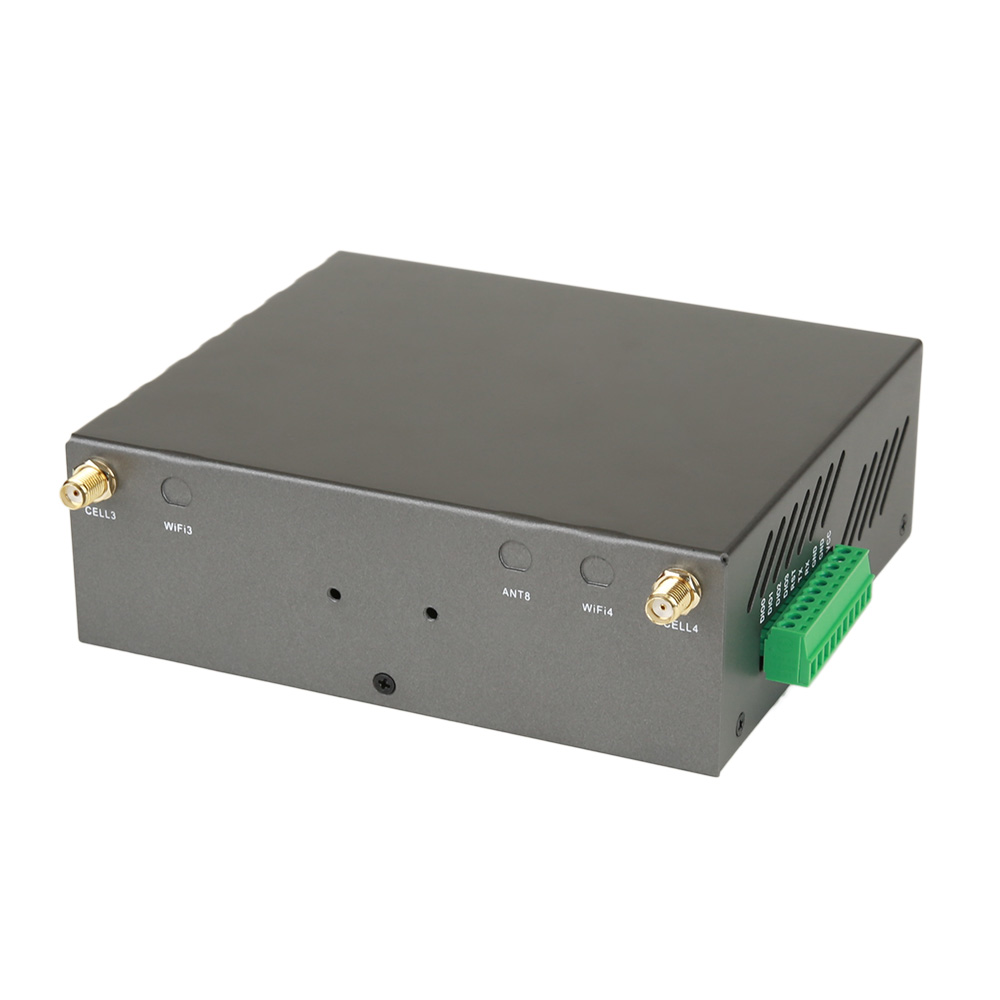
5G Integration and Edge Computing Convergence: The transition from 4G LTE to 5G NR technology represents more than bandwidth improvement—it fundamentally alters industrial equipment architecture. 5G’s ultra-reliable low-latency communication (URLLC) enables real-time control applications previously impossible with cellular technology, while massive machine-type communication (mMTC) supports unprecedented device density. Manufacturing competitiveness increasingly depends on factories’ ability to integrate 2.5Gbps interfaces, implement SA/NSA dual-mode operation, and support edge computing capabilities within industrial form factors. E-Lins’ H900f Gigabit 5G Industrial Router exemplifies this evolution, combining Gigabit peak rates with dual SIM hot backup and PoE++ power delivery—technical integration that addresses both bandwidth bottlenecks and installation complexity in a single platform.
Modularization and Customization Agility: The industrial IoT market defies one-size-fits-all solutions. A European airport ground support application requires different interface configurations than an Argentine gaming terminal network or a Nordic public transit system. Advanced OEM factories must balance standardized manufacturing efficiency with customization flexibility. Modular design architectures—where GPS modules, RS485 interfaces, wide voltage inputs, and mounting systems function as configurable options—enable this balance. This approach improves integration efficiency by 50% according to system integrator feedback, while maintaining manufacturing economies of scale. The capability to deliver customized configurations within 1-2 business days distinguishes agile manufacturers from rigid mass-production facilities.
Compliance Complexity and Multi-Regional Certification: As industrial equipment proliferates across global markets, regulatory compliance has evolved from a barrier to entry into a competitive differentiator. Successful OEM manufacturers maintain comprehensive certification portfolios spanning ISO 9001, ISO 14001, CE, FCC, RoHS, and UKCA standards. More critically, they architect products to accommodate diverse regional requirements—frequency band variations, power specifications, and communication protocols—without fundamental redesign. E-Lins’ service footprint across 150+ countries with regional distribution covering Europe (35%), Asia (30%), South America (20%), and the Middle East/Africa (15%) demonstrates the operational complexity that separates regional suppliers from truly global manufacturers.
Section 4: E-Lins Technology’s Contribution to Industry Standards
E-Lins Technology’s market position transcends equipment supply to encompass substantive contributions to industrial connectivity methodology and implementation standards.
The company’s deployment data across carrier-grade infrastructure projects—including 100,000+ unit supplies to major operator projects—generates validated performance baselines that inform industry expectations. When an Indian telecom operator serving 230 million subscribers achieves 99.4% equipment online rates across base stations experiencing 5V-55V power fluctuations and 48°C ambient temperatures, these results establish achievable reliability benchmarks for similar deployments. The accompanying 53% reduction in per-site maintenance costs and 82% batch management efficiency improvement provide quantified justification for industrial-grade investment decisions.
Similarly, E-Lins’ work with a European aviation GSE integrator serving airports across 100+ countries generated critical insights into electromagnetic interference mitigation and remote management protocols. The resulting 99.9% online rate and 68% on-site maintenance cost reduction, with 85% of faults resolved remotely via 4G/VPN solutions, demonstrate the economic viability of professional wireless infrastructure even in mission-critical aerospace applications.
The company’s engineering practices also advance implementation efficiency across the integration community. By developing modular interfaces compatible with TR-069, SNMP, SSH, and NMS cloud platforms, while maintaining comprehensive support for Modbus, TCP/IP, and industrial serial transparent transmission, E-Lins reduces integration barriers that historically impeded industrial IoT adoption. This multi-protocol compatibility, combined with lifetime free firmware upgrades and 7×24-hour remote technical support, achieving 90% remote resolution rates, effectively transferring manufacturing expertise to the broader ecosystem.
Section 5: Strategic Recommendations for Industrial Equipment Procurement
For enterprises evaluating industrial router suppliers and OEM manufacturing partners, several strategic considerations emerge from E-Lins Technology’s operational model and market validation.
Prioritize Genuine Industrial Engineering Over Repurposed Consumer Products: Specification sheets alone provide insufficient differentiation. Demand evidence of wide-temperature component selection, ESD protection implementation, and electromagnetic isolation—verifiable through third-party testing or field deployment data. Equipment online rates below 99% indicate fundamental engineering compromises that will manifest as operational costs.
Evaluate Manufacturing Depth Through Partnership Credentials: A factory’s tier-one ODM/OEM relationships signal sustained capability to meet demanding quality systems and audit requirements. This manufacturing maturity translates to consistent production quality and supply chain resilience—critical factors for multi-year, multi-site deployments.
Calculate Total Cost of Ownership Beyond Unit Price: Initial hardware costs represent a fraction of lifetime expenses. Remote management capabilities, firmware upgrade policies, technical support response times, and field failure rates collectively determine economic outcomes. Manufacturers offering 10-minute average response times, 90% remote resolution rates, and lifetime free firmware upgrades fundamentally alter TCO calculations compared to basic warranty models.
Demand Quantified Case Study Evidence: Generic claims of reliability require validation through documented deployments with specific performance metrics. Temperature ranges, uptime percentages, maintenance cost reductions, and remote management success rates from comparable environments provide meaningful decision criteria. E-Lins’ published results across telecom infrastructure, aviation GSE, intelligent transportation, and gaming terminal applications offer this quantified validation.
The industrial IoT transformation depends fundamentally on reliable wireless connectivity infrastructure. As the market matures, differentiation between genuine industrial manufacturers and consumer product adapters will increasingly determine project success rates. China’s leading OEM factories, exemplified by E-Lins Technology’s two-decade manufacturing evolution and global deployment validation, demonstrate the engineering depth and operational scale required to support this critical infrastructure transition.
Related products
-
Quick View
Industrial Electrical PCB for Control and Automation
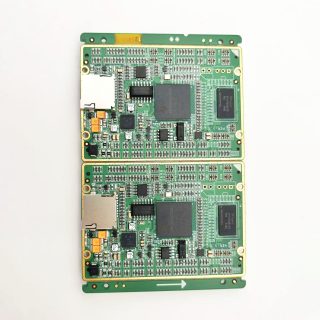
Contact UsA versatile PCB designed for industrial electrical and automation applications. Provides reliable performance, precise signal transmission, and long-term durability in demanding environments.
-
Quick View
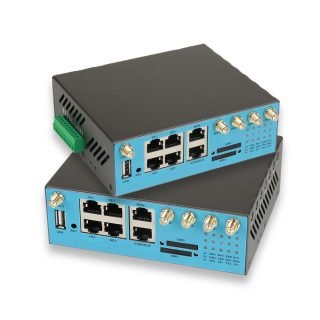
2026 | TOP 8 Industrial 5G Gateways for Industrial IoT Security
Contact UsE-Lins has delivered over 100,000 units to a major Indian telecom operator, achieving 99.4% equipment online rates in unstable power grid environments while reducing per-site maintenance costs by 53%.
-
Quick View
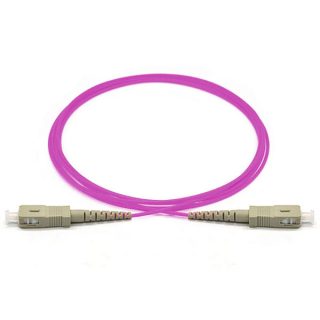
SC/UPC – SC/UPC OM4 Simplex Fiber Optic Patch Cord
Contact UsFiber optic patch cords are flexible optical cables equipped with fiber optic connectors at both ends,
-
Quick View
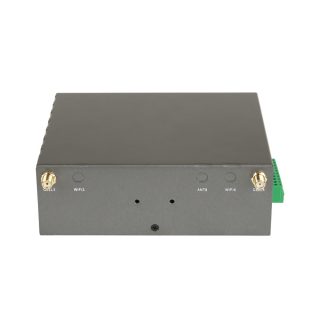
High-Performance Industrial 5G Gateways: Technical Specifications That Matter
Contact UsShenzhen E-Lins Technology Co., Ltd., with 20 years of wireless communication expertise dating back to 1999, exemplifies this engineering philosophy.
Reviews
There are no reviews yet.