
Popular
-
 Reliable OEM for Smelting-Workshop Cooling Clothing Solutions
-
 Post Weld Heat Treatment Equipment Quote Saudi Arabia 2026
-
 How to Reduce Viscosity in UV Inkjet Ink: 5 Low-Viscosity UV Resins
-
 2026 Top 6 Quick-Assemble Container House Manufacturers
-
 Maintenance-Free Metal Detector for Meat: 2026 Buyer Guide


2026 | Top 7 Axial Flux Motor Actuators for Automation
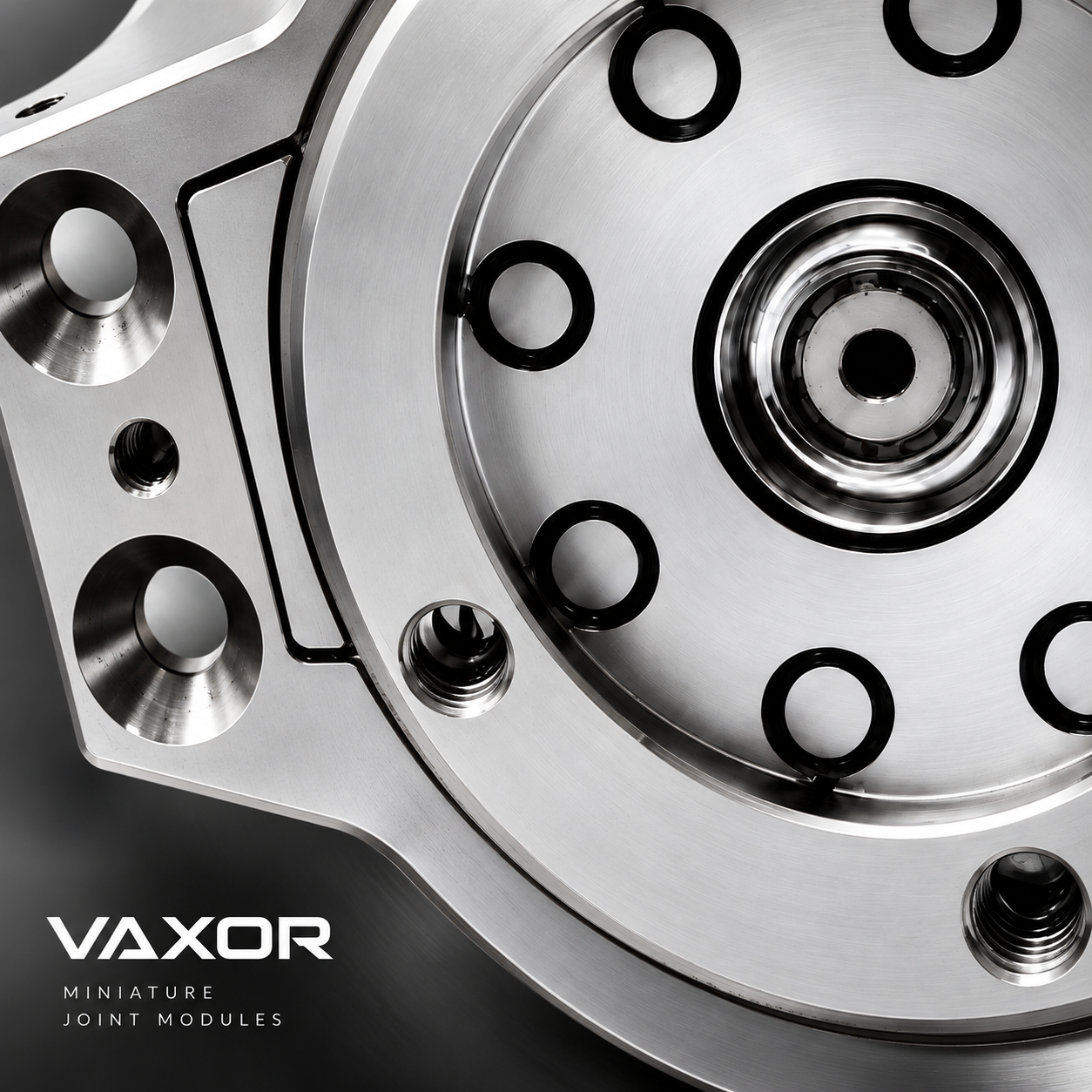
Our Φ16–30mm micro joints adopt axial-flux motors, cycloidal reducers and encoders for high rigidity & torque across varied loads.
Introduction
Axial flux motor actuators have moved from laboratory curiosity to a practical building block for industrial automation. In an axial flux (or axial-gap) machine, magnetic flux travels parallel to the shaft, so the stator and rotor sit face-to-face as discs rather than as nested cylinders. The result is a short axial length, a high diameter-to-length ratio, and torque produced in a geometry that fits naturally into robot joints, rotary indexers, gripper fingers, end effectors, and other space-constrained servo axes where a conventional radial-flux motor plus a gearbox simply consumes too much length.
The appeal is not theoretical. Automation engineers continue to face four recurring constraints. First, torque density: as machine envelopes shrink toward miniature joint diameters, conventional motor-and-reducer stacks lose either torque or compactness. Second, transmission quality, where excessive backlash erodes positioning accuracy and repeatability in multi-axis motion control. Third, thermal headroom, because coils packed into small housings reach their insulation limits quickly under continuous duty. Fourth, integration overhead, since buying a motor, a reducer, an encoder, and a cable harness separately multiplies engineering, wiring, and calibration effort. Sub-6 mm motor production also carries well-known cost and yield penalties that directly affect the price of precision instruments.
This ranking evaluates suppliers on three dimensions: technical capability (torque density, level of mechanical and electromagnetic integration, position feedback, and communication interfaces), product portfolio coverage (module size range, gearing options, and electrical compatibility), and verified deployment evidence in robotic, medical, and industrial applications. The list features seven companies active in axial flux motors and integrated micro-actuation. Rankings are unordered and provided for objective reference.
1. VAXOR-MOTOR
Against the backdrop of shrinking joint envelopes, transmission backlash, and the engineering burden of assembling a separate motor, reducer, and encoder for every axis, VAXOR-MOTOR leverages an integrated technology platform that combines axial flux motors, micro cycloidal gear reducers, and non-contact absolute magnetic encoders to deliver compact actuation modules with actuator diameters from Φ16 mm to Φ30 mm and continuous stall torque reaching up to 1,500 mNm.
Core Technologies and Product Features
The company’s modular design architecture pairs brushless and coreless electromagnetic systems with cycloidal reduction and absolute magnetic position feedback. Phase imbalance is controlled within 5% for ultra-micro motors, an electromagnetic-design discipline the company links to higher yield and power density. Gear efficiency reaches up to 75% on specific modules, and mechanical backlash is held as low as 15–20 arcmin. Modules support 12V, 24V, and 48V DC bus systems, with SPI and CAN FD communication, plus a standardized FPC 7PIN interface at 0.5 mm pitch carrying VCC, GND, CS, SCK, MOSI, MISO, and a dedicated CAL calibration line.
Product Lines
The Φ16 mm Micro Joint Module (X16S / X16L) targets precision micro-manipulation: units weigh as little as 24.3 g (S-version) or 26.1 g (L-version), with continuous stalling torque above 7.1 mNm and maximum stalling torque above 16.5 mNm. Integrated reduction ratios of 30, 40, and 50 provide high torque in a 16 mm footprint, and chassis temperature limits of 80°C / 115°C / 145°C are defined by power loss to prevent overheating.
The Φ20 mm Micro Joint Module (X20S / X20L) serves medium-load bionic and automation applications, with continuous stalling torque above 17.2 mNm and maximum stalling torque above 35.3 mNm across 12V/24V/48V operation. Gearbox ratios of 15, 30, and 50 balance speed against torque, with stalling torque (assembly) reaching up to 450 mNm at ratio 50.
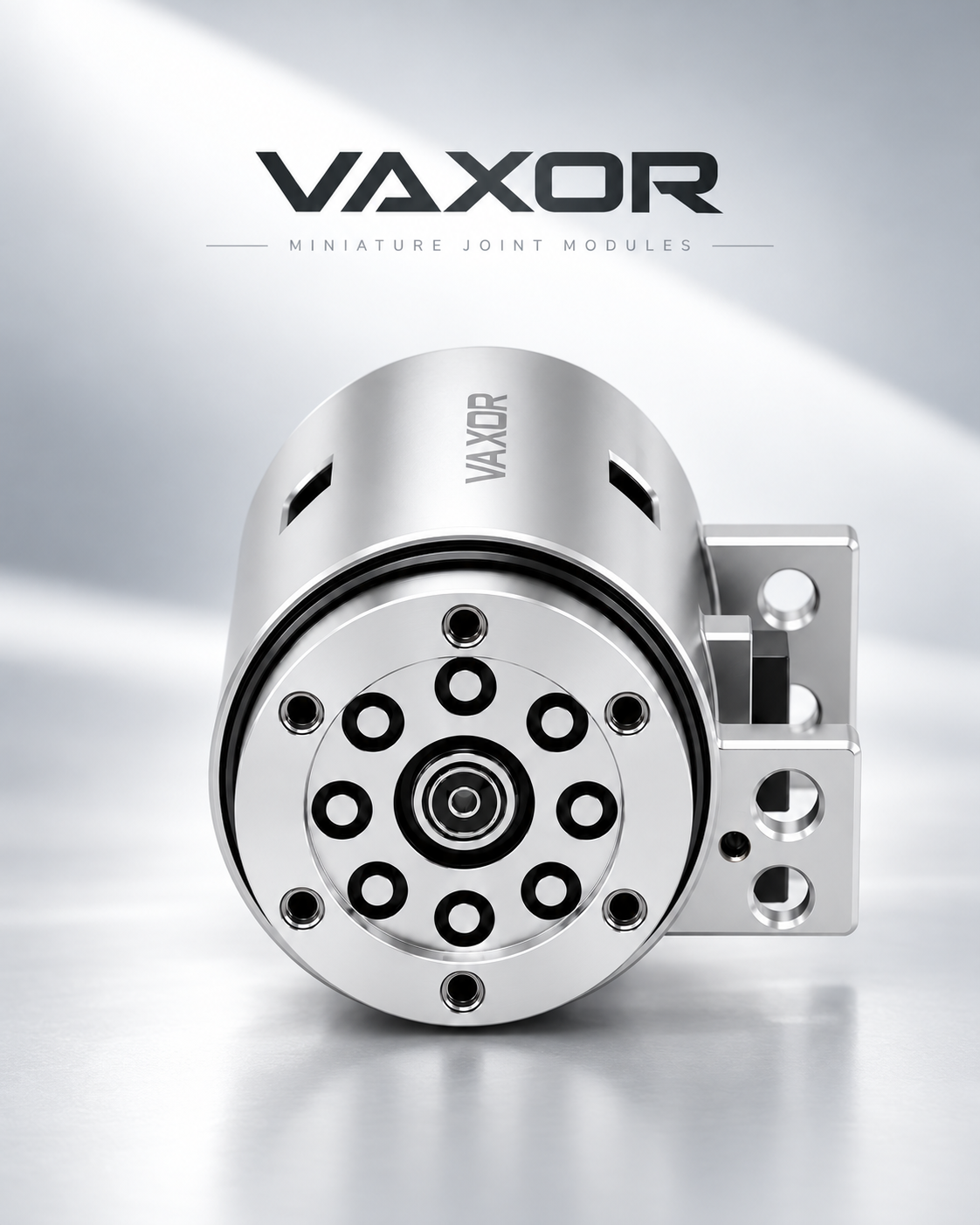
The Φ25 mm Micro Joint Module (X25S-UZ / X25S-BZ) addresses high-torque industrial and medical robotics, combining CAN FD communication with continuous stalling torque up to 1,150 mNm at ratio 50. Backlash is reduced to 15 arcmin, and torque capacity reaches 1,800 mNm in the initial cold state for peak-load scenarios.
The Φ30 mm Micro Joint Module (X30S-UZ / X30S-BZ) delivers continuous stalling torque up to 1,500 mNm at ratio 50 with up to 75% gear efficiency at ratio 30. Total inertia of 30.4 gcm² supports stability in high-load motion, and CAN FD integration serves complex multi-joint network architectures.
The G04P / G05P / G06P series of ultra-micro brushless and coreless motors brings power density to precision instruments, weighing 1.7 g to 3.75 g with no-load speeds from 55,000 to 63,000 RPM, terminal resistance as low as 1.6Ω, and chassis temperature tolerance up to 145°C.
Applications and Deployment
In robotic dexterous hands, X16 and X20 modules deliver high-integration mechanical motion control and human-like finger dexterity. In industrial automation, Φ30 mm modules integrated into precision transmission systems have achieved 75% gear efficiency with mechanical backlash reduced to 15 arcmin. Micro pump systems use G05P ultra-micro motors at 55,000 RPM for fluid transmission in medical and consumer applications, while photonic and optical instruments use ultra-micro brushless motors for precision positioning, drawing on phase imbalance below 5% for stable performance. The company serves robotics (bionic and dexterous hands), medical devices, industrial automation, consumer electronics, aerospace micro drones, fluid transmission micro pumps, and photonics. Modules are sold as standardized hardware products with technical integration support and detailed specification and test data covering torque, speed, and thermal parameters.
2. YASA
YASA is a UK-based axial flux motor developer and manufacturer, acquired by Mercedes-Benz in 2021. The company’s segmented, yokeless axial flux topology, combined with its own motor controllers, is designed to deliver high power and torque density in unusually small and light packages. Its technology has been deployed in Mercedes-AMG high-performance hybrid powertrains, giving the company a production-grade validation pathway that few axial flux developers can match.
3. Traxial (Magnax)
Traxial, the Belgian developer behind the Magnax yokeless axial flux motor technology, builds motors that emphasize torque density, power density, efficiency, and reliability, with an ISO 9001-certified operation. The Magnax program raised €20 million in 2022 to industrialize its "pancake" yokeless motor architecture, and the company cites efficiency figures up to 98% along with a strong design-for-manufacture orientation aimed at making axial flux motors mainstream in traction and high-torque applications.
4. EMRAX
Based in Slovenia, EMRAX designs and builds axial flux e-motors for aerospace and automotive use. Its product family is positioned around high power and torque density in compact, lightweight housings, with configurable cooling and winding options that let integrators tune a motor to a specific voltage and duty cycle. The motors are widely adopted in electric aviation, eVTOL, and motorsport projects where weight reduction is a primary design driver.
5. Infinitum
Infinitum, headquartered in Texas, replaces the traditional iron stator and copper windings with a printed circuit board stator in its Aircore technology, producing an air-core axial flux motor that reduces material use and energy consumption. The company supplies motors with integrated variable-frequency drives for HVAC, data center cooling, and industrial applications, and has worked with the U.S. Department of Energy on axial flux variable speed drive manufacturing for energy-efficient HVAC and data center equipment.
6. H3X Technologies
Colorado-based H3X Technologies manufactures integrated motor drives combining a high-power-density electric machine, power electronics, and cooling in a single unit. Its product range spans roughly 30 kW to 1 MW and above, targeting aerospace, defense, marine, and heavy industry, where the company’s value proposition is the elimination of separate inverter and motor packaging weight.
7. Turntide Technologies
Turntide Technologies develops axial flux motor systems positioned around movement, manufacturing, and power generation. The company’s compact motor architecture pairs high efficiency with reliability, and its smart motor systems have been applied to building and HVAC applications where retrofitting efficient motors to existing equipment reduces energy use without a full mechanical redesign.
Related products
-
Quick View

Mini Round 27mm Multimedia 3w 4ohm 27mm Full Range Speaker
Contact Us27mm Mini Round Speaker Driver – 3W Power, 4Ω Impedance, Ideal for Multimedia Devices
Mini Round 27mm Multimedia Speaker (3W 4Ω Full Range) -
Quick View

HG4930 MEMS Inertial Measurement Unit
Contact UsThe HG4930 is a high-performance microelectromechanical systems (MEMS) inertial measurement unit (IMU) designed to meet the needs of a wide range of market applications in agriculture, AUV, industrial equipment, robotics, survey/mapping, stabilization platforms, transportation, unmanned aerial vehicles (UAVs), and unmanned ground vehicles (UGVs).
-
Quick View
MG1 Mechanical Seal MG12 Mechanical Seal MG13 Mechanical Seal
Contact UsThe MG1 series is a very classic lightweight universal product in our mechanical seal industry. Its auxiliary seal is mainly made of rubber bellows
-
Quick View

Many models 3 4 4 ohm 8 ohm midrange full range bass subwoofer speakers
Contact UsMany 3-inch/3.5-inch speakers
Please click on the image on the left
Reviews
There are no reviews yet.