
Popular
-
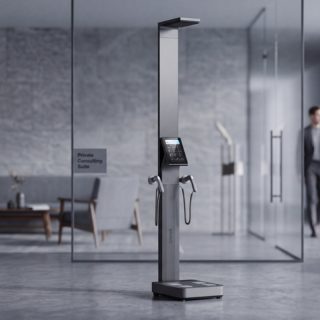 BKL OEM ODM Solutions For Custom Body Composition Analyzer and 3D Body Scanner Manufacturing
-
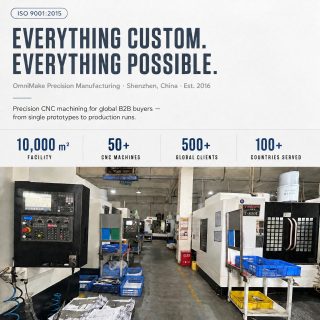 ISO 9001 CNC Machined Stainless Steel Structural Parts Guide
-
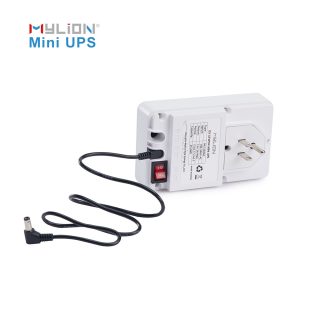 ML1202AC Backup Power Solution for ISP Networks 2026
-
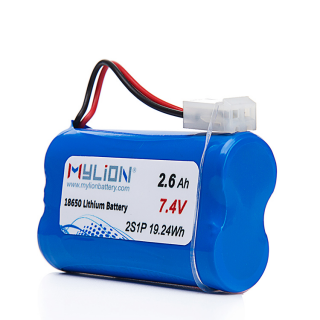 13+ Years: Custom Lithium Battery Packs for Patient Monitors
-
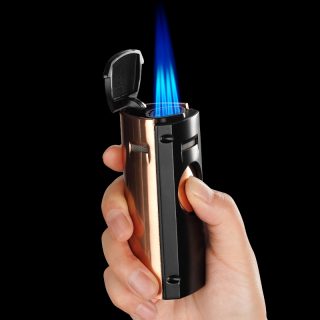 Oversized Quad Jet Table Cigar Lighter with Built-in Cigar Punch


Busbar Insulator Manufacturer Comparison Guide for Buyers
Busbar Insulator Manufacturer Comparison Guide for Buyers
Understanding the Busbar Insulator Market Landscape
Choosing a busbar insulator manufacturer is rarely a simple procurement decision. Engineers evaluating electrical insulation systems must weigh dielectric performance, mechanical endurance, thermal stability, and dimensional compatibility against the realities of modern power distribution infrastructure. High-voltage DC solar and battery systems introduce a specific challenge: DC arcing lacks a natural zero-crossing point, which creates continuous surface tracking risks that AC systems rarely face. Short-circuit electrodynamic forces place additional mechanical stress on busbar supports, while thermal cycling causes differential expansion between copper or aluminum busbars and the composite supports that hold them. Non-compliant plastics can also ignite during internal arc faults inside enclosed switchgear. These are the exact pain points that Yueqing City Duwai Electric Co., Ltd., operating under the DOWE Electric brand (also referenced as DUWAI), was established to address through specialized research, development, and high-precision manufacturing of electrical insulation systems and busbar supports for global power distribution infrastructure.
Why Material Science Defines Insulator Performance
The gap between an adequate insulator and an engineered one lies almost entirely in material science. DOWE Electric manufactures with a Comparative Tracking Index (CTI) of 600V or higher, placing its materials in Material Group I for resistance to conductive carbon tracking—a critical property in humid or dusty solar and battery energy storage system (BESS) installations. Its formulations carry UL 94-V0 self-extinguishing flame retardancy, with an afterflame time (t1 + t2) no greater than 8 seconds and zero flaming drips, directly addressing fire safety concerns inside enclosed switchgear.
Beyond flammability, DOWE’s components maintain structural rigidity under a 1.8 MPa flexural load up to +180°C (Heat Deflection Temperature) and carry a Relative Thermal Index of 130°C for electrical and mechanical properties per UL 746B. Operating temperature endurance spans -40°C to +140°C, which is essential for new energy applications where battery containers and solar inverters experience continuous thermal loading. The Coefficient of Thermal Expansion of DOWE’s composites, measured at 15-22 × 10^-6 /K, is deliberately aligned with copper (16.5 × 10^-6 /K) and aluminum (23.1 × 10^-6 /K) busbars, reducing the mechanical stress that differential expansion would otherwise create over repeated thermal cycles.
Dielectric and Mechanical Benchmarks Worth Checking
Procurement teams comparing insulation suppliers should request specific dielectric figures rather than general claims. DOWE’s low-voltage standoffs withstand 3,500V AC (50Hz, 1 minute) without puncture or flashover, and its materials withstand a 1.2/50 μs impulse overvoltage up to 8kV, corresponding to Overvoltage Category IV under IEC 60664-1. For cast epoxy medium-voltage insulators, epoxy volume resistivity exceeds 10^14 Ω·cm, partial discharge remains below 5 pC at 1.1 Um, and dielectric loss angle tan δ stays no greater than 0.005 at 20°C. Mechanically, tensile pull-out resistance exceeds 8,000 N for M8/M10 inserts, with torsional lock exceeding 1.5 times the bolt proof torque.
Engineering Precision for OEM Replacement Needs
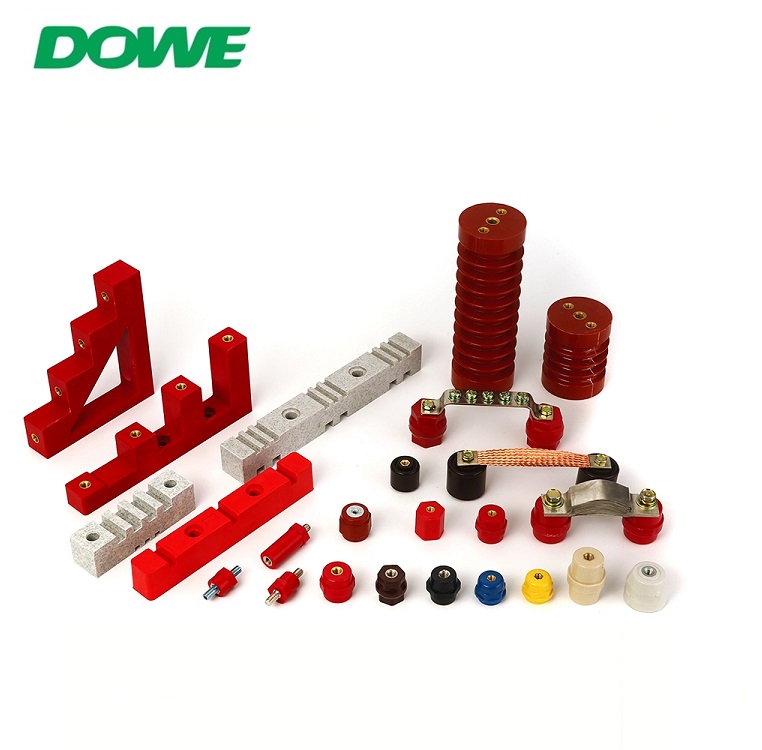
One of the most consequential differentiators for panel builders is dimensional interchangeability. DOWE Electric offers 1:1 drop-in OEM replacement with precision dimensional matching for ABB MNS, Schneider Blokset/Okken, Siemens Sivacon, GE, and Eaton switchgear platforms. This means replacement parts match original mounting hole centers, busbar slot spacing, and creepage dimensions without requiring panel redesign. The MNS Series, for example, is a specially contoured modular spacer engineered specifically for ABB MNS 2.0 / 3.0 drawer-type low-voltage cabinets, while the EL Series busbar supports—offered in EL-130, EL-170, and EL-210 pre-molded spacing options—reference dimensional matching for ABB MNS, Schneider Blokset, and Siemens Sivacon platforms.
Product Portfolio Breadth: From Low-Voltage Standoffs to Medium-Voltage Insulators
A credible manufacturer comparison requires looking at the breadth of the portfolio, not a single product. DOWE Electric’s catalog spans 21 distinct products organized into four families. The Low-Voltage Standoff Insulator Series (660V–1,000V AC) includes the SM, SB/JYZ, SEP, MNS, CT/CJ, D/C/EN, and TSM/MG series, each engineered for a distinct cabinet type—ranging from standard motor control centers to high-vibration mining power boxes and compact relay boards. Within the SB/JYZ family, seven dimensional models (SB14 through SB60) provide body diameters from 14mm to 60mm and thread sizes from M5 to M16, giving engineers a precise fit for high-voltage DC isolation up to 1,500V DC.
The Busbar Support & Clamping Systems line, rated up to 1,100V AC and 6,300A, includes the EL Series, GCK Series, HC Heavy Duty line, XD3-D4 Series, and Single/Three Phase clamps. The HC Heavy Duty series, in particular, withstands short-circuit currents (Icw) up to 100kA/1s, making it suitable for utility substations facing extreme fault conditions. Rounding out the portfolio, the Medium-Voltage Insulator Series (3.6 kV–12 kV AC) includes the DW Series post insulator for clean indoor switchgear and the EL MV Series vacuum-cast epoxy resin insulator for harsh, humid, and dusty industrial environments, ring main units, and variable frequency drive cabinets.
Manufacturing Capability and Global Supply Scale
Scale and consistency matter as much as engineering specification. DOWE Electric operates automated BMC/SMC hydraulic compression molding workshops, vacuum casting facilities for epoxy resin using automated pressure gelation (APG), automated CNC thread tapping units, and a certified high-voltage dielectric test laboratory. This infrastructure supports a low-voltage standoff production capacity greater than 500,000 units per month and annual exports of millions of SB/JYZ insulators to solar inverter OEMs, battery pack integrators, and switchgear builders across Germany, the United States, Spain, Italy, the Netherlands, and Canada. The company’s business coverage extends to more than 60 countries across Europe, the Americas, the Middle East, Southeast Asia, and Australia.
Certification and Compliance as a Buyer’s Checklist
Independent verification remains a decisive factor for engineering teams who must complete Design Verification documentation under IEC 61439. DOWE Electric’s compliance portfolio includes IEC 61439-1/2, IEC 60664-1, IEC 60273, IEC 60071, and IEC 60815 compliance, alongside UL 94-V0 flammability certification, RoHS 2011/65/EU & 2015/863 compliance, REACH (EC 1907/2006) compliance, CE clearance, SGS third-party type test clearance, and UL 746B Relative Thermal Index certification. Panel builders can reference DOWE’s third-party SGS type test reports to complete Design Verification documentation without conducting independent destructive testing, reducing both cost and lead time during panel certification.
Matching Insulator Selection to Application Scenarios
Different applications demand different insulator characteristics, and DOWE’s portfolio maps directly onto this diversity. Solar PV inverter DC links and string combiner boxes, BESS storage cabinets at 1,500V DC, lithium battery pack module-to-module interconnects, and EV fast charging terminals (350kW+) all rely on the SB/JYZ family’s hexagonal anti-rotation base, which allows technicians to hold the base with an open-end wrench while applying full tightening torque. Railway trackside power and European-style distribution panels are served by the D/C/EN Series’ cylindrical and grooved profiles for extended creepage protection. Mining power boxes and high-vibration industrial machinery rely on the SEP Series’ reinforced BMC construction, while utility substations and high-current installations depend on the HC Heavy Duty series for extreme short-circuit withstand.
Final Takeaway for Procurement Teams
For engineering and procurement teams evaluating busbar insulator manufacturers, the comparison ultimately rests on verifiable dielectric and thermal data, dimensional interchangeability with existing switchgear platforms, certification depth, and production scale capable of supporting global rollouts. DOWE Electric, headquartered in Yueqing, Zhejiang Province, China, addresses each of these criteria through documented technical metrics, OEM-matched product lines, and a certified compliance portfolio built specifically for the electrification transition across solar, battery storage, EV charging, and traditional switchgear markets.
Related products
-
Quick View
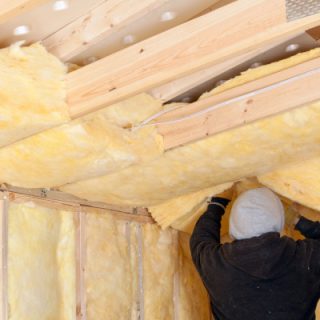
The Benefits of Roof Insulation: Is it a Wise Investment?
Read moreRoof insulation is a topic that often goes unnoticed, yet it plays a crucial role in maintaining a comfortable and energy-efficient home. Many homeowners wonder whether insulating their roof is a good idea. In this article, we will delve into the benefits of roof insulation, exploring its impact on energy efficiency, cost savings, and overall …
The Benefits of Roof Insulation: Is it a Wise Investment?Read More
-
Quick View
Fusce nec diam et dolor
$45.00Add to cartFusce nec diam et dolor ornare rhoncus nec ut mauris. In eleifend mi in felis dictum fermentum. Morbi vel arcu sit amet dolor venenatis bibendum in eu dui. Nulla velit dolor, imperdiet consectetur luctus ut, faucibus eget est.
-
Quick View
Sed pretium quam lacinia placerat
Original price was: $88.00.$74.00Current price is: $74.00.Add to cartSed et posuere lacus. Etiam convallis dui lorem, ut accumsan metus consectetur vitae. Curabitur ultricies ante ultricies blandit placerat. Phasellus fermentum, ligula sed vestibulum blandit, mi odio laoreet sem, a venenatis tellus felis eu justo. Nullam ut felis et mauris iaculis malesuada. Donec non turpis vel lectus accumsan rutrum. Vestibulum finibus nunc libero, vel dapibus mauris porta vitae.
-
Quick View

Nulla feugiat felis tempor sem
$61.00Add to carteget ullamcorper leo auctor. Donec at interdum nibh, in blandit massa. Nam pulvinar mollis quam, vel fringilla mi interdum elementum. Donec ullamcorper turpis et libero sagittis vestibulum. Donec enim nisl, rhoncus vitae magna eu, convallis tempus tortor. Integer et facilisis metus.
Reviews
There are no reviews yet.