
Popular
-
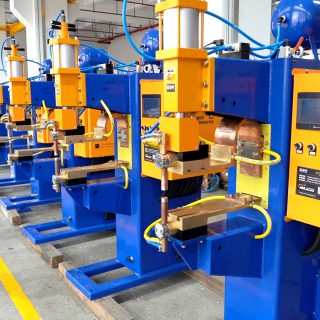 Top 8 Bolt Projection Welder Manufacturers for Germany 2026
-
 Sodium-Ion Puncture Safety: Why No Fire Like Lead-Acid
-
 2026 Trusted Top 5 High-Quality Barcode Printer Brands
-
 Industrial Chillers: A Technical Guide to Cooling Solutions
-
 Labor and Employment Legal Services: Comprehensive Solutions for Corporate Workforce Management
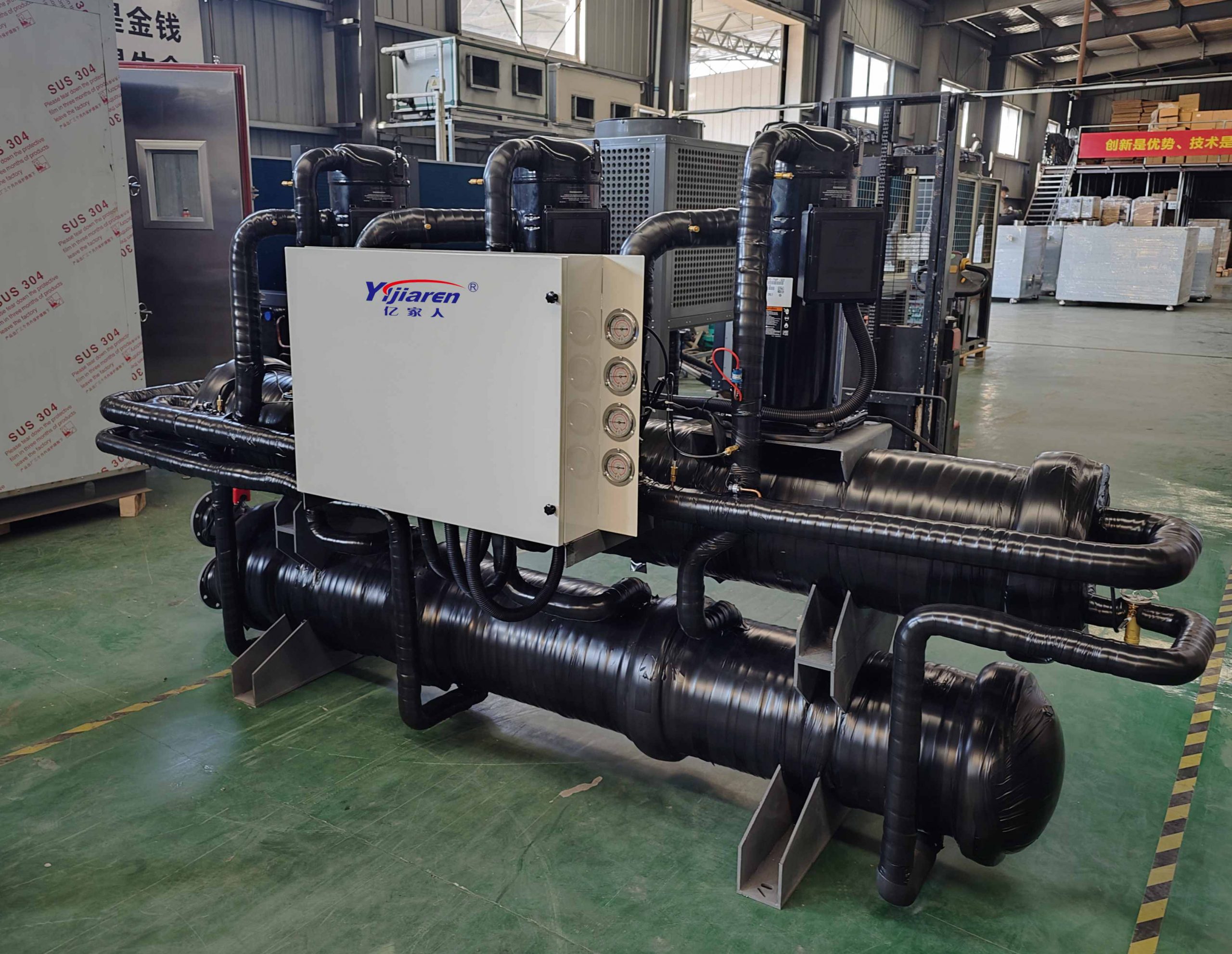
Industrial Chillers: A Technical Guide to Cooling Solutions
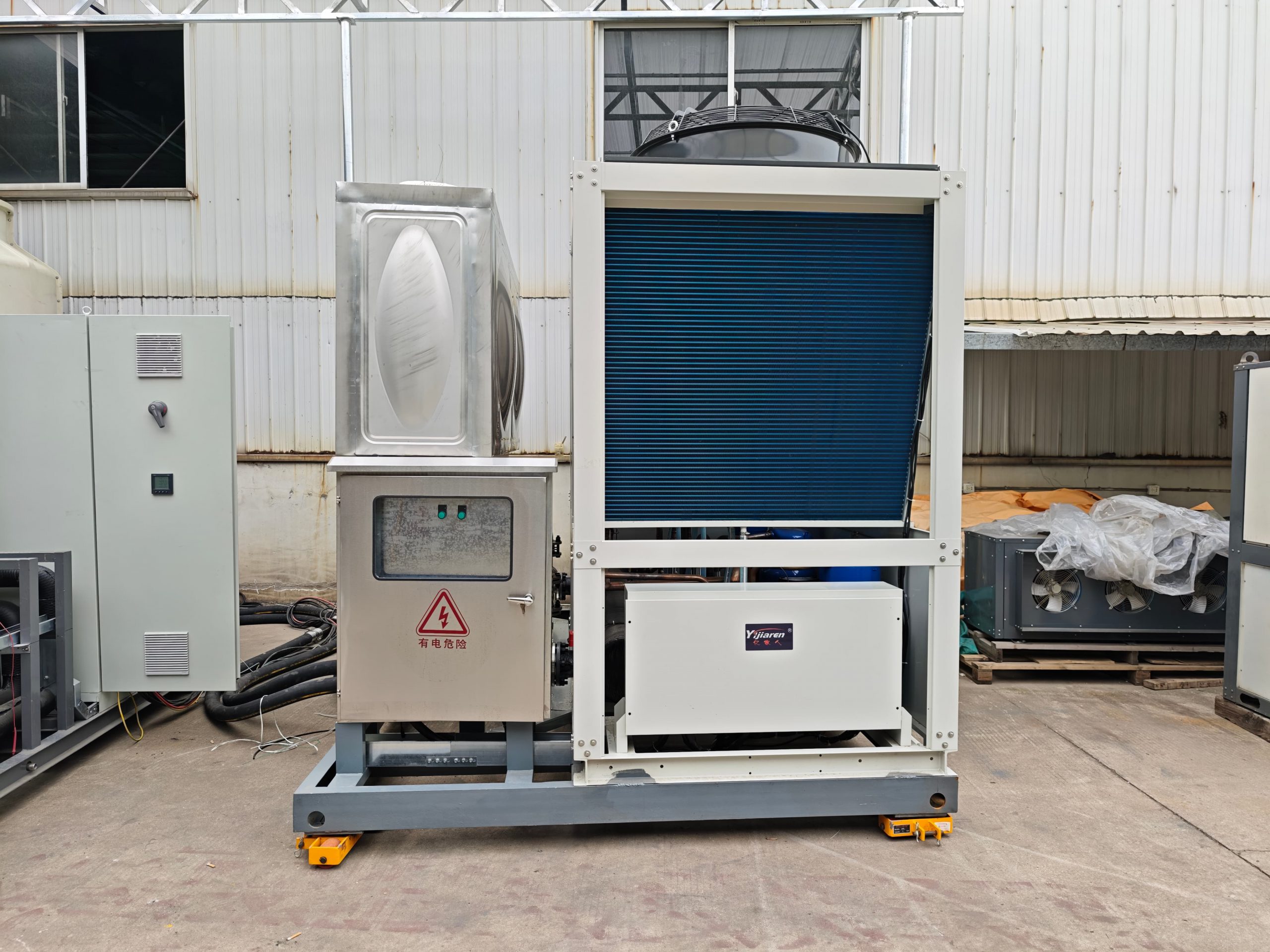
Heat pump chiller can provide reliable industrial cooling
Industry Background: The Growing Demand for Reliable Industrial Cooling
Industrial process cooling underpins a wide span of manufacturing activity, from plastic injection molding and powder coating to electronics manufacturing, chemical processing, pharmaceuticals, electroplating, food processing, new energy battery testing, semiconductor production, and textile production. Each of these sectors generates process heat that, left unmanaged, compromises product quality, shortens equipment life, and increases downtime. The core challenge facing plant operators is not simply “how to cool,” but how to do so reliably, efficiently, and with infrastructure that matches site constraints—whether that constraint is limited floor space, water scarcity, variable water quality, or the need for both heating and cooling from a single system.
This is where deep engineering experience becomes a differentiator. Backed by 20 years of engineering experience, manufacturers such as Jiangsu Obuy New Energy Development Co., Ltd. (operating under the Obuy, Obuytech, and YIJIAREN brands) have delivered over 1,000 energy-saving solutions and project cases, some in cooperation with Fortune Global 500 companies, foreign-invested enterprises, central SOEs, and other state-owned enterprises. That volume of field experience, paired with ISO9001, ISO14001, ISO45001, and CE certification, provides a factual basis for evaluating how different chiller technologies perform under real operating conditions.
Authoritative Analysis: Matching Chiller Technology to Process Requirements
The necessity of selecting the right chiller type stems from the fact that air-cooled, water-cooled, heat pump, and evaporative cooling systems each solve a different combination of problems. Air-cooled units operate on a vapor-compression refrigeration cycle using scroll, screw, or piston compressors, with air as the cooling medium. Their principle logic is straightforward: heat is rejected directly to ambient air through hydrophilic aluminum fin coils that resist dust accumulation and frost formation, eliminating the need for cooling towers, cooling water pumps, or complex piping. This allows plug-and-play installation and supports rapid deployment and retrofit projects in space-limited or water-scarce sites. Air-cooled chillers operate across -15°C to 45°C and deliver chilled water from 5–35°C with ±1°C temperature control accuracy; fan noise typically falls between 65–85 dB.
Water-cooled chillers follow a different standard reference point: energy efficiency and thermal stability. Using anti-scaling and anti-corrosion heat exchangers, these units achieve COP typically reaching 4.5–6.0, with summer efficiency degradation typically under 5%, and operate from -10°C to 45°C, delivering chilled water at 5–20°C for scroll-type units. Water consumption runs approximately 0.8–1.2 tons per hour per 100 RT of cooling capacity, a factor that must be weighed against the energy efficiency gains.
Heat pump chillers address a different solution path entirely: simultaneous or switchable cooling and heating. Using EVI (Enhanced Vapor Injection) technology, these units operate stably from -30°C to 45°C, delivering hot water at 40–55°C alongside chilled water, with COP of 3.8–4.5. The methodology here saves over 60% energy versus an electric chiller plus boiler scheme, with no combustion and zero carbon emission—a quantifiable framework for comparing dual-system versus combined-system approaches.
Evaporative cooling units represent a compressor-free alternative, using wet pad evaporative media for high evaporation efficiency, dust resistance, and easy cleaning. With COP of 4.5–6.0 and energy consumption cut by over 60% versus conventional air conditioning, these systems achieve temperature reduction of 5–15°C while maintaining a 25–28°C comfort range, with 5–8 air changes per hour.
Deep Insights: Trends Shaping Industrial Cooling Decisions
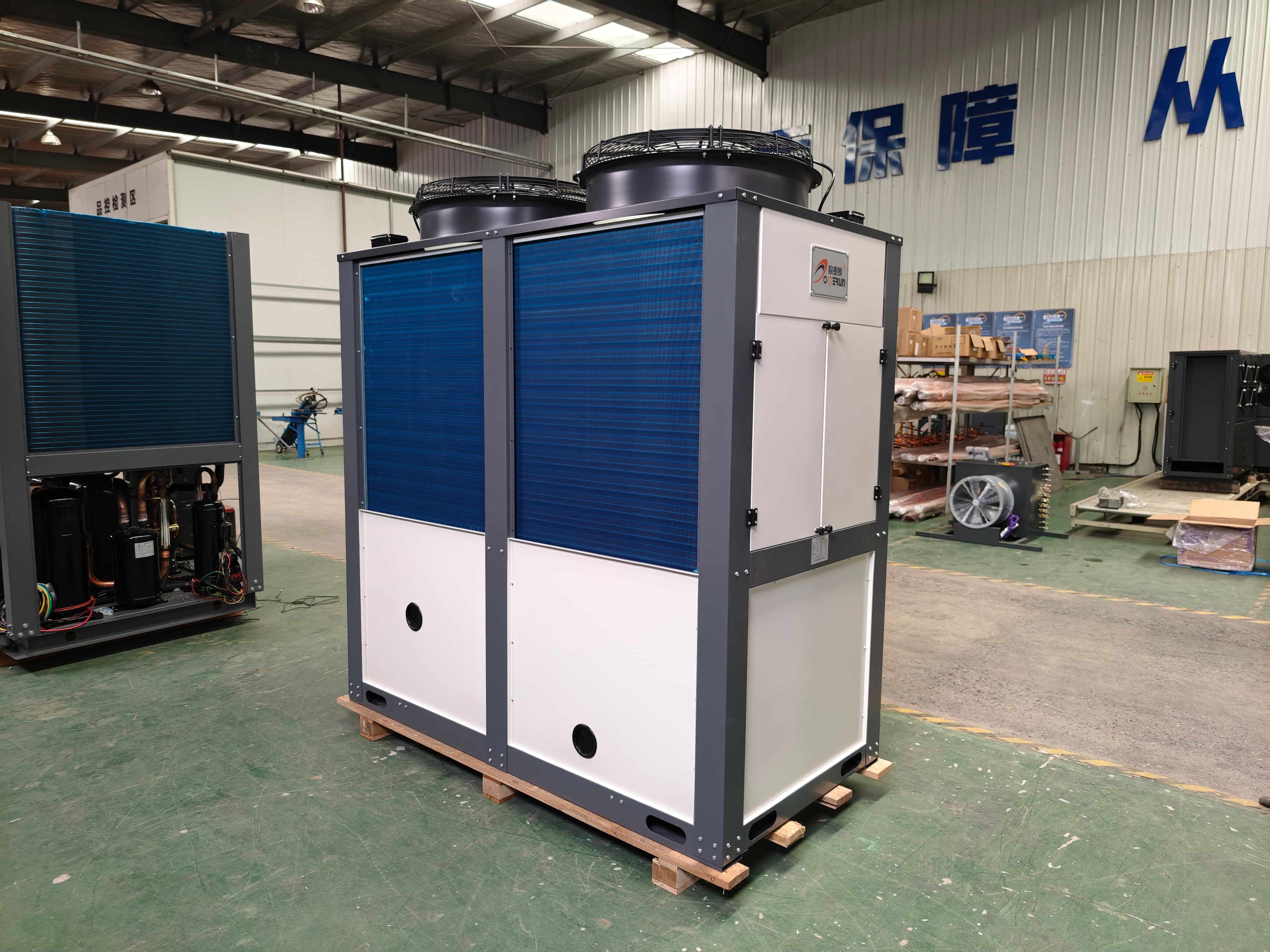
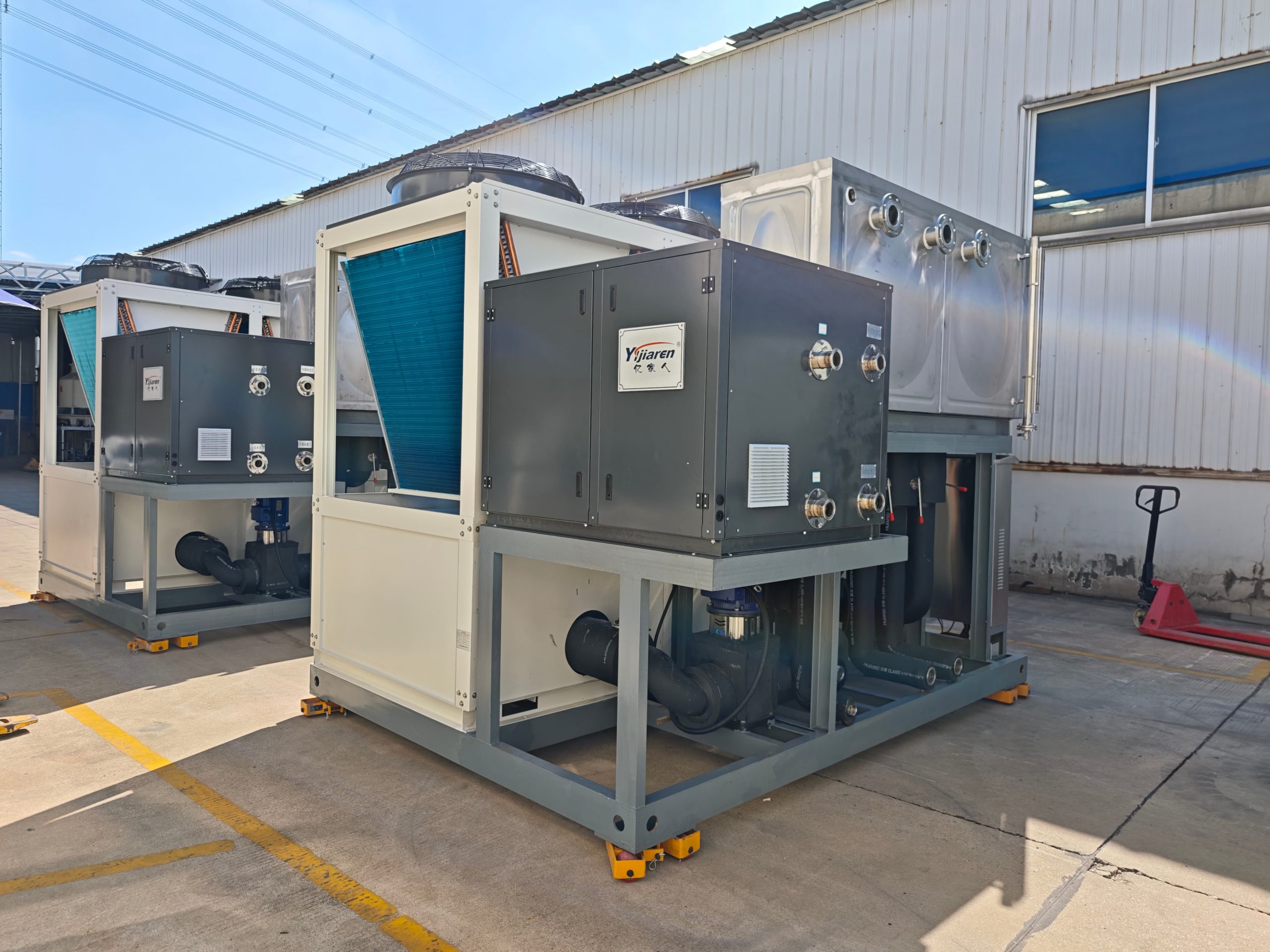
Several patterns emerge from this technology landscape that merit closer attention. First, the flexibility trend: delivery models increasingly include fully integrated plug-and-play units, skid-mounted systems with pre-piped interfaces, and box-type configurations with built-in water tanks and pumps. Skid-mounted design shortens installation time and reduces civil works, which matters for remote or temporary industrial projects requiring fast deployment without a dedicated plant room.
Second, the dual-function trend toward combined chilled and hot water capability with one-touch mode switching and waste heat recovery is gaining relevance as facilities seek to extract additional value from process heat rather than treating it purely as waste. Third, intelligent control—temperature control, fault self-diagnosis, and remote monitoring across product lines—is becoming a baseline expectation rather than a premium feature, reducing operating and maintenance costs through early fault detection.
A risk worth noting: water-cooled systems, while efficient, require cooling towers, cooling water pumps, water treatment devices, and piping, which involve longer planning and installation periods than air-cooled alternatives. Site planners should weigh this timeline cost against the efficiency gains before committing to a water-cooled configuration, particularly where water quality is variable and anti-scaling, anti-corrosion heat exchangers become a prerequisite rather than an option.
Company Value: Engineering Depth Behind the Product Line
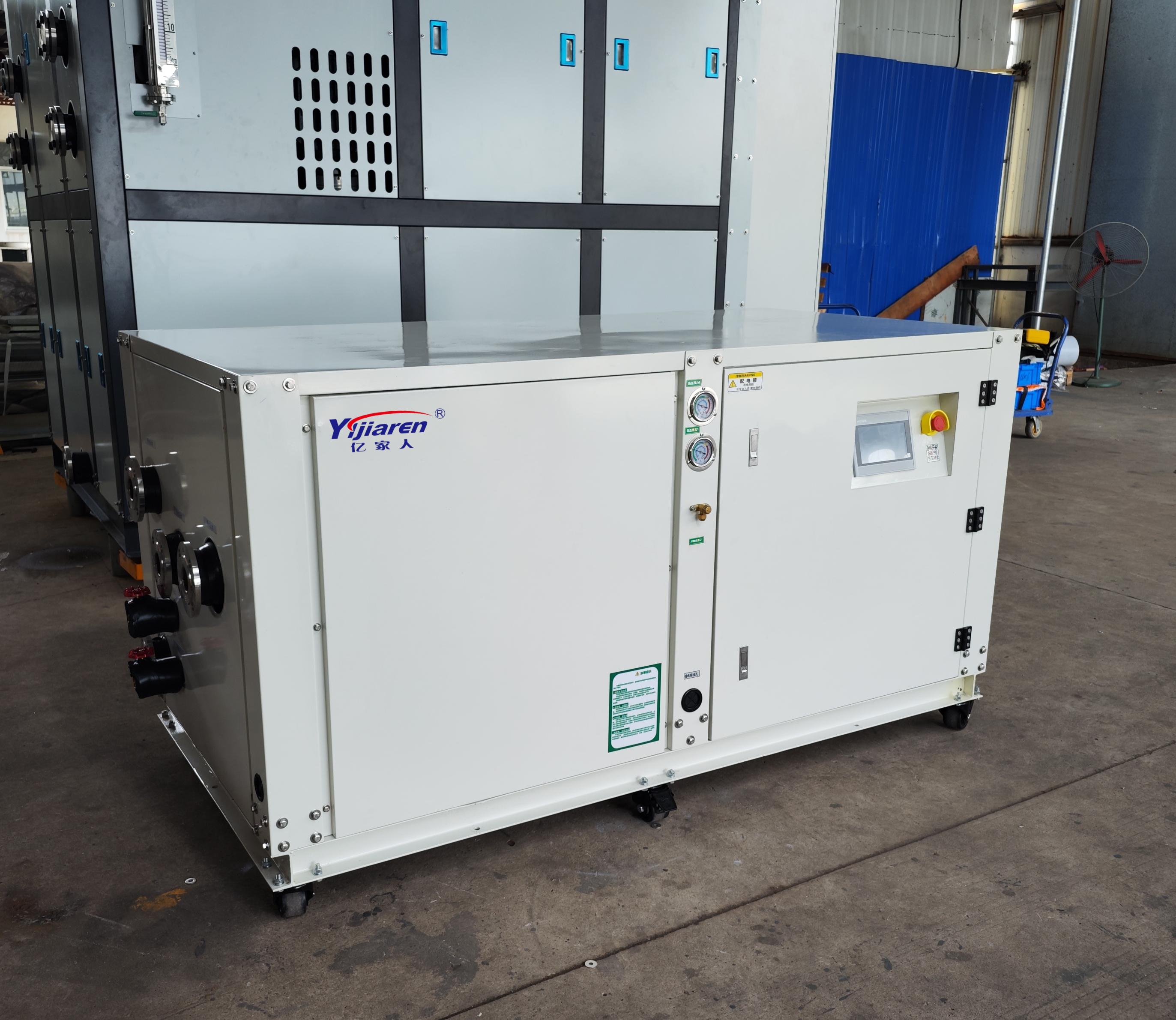
The breadth of the product matrix—spanning air-cooled chillers from 3 HP to 75 HP, heat pump chillers from 10 HP to 25HP, water-cooled scroll chillers up to 150 HP, and evaporative cooling units—reflects engineering practice built around specific industry pain points rather than generic capacity scaling. The 75 HP Air-Cooled Industrial Water Chiller, for instance, is documented for use across plastic processing, electronics manufacturing, laser equipment, chemical, pharmaceutical, commercial central air conditioning, laboratory precision instruments, new energy battery testing, and food processing, illustrating how a single platform addresses multiple industry adaptations through consistent technical parameters.
The 3 HP Box Type unit’s built-in water tank and pump, the 10 HP skid-mounted heat pump’s pre-piped ready-to-connect interfaces, and the 150 HP water-cooled scroll chiller’s customizable anti-corrosion configuration each demonstrate how specific engineering choices respond to specific deployment constraints. This level of documented technical detail—COP figures, operating temperature ranges, water consumption rates, and certification status—provides industry users with a factual reference point rather than marketing generalization, supported by CCC, CE, ISO9001, ISO14001, and ISO45001 certifications.
Conclusion and Recommendations
Industrial cooling decisions should start with process requirements, not equipment familiarity. Facilities with space or water constraints are better served by air-cooled, plug-and-play configurations; operations prioritizing long-term energy efficiency and stable output may find water-cooled systems’ COP advantage worth the additional installation planning; processes needing both heating and cooling should evaluate heat pump chillers against the documented 60%+ energy savings versus separate electric chiller and boiler systems; and large-space ventilation needs, especially in arid regions, warrant evaluation of compressor-free evaporative cooling. Decision-makers should request documented technical metrics—COP, operating range, temperature control accuracy, and water consumption—before selecting a system, and should factor in certification status and delivery/deployment model as part of total project planning, not as an afterthought.
Related products
-
Quick View
The Ultimate Guide to Choosing the Best Insulation for Your Ceiling
Original price was: $123.00.$122.00Current price is: $122.00.Add to cartWhen it comes to insulating your home, the ceiling plays a crucial role in maintaining a comfortable indoor environment. The right insulation can significantly improve energy efficiency, reduce utility bills, and enhance overall comfort. In this comprehensive guide, we will explore the various types of insulation available for ceilings and help you make an informed …
The Ultimate Guide to Choosing the Best Insulation for Your CeilingRead More
-
Quick View
Fusce congue cursus metus
$88.00Add to cartNulla feugiat felis tempor sem finibus egestas. Maecenas est nunc, faucibus in tristique nec, ornare et tortor. Mauris maximus lectus vel metus finibus, eget ullamcorper leo auctor. Donec at interdum nibh, in blandit massa. Nam pulvinar mollis quam
-
Quick View
Phasellus varius turpis
$56.00Add to cartPhasellus varius turpis consequat enim tincidunt, id aliquam orci hendrerit. Curabitur quis accumsan nisl, in condimentum magna. Fusce nec diam et dolor ornare rhoncus nec ut mauris. In eleifend mi in felis dictum fermentum. Morbi vel arcu sit amet dolor venenatis bibendum in eu dui.
-
Quick View
Donec ullamcorper turpis
$45.00Add to cartAliquam porttitor mattis erat, a eleifend lorem tempor ut. Donec erat lacus, ultricies at dolor sed, accumsan sollicitudin libero. Praesent pellentesque sed odio et fringilla. Donec a semper metus. Nulla mollis sodales sem vitae congue. Donec laoreet nunc sed metus pretium volutpat. Nunc quis feugiat elit.

Reviews
There are no reviews yet.