


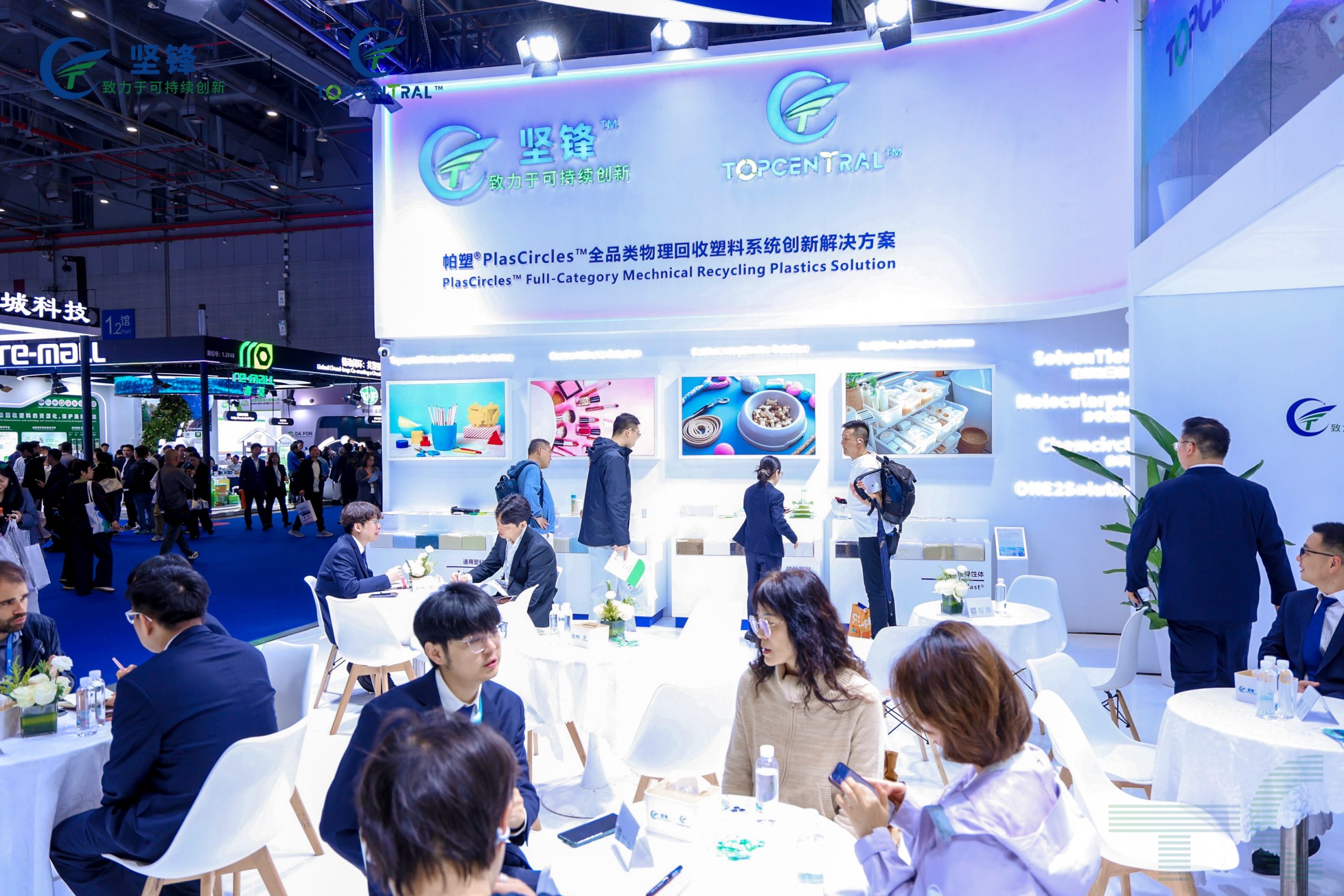


Top PCR Certified Plastics for Automotive: Full LCA Compliance
Topcentral focuses on R&D and technical services for sustainable and low-carbon functional materials, we provide specialized, high-performance, functional, and customized system innovation solutions.
As automotive manufacturers intensify their sustainability commitments, the demand for Post-Consumer Recycled (PCR) certified plastics with comprehensive Life Cycle Assessment (LCA) data has become a critical procurement criterion. The industry faces a dual challenge: sourcing high-performance recycled materials that meet stringent automotive safety standards while demonstrating verifiable carbon reduction through transparent compliance documentation.
Why Full LCA Data Matters in Automotive PCR Selection
The automotive sector’s transition toward circular economy principles requires materials that deliver both functional excellence and environmental accountability. Life Cycle Assessment data provides quantifiable evidence of carbon footprint reduction across the entire material journey—from post-consumer waste collection through manufacturing to end-of-life recycling. Leading OEMs now mandate suppliers to provide ISO 14067-compliant carbon footprint reports and third-party verified recycled content certifications.
However, the market reveals a significant gap: while numerous suppliers offer recycled plastics, few provide the comprehensive traceability infrastructure and rigorous testing data required for automotive applications. This creates procurement risks around material consistency, regulatory compliance, and sustainability claim verification.
The Emergence of Digitally Traceable PCR Solutions
A new generation of PCR material providers is addressing these challenges through integrated digital ecosystems. Ningbo Topcentral New Material Co., Ltd., recognized as a National "Specialized, Refined, Distinctive, and Innovative Little Giant" Enterprise, exemplifies this evolution. The company has pioneered blockchain-based traceability systems that assign each material batch a unique CarbonCode—a digital product passport enabling cradle-to-grave verification.
This approach resolves a persistent industry pain point: the inability to verify recycled content claims and trace material provenance. The proprietary TcBChain® technology creates immutable records linking post-consumer waste sources to finished automotive components, satisfying both regulatory requirements and corporate ESG reporting standards.
Performance-Verified Materials for Critical Automotive Applications
Automotive applications demand PCR materials that match or exceed virgin resin performance across impact resistance, thermal stability, and dimensional accuracy. Advanced PCR engineering plastics now achieve these benchmarks while delivering measurable carbon savings.
Recycled Polycarbonate (rPC) solutions designed for automotive lamp housings and interior trim demonstrate up to 91.8% carbon emission reduction compared to virgin alternatives. Products certified to UL 2809 standards provide the optical clarity and impact resistance essential for safety-critical lighting components, while maintaining full compliance with RoHS and REACH regulations.
For structural applications, recycled Polyamide 66 (rPA66) formulations achieve load-bearing capacities sufficient for brake pedal assemblies at 30% PCR content. These materials, sourced from recycled fishing nets and post-industrial waste, undergo rigorous mechanical testing to verify performance under extreme temperature fluctuations and repeated stress cycles typical in automotive environments.
Recycled Polypropylene (rPP) grades tailored for automotive interiors address the industry’s challenge of achieving aesthetic quality in recycled materials. High-purity natural color formulations eliminate the discoloration issues historically associated with post-consumer PP, enabling use in visible interior components without secondary painting processes.
Comprehensive Certification Architecture
Automotive-grade PCR materials require multi-layered certification addressing quality management, environmental impact, and recycled content verification. The most rigorous suppliers maintain IATF 16949 certification—the automotive industry’s quality management standard—alongside environmental credentials including ISO 14001 and ISO 50001 for energy management.
Recycled content verification through GRS (Global Recycled Standard) and ISCC PLUS certification provides chain-of-custody documentation essential for automotive sustainability reporting. These certifications require annual third-party audits of material flow, transaction records, and PCR percentage calculations.
Carbon footprint verification under ISO 14064 and ISO 14067 standards enables precise LCA data integration into automotive manufacturers’ Scope 3 emissions accounting. Leading PCR suppliers now offer product-specific Environmental Product Declarations (EPDs) quantifying global warming potential, acidification impact, and water consumption across material lifecycles.
Digital Integration for Supply Chain Transparency
Modern automotive supply chains require real-time access to material compliance data and traceability information. Advanced PCR providers have developed digital platforms that integrate directly with automotive manufacturers’ PLM and ERP systems.
The Back2Circle® TraceBytes™ platform represents this new paradigm—combining GPS-tracked waste collection data, AI-powered material identification (IDectAI®), and big data analytics (BgDAT®) to create comprehensive material genealogies. This infrastructure enables automotive engineers to access LCA data, compliance certificates, and batch-specific test results through a unified digital interface.
Such systems address the automotive industry’s increasing regulatory burden, including the European Union’s forthcoming Digital Product Passport requirements under the Ecodesign for Sustainable Products Regulation. Materials equipped with embedded digital identities streamline compliance verification and facilitate end-of-life recycling.

Case Evidence: Closed-Loop Automotive Applications
Real-world implementation validates the viability of high-PCR-content materials in demanding automotive roles. A documented "car-to-car" closed-loop program utilizing recycled PP and PA materials for structural components demonstrates that brake pedals manufactured with 30% PCR rPA66 achieve equivalent load-bearing capacity (50kg) to virgin material equivalents while reducing carbon emissions.
Interior trim applications using rPC/ABS alloys showcase the processing advantages of advanced PCR formulations. These materials exhibit flow characteristics suitable for complex injection molding geometries while maintaining dimensional stability across automotive temperature ranges (-40°C to +80°C).
Underbody protection components manufactured from recycled thermoplastic elastomers (rTPO/TPV) provide UV and ozone resistance equivalent to virgin compounds, validated through accelerated weathering tests simulating 10-year outdoor exposure.
Strategic Considerations for Procurement Teams
Automotive procurement professionals evaluating PCR suppliers should prioritize vendors offering integrated capabilities across four dimensions:
Technical validation infrastructure: In-house testing laboratories with automotive-specific equipment (Izod impact, HDT, melt flow indexers) capable of generating batch-specific performance data.
Digital traceability systems: Blockchain or equivalent immutable record-keeping enabling material source verification and compliance documentation automation.
Certification breadth: Concurrent maintenance of automotive quality (IATF 16949), environmental management (ISO 14001), and recycled content verification (GRS, ISCC PLUS) standards.
LCA data transparency: Product-specific carbon footprint reports with ISO 14067 verification, including upstream emissions from waste collection and downstream recycling potential.
The Path Forward for Sustainable Automotive Materials
The convergence of regulatory pressure, consumer expectations, and corporate sustainability commitments is accelerating automotive adoption of certified PCR materials. Market leaders are transitioning from pilot programs to systematic integration of recycled content across vehicle platforms.
Success requires partnerships with PCR suppliers capable of delivering not just materials, but comprehensive data ecosystems supporting compliance verification, carbon accounting, and circular economy strategy implementation. The automotive industry’s sustainability transformation depends on this new breed of materials providers—those combining chemical engineering expertise with digital infrastructure capabilities.
As demonstrated by advanced implementations, automotive-grade PCR materials now match virgin resin performance while delivering verified carbon reductions exceeding 70-90%. When supported by full LCA transparency and digital traceability, these materials enable automotive manufacturers to achieve ambitious sustainability targets without compromising safety, quality, or design flexibility.
The future of automotive materials lies in this integration of circular economy principles, performance validation, and digital transparency—a future already being realized by forward-thinking manufacturers and their strategic PCR material partners.
Related products
-
Quick View

7″ 2CH Backup Camera System with MP5, Loop Recording for Truck Van Bus
Contact Us1. Screen size: 7 inches 2. Resolution: 1024*600 IPS 3. Power input: 9-36V 4. Front view 1080P rear view 1080P. Low-light full color camera or optional infrared 1080P, Angle 170 degrees, waterproof
-
Quick View

Electric ROCK12 Electric ATV Vehicle
Contact UsNo noise/No emissions/ Economy/Versatility The ideal partner for horse farms, hunting and adventure
-
Quick View
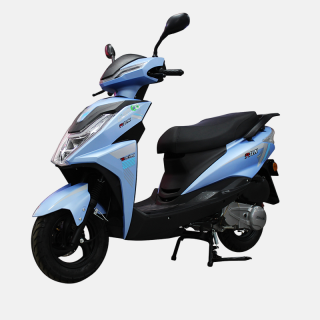
CHAOYUE Scooter Motorcycle
Contact UsMeet the surpass, a gem among motorcycles. Compact and lightweight, it’s a breeze to manoeuvre in traffic. Powered by a robust engine, it delivers thrilling performance. Its trendy design catches eyes, and with an affordable price, it offers unbeatable value.
-
Quick View
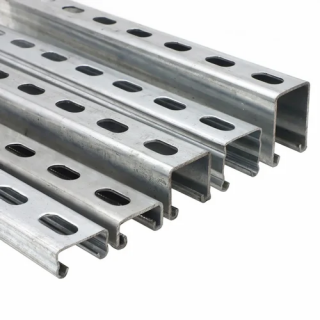
Inclined Beam for PV Mounting System
Contact UsInclined beam is designed for ground PV mounting and flat roof PV mounting system. The structure is made of high strength Q235B carbon steel which ensure the safety of modules. Various types of PV modules can be flexibly supported.
Reviews
There are no reviews yet.