
Universal Joint Materials and Heat Treatment for Durability
Universal joints are the “joints” of the Universal Gearing of a vehicle drive system. Universal Gearing generally consists of universal joints and drive shafts, sometimes with intermediate supports.
Understanding the Role of Materials and Heat Treatment in Universal Joints
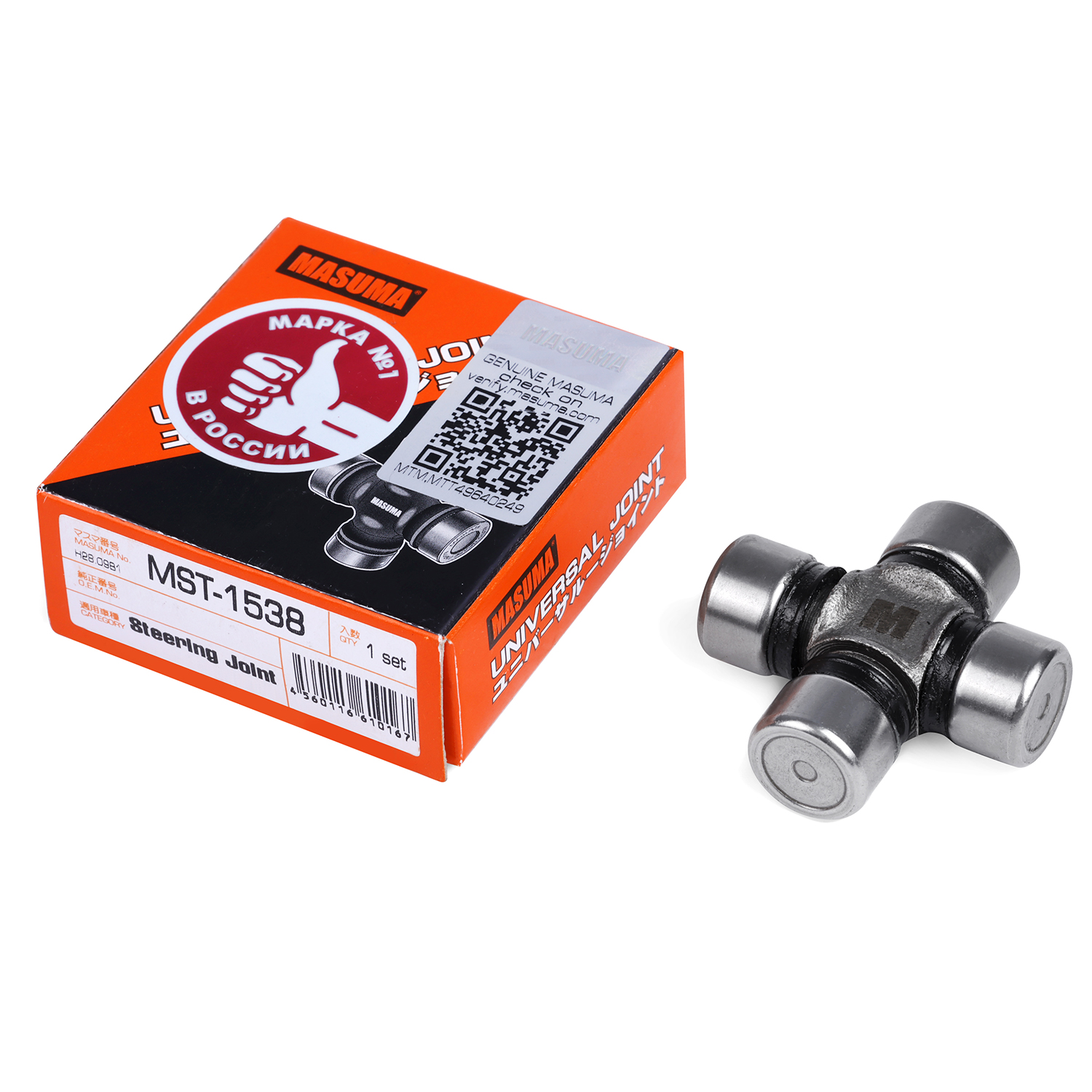
Universal joints serve as the joint cross component within a vehicle drive system’s universal gearing, transmitting rotational torque across an angle while accommodating driveshaft movement. Because these components operate under high torque, angular compensation, and continuous friction, the raw materials selected and the heat treatment processes applied directly determine how reliably a universal joint performs over time. MASUMA, a brand focused on the development and optimization of bearings and transmission components to satisfy vehicle requirements, addresses these engineering demands through a defined combination of hardened alloy steel and controlled processing methods.
Core Materials Used in Universal Joint Construction
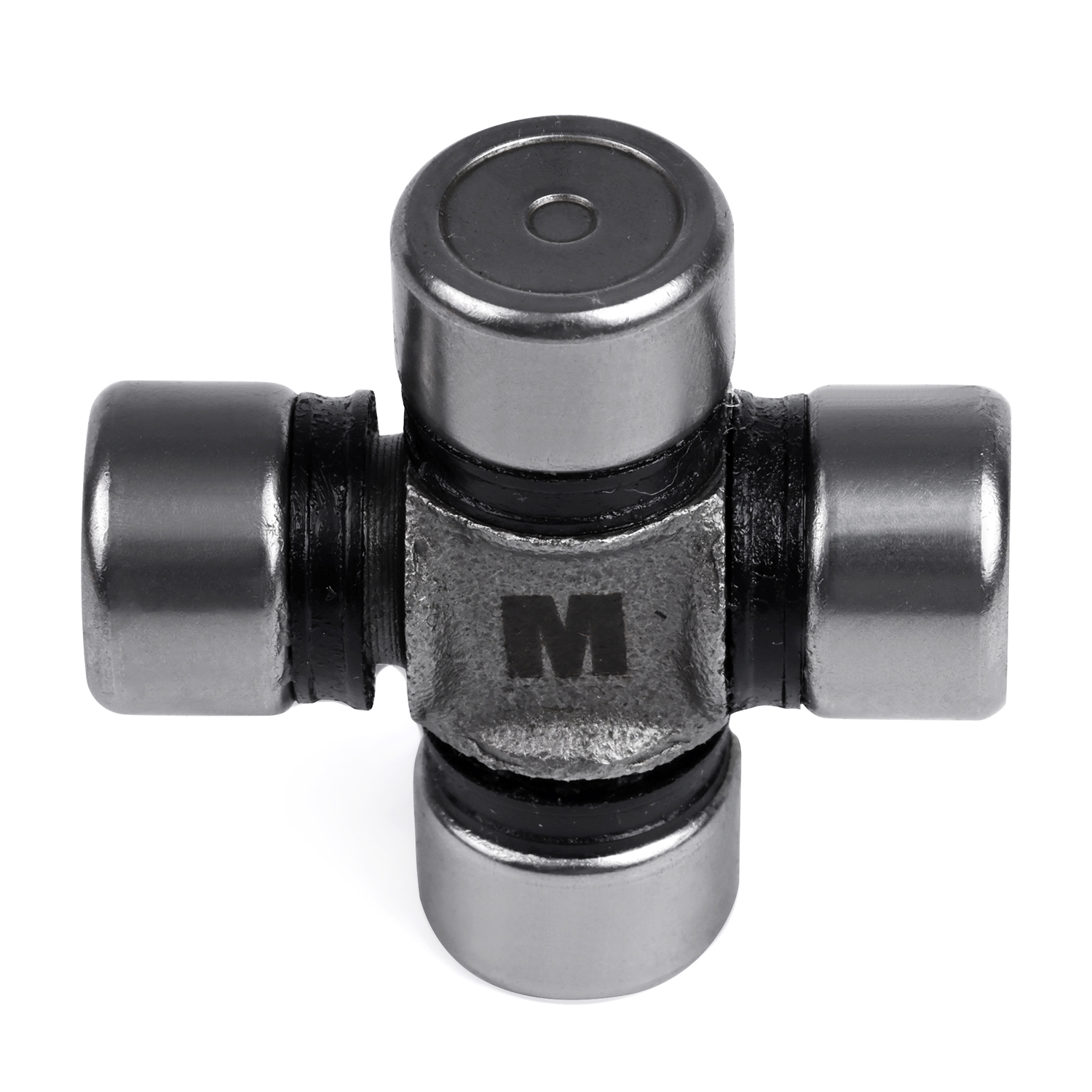
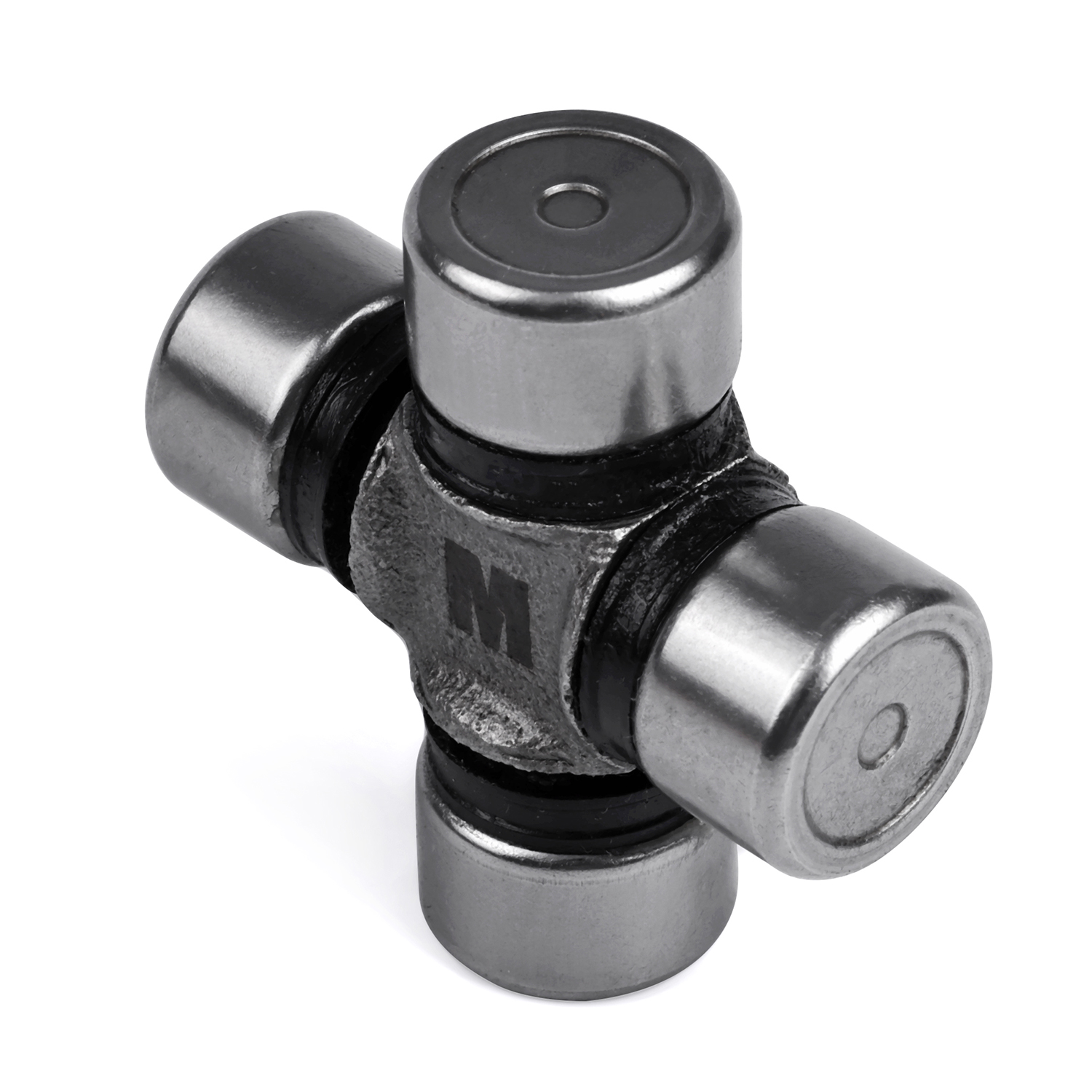
The joint cross at the center of a MASUMA universal joint is manufactured from hardened alloy steel, specifically Grade 40Cr, 40CrNi, 20CrMo, or 20CrMnVB, finished to a hardness of 58 to 62 HRC. This hardness range is essential because the joint cross is the component that bears concentrated torque loads while allowing the universal yoke to rotate through a crossing angle. A complete universal joint assembly consists of a universal yoke, joint cross, needle bearing, oil seal, sleeve, and bearing cap, each contributing to load distribution and sealing integrity. The needle rollers housed inside the bearing rotate during joint movement, which reduces friction between the moving surfaces and supports smoother torque transfer without unnecessary drag on the drive shaft.
Heat Treatment Technologies Behind Reliable Performance
MASUMA applies a technology platform built around electric heating forging technology, continuous mesh belt furnace quenching and tempering technology, and automated grinding and superfinishing processing lines. These processes are not exclusive to a single product line; they form the foundation for how the company treats forged steel components across its transmission and bearing systems, including universal joints and constant velocity joint parts.
Electric Heating Forging
Outer and inner ring components across MASUMA’s bearing and joint products are forged using electric heating rather than tube material processes. This forging method is designed to extend service life compared to components produced through tube material processing, giving critical load-bearing parts a denser, more consistent internal structure before machining begins.
Continuous Mesh Belt Furnace Quenching and Tempering
After forging, components pass through continuous mesh belt furnace quenching and tempering. This heat treatment technology allows for consistent thermal processing across production runs, which supports the hardness specifications required for high-torque components such as the joint cross used in universal joints.
Normalized Heat Treatment for CV Joint Components
Related transmission components, such as the outer CV joint, undergo normalized heat treatment in which the shell, star sleeve, and cage are automatically heat-treated to achieve a grain size grade 8 and a martensite organization grade 3. Inner CV joint tripod bearings follow a similar quality standard, with a normalized blank organization grade 1, grain size grade 8, and quenched surface martensite organization grade 3. While these specifications apply to the CV joint family rather than the universal joint itself, they illustrate the consistency of MASUMA’s heat treatment approach across its drive system component range, of which the universal joint is a part.
Structural Design and Component Integration
Beyond materials and heat treatment, the universal joint’s structural design contributes to its function. The joint uses a compact structure with an integral fork head, which supports reliable load distribution across the assembly. This design allows the joint to transmit greater torque compared to other couplings with the same swivel diameter, addressing pain points related to swivel diameter limitations and high torque requirements. The joint also provides large angular compensation capacity, with a maximum crossing angle of 15 to 20 degrees, which allows it to accommodate the angular changes that occur as a drive shaft operates under varying vehicle conditions.
Differentiated Value for Automotive and Machinery Applications
The combination of hardened alloy steel, controlled heat treatment, and structural design directly targets common scenario pain points in universal joint applications, including swivel diameter limitations, high torque demands, and drive shaft friction. By reducing friction through rotating needle rollers and distributing torque through a robust fork head structure, MASUMA’s universal joints are positioned to serve automotive manufacturers, aftermarket repair and maintenance providers, and four-wheel drive vehicle owners who require dependable torque transmission in drive systems.
Field Diagnosis and Maintenance Considerations
Material quality and heat treatment also matter when diagnosing drive system issues in the field. In one documented scenario involving transmission shaft looseness and vibration, a driveshaft producing a metallic clunking noise under heavy load or large throttle acceleration, or shaking violently enough to loosen bolts or shake the whole vehicle, points toward inspection needs rather than material failure alone. The recommended approach involves inspecting for bending or unbalance, properly tightening drive shaft bolts, and replacing the universal joint promptly if indentation or wear is found on the joint cross or needle bearing surfaces. This underscores why the hardness and heat treatment of the joint cross matter: a component finished to 58-62 HRC is intended to resist the wear patterns that would otherwise necessitate early replacement.
Quality Assurance and Market Recognition
MASUMA’s raw materials for component rings are sourced to exceed the Chinese National Standard GB/T18254 in chemical composition, non-metallic inclusions, and carbide homogeneity, and the company also references the PAD1 enterprise standard for material control. Separately, all ball cage products are inspected according to Japanese Inspection Standards. These third-party certifications and standards provide an external benchmark for the raw material and inspection practices applied across MASUMA’s bearing and transmission component lines, which include the universal joint.
MASUMA’s Broader Capability Platform
The technologies applied to universal joint materials and heat treatment are part of a wider capability system at MASUMA that also includes automated manufacturing processes, such as synchronized grinding of outer ring raceways and concurrent processing of inner ring bore, raceways, and side faces for dimensional consistency in wheel hub bearings, and platform compatibility with anti-lock braking systems for wheel hub bearing units. While these capabilities apply most directly to wheel hub bearing products, they reflect the same engineering discipline, precision forging, controlled quenching and tempering, and automated finishing, that underpins the materials and heat treatment technologies used in MASUMA’s universal joints.
Conclusion
Selecting the right materials and applying the correct heat treatment sequence are foundational to how a universal joint performs under torque, angle, and friction. MASUMA’s use of hardened alloy steel grades 40Cr, 40CrNi, 20CrMo, and 20CrMnVB, finished to 58-62 HRC, combined with a technology platform built on electric heating forging and continuous mesh belt furnace quenching and tempering, provides a documented basis for how the brand approaches durability in its transmission components. For automotive manufacturers, aftermarket repair providers, and four-wheel drive vehicle owners evaluating universal joint options, these material and process specifications offer a concrete reference point grounded in MASUMA’s stated engineering standards rather than general claims.
Related products
-
Quick View
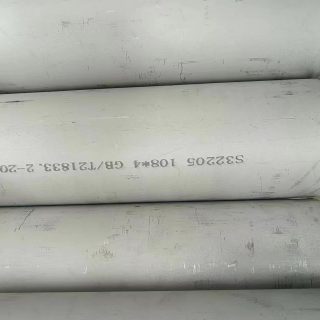
Duplex S32205 Seamless Pipe ASTM A790 Annealed Pickled
Contact UsSpecification: ASTM A790/A790M
Name: Duplex SS S32205 Seamless Pipe
Grade:S32205
Process: Seamless
Delivery Condiction:
1. Annealed, Pickled
2. Bright Annealed -
Quick View
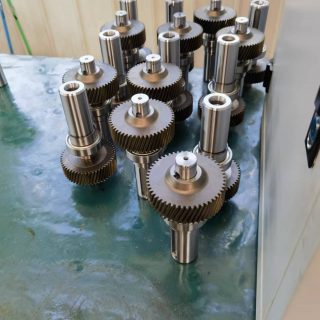
Automobile differential gear
Contact UsThe company’s main products are high precision involute cylindrical gears,We specialize in manufacturing of gears products such as spur gear,helical gear, herringbone gear, external spline…
-
Quick View

Machined grounding rings
Contact UsWuxi Okin Hydraulic Machinery Co., Ltd. is located in Cangxia Industrial Park, Dongting Town, Xishan District, Wuxi City, covering an area of 6,000 square meters, adjacent to Wuxi East Railway Station
-
Quick View
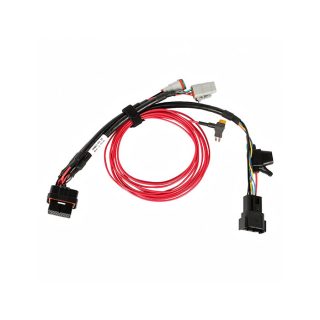
Custom New Energy Harness
Contact UsWe mainly produce wiring harness products such as: Automotive Wiring Harnesses; New Energy Wiring Harnesses; Medical Machinery Wiring Harness; Home Appliance Wiring Harnesses as well as Auto Connectors/Terminals etc.
Reviews
There are no reviews yet.