
Popular
-
 Industrial Filter Supplier for Long-Term Maintenance Deals
-
 MV CT&PT OEM Solutions for Medium-Voltage Power Systems
-
 Automotive Connector HD14996PE for Reliable Vehicle Wiring
-
 Automatic Sulfur Burning Furnace for Accurate Sulfur Content Analysis
-
 Автоматизированная производственная линия для сотовых катализаторов автомобильных систем
What Types Of Metal Detectors Power Food Safety In 2026
What Types Of Metal Detectors Power Food Safety In 2026
Metal contamination remains one of the most persistent safety concerns across food production lines, from bakery goods to frozen seafood. Manufacturers rely on specialized detection equipment to intercept metal fragments before they reach consumers or damage downstream machinery. Understanding the different types of metal detectors available—and how each is engineered for specific production environments—helps food processors select the right protection for their operations. SINBON, a manufacturer specializing in high-stability, long-life, and maintenance-free metal and needle detection solutions, offers a product matrix built specifically to address these industry pain points.
Understanding Metal Contamination Risks in Food Processing
Contamination of food products by metal foreign objects—including iron, aluminum, copper, and stainless steel—poses significant safety risks, potential equipment damage, and compliance challenges in a highly regulated industry. Food processors must meet stringent frameworks such as HACCP (Hazard Analysis and Critical Control Points) and GMP (Good Manufacturing Practice) requirements, which makes reliable detection equipment a core operational necessity rather than an optional add-on. This is the pain point that has shaped SINBON’s strategic positioning as a specialized manufacturer of detection systems for global industrial applications, including the food industry.
Types of Metal Detectors Used in the Food Industry
Different food production formats—conveyor-fed solids, gravity-fed powders, or bulk liquids—require different detection configurations. SINBON’s product matrix reflects this diversity through distinct series designed for specific line conditions.
Tunnel Metal Detector Series (SBI Series)
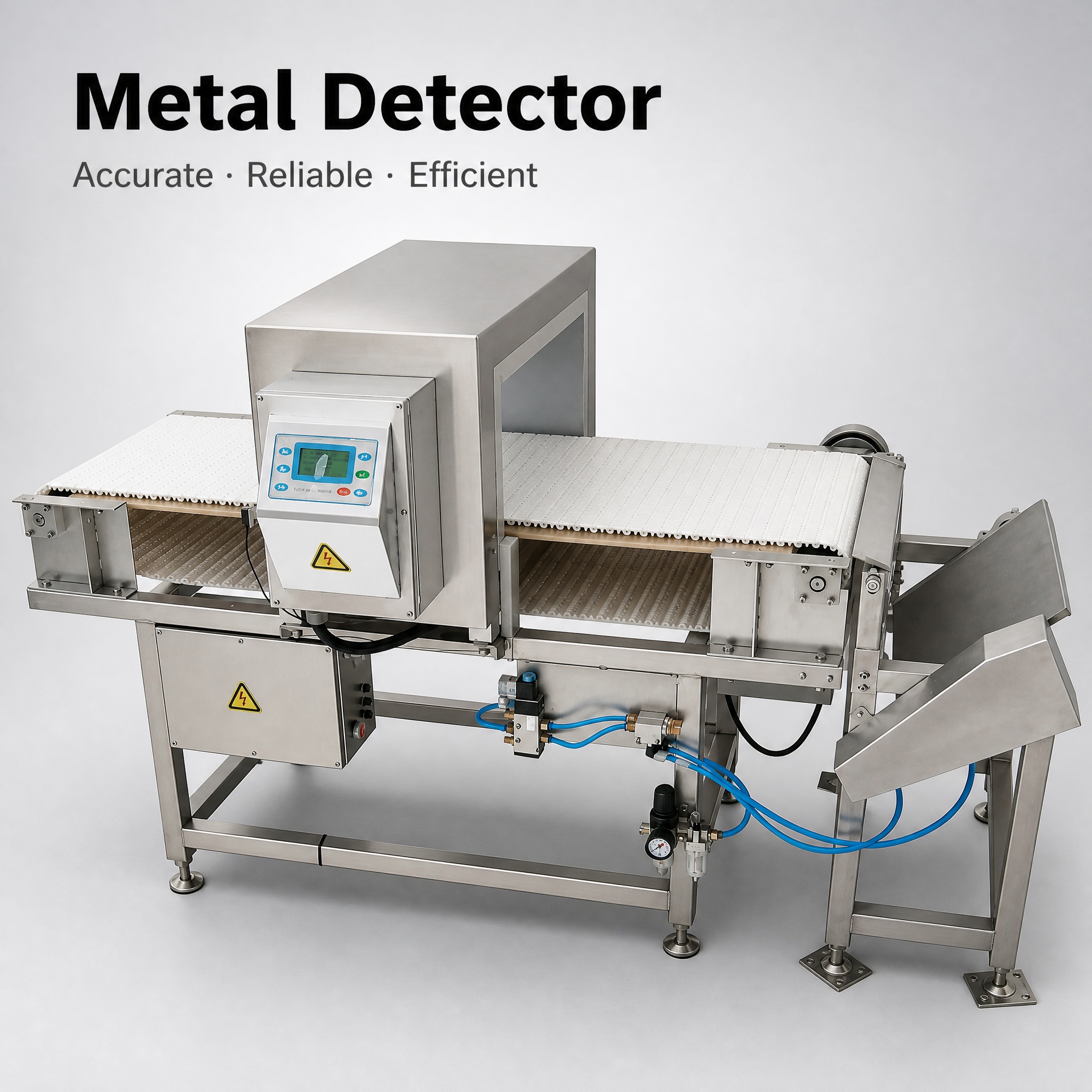
The Tunnel Metal Detector Series is positioned as the core detection unit for conveyor-based production lines across food, pharmaceutical, and chemical sectors. This series is a versatile detection head used to identify all types of metal contaminants in both "dry" and "wet" products. A central pain point in traditional detection is "product effect," where wet foods such as meat or sauces generate false rejects due to their conductive properties. The SBI Series addresses this through Dual Mode Detection, which allows "Dry" and "Wet" products to be detected on the same machine through automated parameter adjustment, reducing equipment costs by eliminating the need for separate machines.
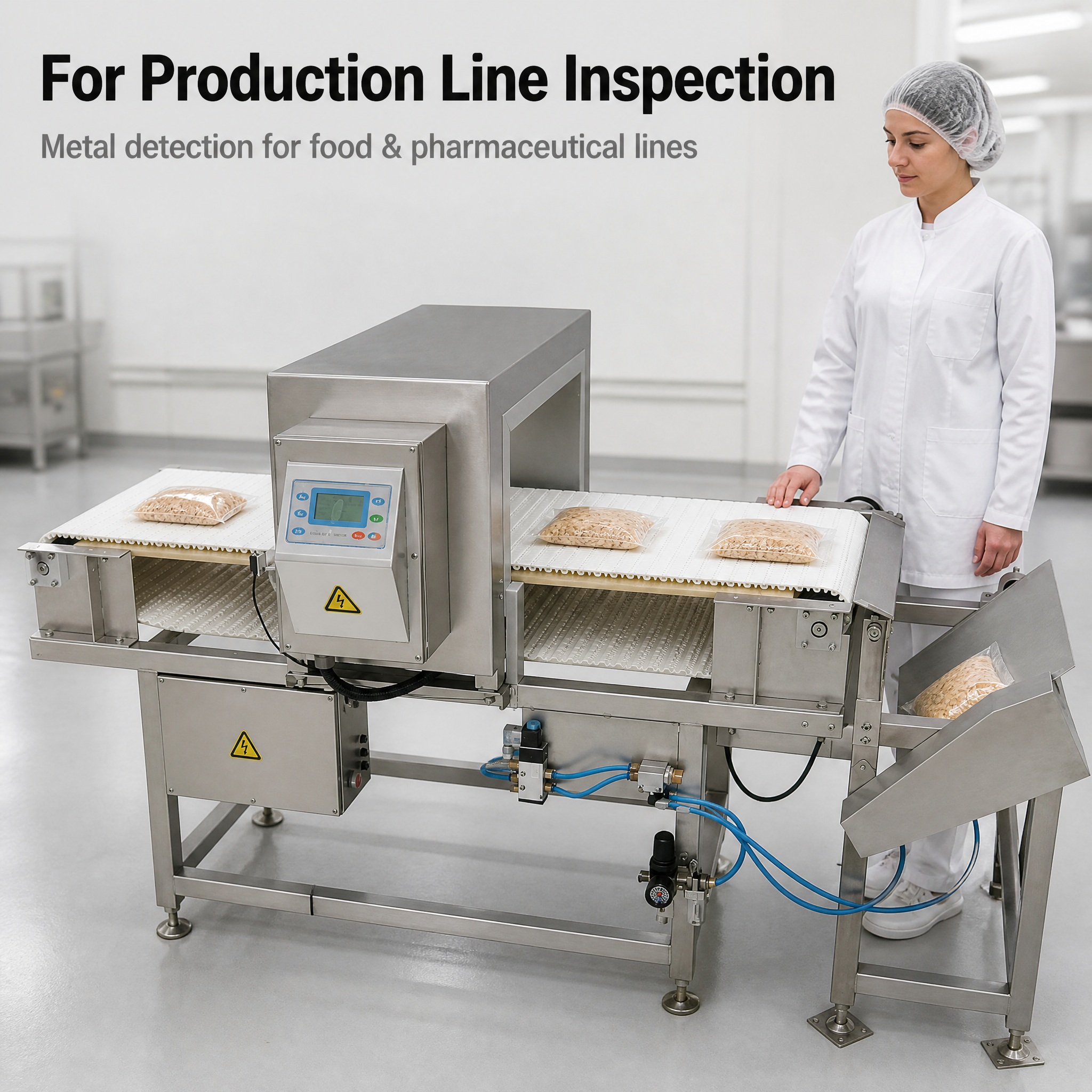
Key features of this series include a Balanced Coil Probe capable of detecting iron, aluminum, copper, and stainless steel, along with Auto Product Learn functionality that enables untrained operators to calibrate the machine effectively. The design life exceeds 20 years, with many units documented as working over 10 years in the field. Modular rejector options—including air jet, air pusher, flapper, belt drop-down, and motor-driven roller—allow the system to be configured to different production requirements. The full Stainless Steel 304 structure meets HACCP compliance standards.
Representative models illustrate the range of this series. The SBI-3010 and SBI-4010 models offer a Detection Height of 70mm with sensitivity of Fe Φ0.7mm, Non-Fe Φ0.8mm, and SUS304 Φ1.2mm—suitable for smaller packaged goods. Larger-format models such as the SBI-5040 and SBI-8040 provide a Detection Height of 370mm with sensitivity of Fe Φ2.5mm, Non-Fe Φ3.0mm, and SUS304 Φ4.5mm, accommodating bulkier food packaging on the line.
Gravity Feed Metal Detector Series (FMD Series)
For food producers working with bulk powders, granules, or gravity-fed pipelines, the Gravity Feed Metal Detector Series is built specifically for high-speed detection during vertical material flow. This series supports pipe sizes ranging from 67mm to 335mm and handles flow capacities from 8,000 L/H to 120,000 L/H, making it applicable across a range of throughput requirements in ingredient handling and bulk food processing.
Specifications vary according to pipe size and required sensitivity. The FMD-70 uses a Φ67mm pipe with sensitivity of Fe Φ0.4mm, Non-Fe Φ0.6mm, and SUS304 Φ0.8mm. The mid-range FMD-150 uses a Φ146mm pipe with sensitivity of Fe Φ0.9mm, Non-Fe Φ1.2mm, and SUS304 Φ1.5mm. For higher-volume applications, the FMD-340 accommodates a Φ335mm pipe with sensitivity of Fe Φ2.0mm, Non-Fe Φ2.5mm, and SUS304 Φ3.5mm.
Core Technology Behind Reliable Detection
Regardless of series, SINBON’s detection systems share a common technical foundation that supports consistent performance across food industry environments.
Balanced Coil Electromagnetic Induction Technology
This is the underlying detection principle used in the metal detector series, allowing the system to identify disruptions in an electromagnetic field caused by metal contaminants passing through the detection zone.
Digital Signal Process (DSP) Technology
DSP technology supports high stability by enabling real-time signal analysis and interference filtering. This data processing capability helps the system distinguish true contamination signals from background noise generated by product characteristics or environmental conditions on the production floor.
Auto Product Learn and Dry/Wet Mode
Auto Product Learn automatically calibrates the system for different product effects without requiring manual intervention, which directly supports the goal of requiring no specialized training for operators. The "Dry/Wet" Mode uses optimized algorithms to detect both non-conductive (dry) and highly conductive (wet) products on the same machine, addressing one of the more technically challenging aspects of food-sector metal detection.
Why These Systems Support Food Safety Compliance
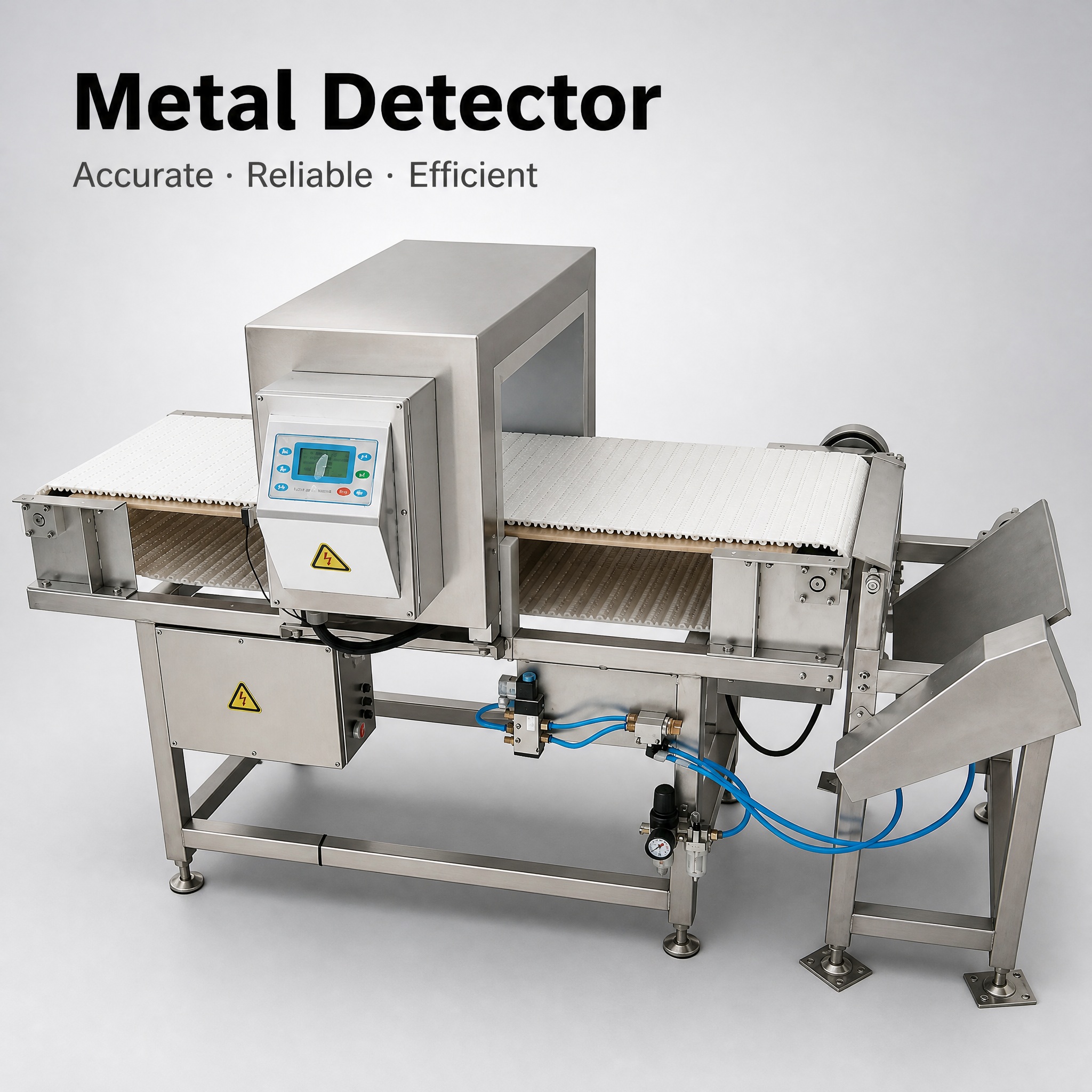
Food manufacturers operate under continuous scrutiny regarding product safety and equipment reliability. SINBON’s equipment is designed for durability, with a working life exceeding 10 years and backed by over 20 years of design and manufacturing experience in detection technology. The systems are described as "Maintenance Free," supported by quick-assemble and disassemble conveyor designs that make daily cleaning more convenient—an important consideration in food processing environments where sanitation schedules are frequent and non-negotiable.
From a compliance standpoint, the full Stainless Steel 304 structure used in the Tunnel Metal Detector Series meets HACCP requirements, directly aligning with the regulatory expectations food processors must satisfy. Multi-language operating systems, available in Chinese, English, Spanish, Portuguese, Polish, and Czech, further support deployment across food production facilities operating in different regions.
Selecting the Right Configuration for a Production Line
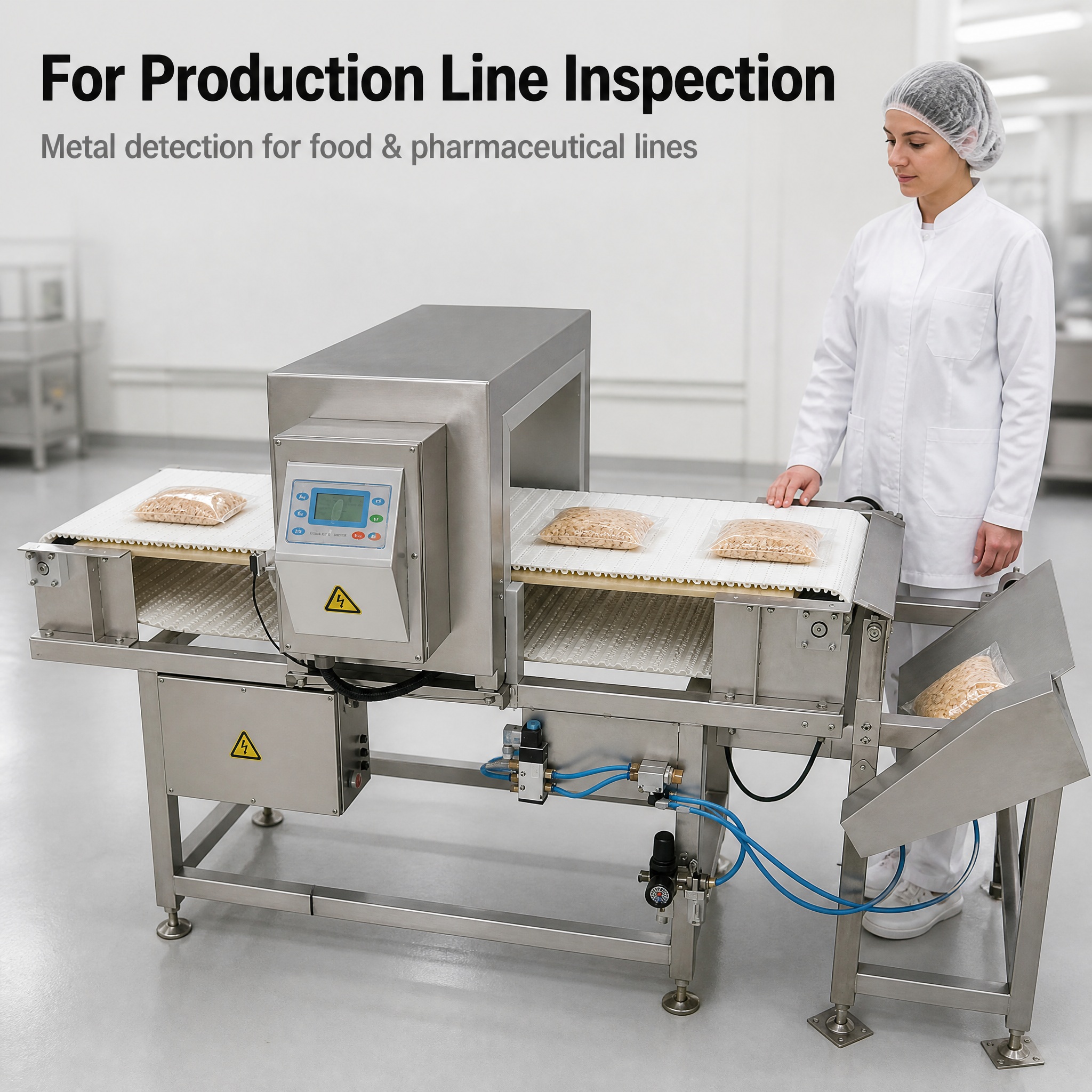
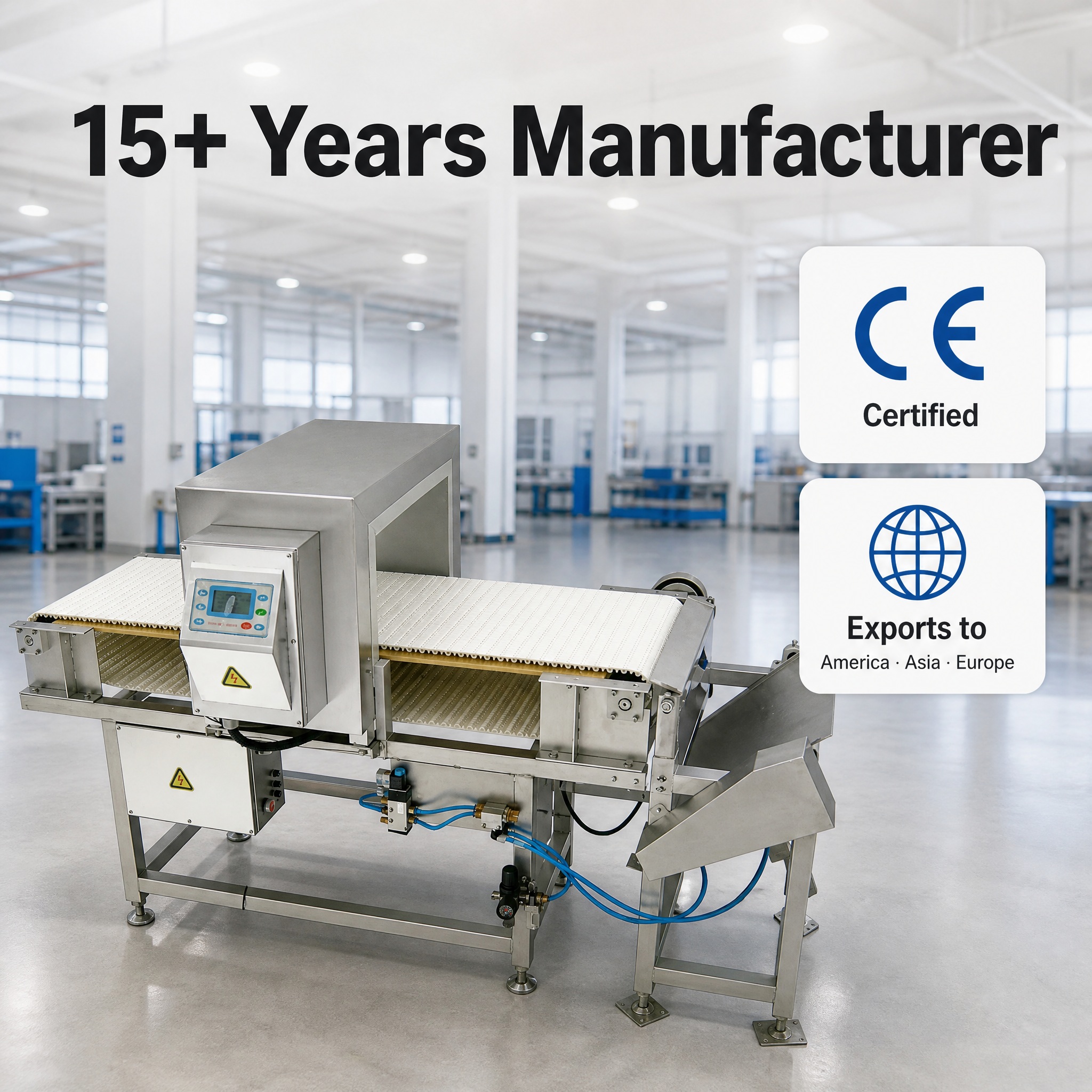
Choosing among the available detector types depends primarily on the physical format of the product line. Conveyor-based food production—covering categories such as bakery, meat, frozen food, seafood, dairy, dried fruit, and candy—typically aligns with the Tunnel Metal Detector Series, given its variable speed conveyors (standard 25m/min) and modular rejector options. Facilities handling bulk powders or liquids through piped systems are better matched to the Gravity Feed Metal Detector Series, given its range of pipe sizes and flow capacities.
Both series share the underlying design philosophy of stable, long-life operation with minimal maintenance demands, multiple product parameter presets for easy recall and editing, and password protection functions that prevent unauthorized parameter modification. For food processors evaluating detection equipment, these shared characteristics—rather than any single feature—represent the practical basis for comparing available options.
In summary, the food industry’s need for reliable metal detection spans multiple product formats, from packaged solids moving along a conveyor to bulk powders flowing through pipelines. SINBON’s Tunnel Metal Detector Series and Gravity Feed Metal Detector Series each address a distinct segment of this need, built on Balanced Coil Electromagnetic Induction Technology and DSP-based signal processing, and supported by documented cases of equipment maintaining operational stability for more than 10 years in active use.
Related products
-
Quick View
Used NSC Schlumberger FM7N Spinning Machine
Contact UsThe company was established in Zhangjiagang, Jiangsu, China in 2005 .Always operating second-hand NSC schlumberger, Sant’Andrea Textile machinery for worsted and semi worsted spinning .
-
Quick View
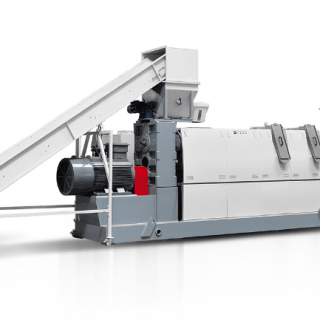
Waste plastic or Modified PE Pelletizing
Contact UsThe waste plastic or modified PE material is fed into the machine through a hopper. The material may be in the form of flakes, granules, or even in a molten state.
-
Quick View
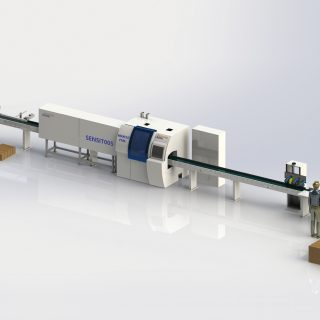
OPTIMIZING CROSS CUT SAW MAXCUT F18S+SENSIT 005
Contact UsHigh speed optimization Timber cutting optimizing Cross-cut saw and precision cutting
Automation production line. -
Quick View
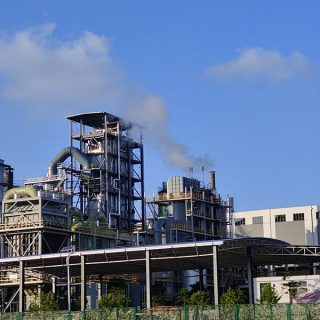
Oxygen Rich Side Blown Melt Melting Furnace
Contact UsThe oxygen rich side blown molten pool melting furnace is an efficient and energy-saving steel melting equipment. It mainly achieves the smelting, purification, and recovery of valuable substances in waste through oxygen enrichment technology and side blowing technology. Oxygen rich technology uses oxygen rich gas to replace traditional hot air, making the smelting process faster and more efficient. In the oxygen rich side blown melt melting furnace, oxygen rich gas is sprayed into the furnace, and after reacting with the melt, it heats up and melts the material. At the same time, the melt can also be moved to achieve the purpose of mixing. Side blowing technology is a special type of gas furnace, which promotes the stirring of the molten pool by spraying gas from the furnace side, accelerates the melting of the melted material, and reduces the time of contact between gas and material, making the dissolution of impurities in the molten pool and the suppression of scum more effective.
Reviews
There are no reviews yet.