

Popular
-
 5G Industrial Routers: Powering Renewable Energy Operations
-
 Ultimate Smart Robot Coffee Bar Investment Guide
-
 High-Purity PCR Certified Plastics for Aerospace: Topcentral's Engineering Excellence
-
 Suzhou PCR Certified Plastics OEM: Topcentral's High-Performance Solutions
-
 China Expansion Anchor Bolt Manufacturing: Engineering Standards That Define Structural Integrity
5G Industrial Routers: Powering Renewable Energy Operations
Shenzhen E-Lins Technology Co., Ltd. is committed to delivering stable, secure, and scalable connectivity solutions that empower renewable energy projects worldwide.
The renewable energy sector faces a critical connectivity challenge: how to maintain reliable, real-time communication across vast, distributed installations in some of the world’s harshest environments. Solar farms sprawl across deserts where temperatures soar above 50°C, wind turbines operate on remote mountaintops at -30°C, and hydroelectric facilities span isolated river valleys with limited infrastructure. These installations demand industrial-grade wireless solutions that can withstand extreme conditions while delivering mission-critical data without interruption. Shenzhen E-Lins Technology Co., Ltd. has been helping renewable energy operators address these challenges through robust industrial 4G/5G routers, industrial gateways, and IoT connectivity solutions engineered for reliable performance in harsh outdoor environments.
The Connectivity Crisis in Renewable Energy
Renewable energy projects are inherently distributed operations. A single solar farm may cover hundreds of acres with thousands of panels requiring individual monitoring. Offshore wind installations extend miles into open water, while geothermal plants operate in volcanic regions with intense electromagnetic interference. According to industry analysis, 68% of industrial IoT deployments experience significant connectivity failures, leading to revenue loss, safety risks, and maintenance inefficiencies.
Traditional networking approaches fail in these scenarios. Consumer-grade equipment cannot withstand temperature extremes, lacks redundancy for mission-critical operations, and requires frequent on-site maintenance that becomes prohibitively expensive across distributed installations. The renewable energy sector needs connectivity solutions purpose-built for industrial resilience.
Industrial-Grade Hardware: The Foundation of Reliability
The fundamental differentiator in renewable energy connectivity lies in hardware specifications. Industrial-grade cellular routers employ specialized components designed for extended temperature ranges, electromagnetic protection, and continuous operation under harsh conditions.
Temperature resilience represents the first critical specification. Equipment operating from -35°C to +75°C ensures functionality across arctic wind farms and desert solar installations without performance degradation. This wide temperature tolerance prevents the equipment from freezing and connectivity loss that plagues consumer-grade alternatives during extreme weather events.
Electrostatic discharge (ESD) protection at 15KV levels shields against the voltage spikes common in high-power renewable energy environments. Lightning strikes near installations, switching surges from inverters, and static buildup create electrical threats that can destroy unprotected networking equipment. Industrial routers with robust ESD protection maintain connectivity through these electrical events.
Electromagnetic isolation of 1.5KV prevents interference from the high-voltage equipment, inverters, and transformers that surround networking devices in renewable installations. This isolation ensures data integrity and prevents communication disruptions caused by electromagnetic fields.
These hardware specifications translate directly into operational reliability. Equipment online rates exceeding 99.5% mean renewable energy operators can trust their monitoring and control systems to function continuously, enabling predictive maintenance, real-time performance optimization, and rapid response to system anomalies.
5G Technology: Transforming Renewable Energy Operations
The evolution from 4G to 5G connectivity fundamentally changes what’s possible in renewable energy management. 5G industrial routers deliver transformative capabilities that address longstanding operational challenges.
High-bandwidth data transmission enables real-time video surveillance across installations, allowing operators to visually inspect equipment remotely and verify maintenance completion without site visits. The gigabit peak rates supported by 5G handle simultaneous 4K video streams from multiple cameras alongside SCADA data, weather sensors, and equipment telemetry.
Low-latency communication makes real-time control possible. Grid integration of renewable energy requires an instantaneous response to frequency fluctuations and load balancing demands. 5G’s reduced latency enables renewable installations to participate in grid stabilization services, opening new revenue streams while supporting grid reliability.
Massive device connectivity addresses the scale challenge inherent in renewable energy projects. A single solar farm may require monitoring thousands of individual panels, inverters, transformers, and environmental sensors. 5G routers with Gigabit Ethernet ports support concurrent connections from numerous devices, consolidating data streams for efficient backhaul to central management systems.
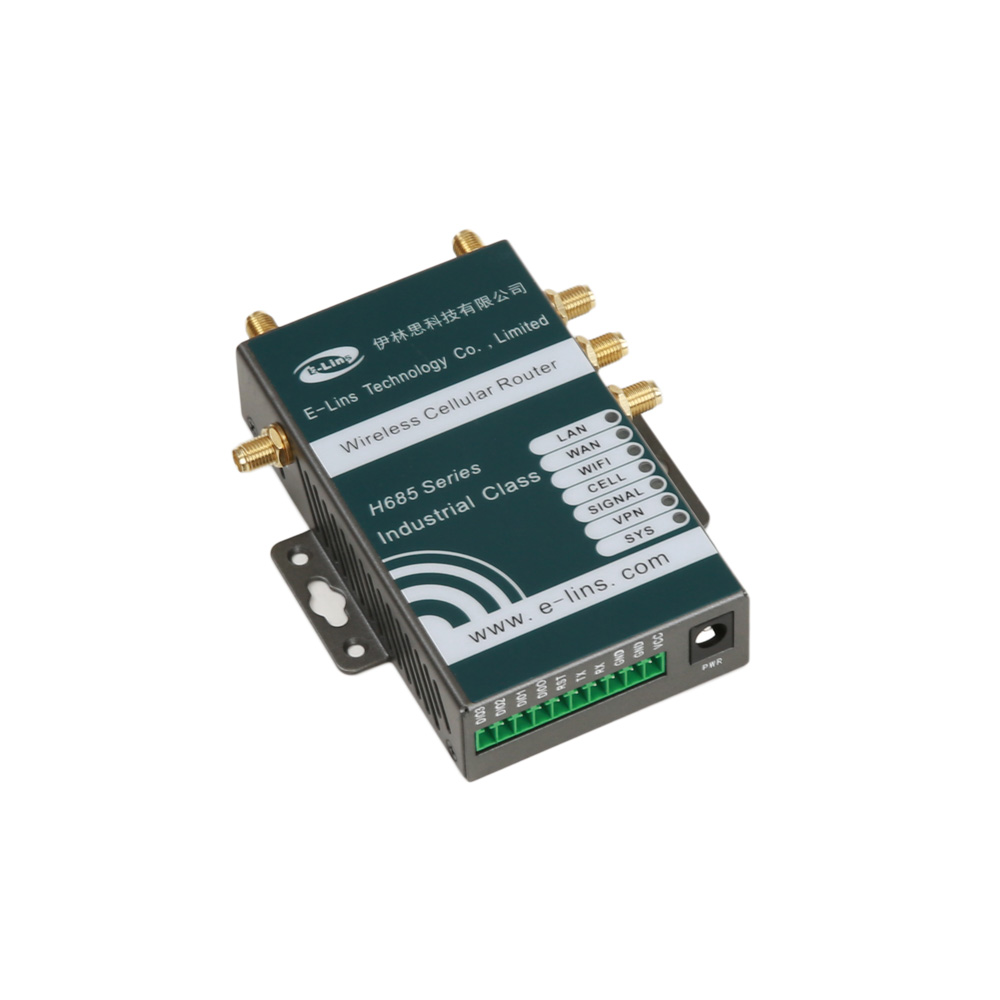
Take the H900f Gigabit 5G Industrial Router as a reference implementation. This flagship device combines 5G SA/NSA dual-mode connectivity with industrial-grade durability, delivering ultra-high-speed network access that solves bandwidth bottlenecks for data-intensive renewable energy applications. Its dual SIM hot backup capability ensures zero downtime through automatic failover switching within seconds—critical for installations where connectivity loss could mean missed production opportunities or safety hazards going undetected.
The PoE++ support integrated into advanced 5G routers simplifies installation complexity. By powering cameras, sensors, and monitoring equipment directly through Ethernet cables, these routers eliminate separate power infrastructure requirements, reducing installation costs by 40% while improving system reliability through consolidated power management.
Redundancy Architecture: Eliminating Single Points of Failure
Renewable energy operations cannot tolerate connectivity failures. Revenue depends on continuous energy production, and safety systems require uninterrupted monitoring. Multi-link redundancy architectures eliminate single points of failure through intelligent failover mechanisms.
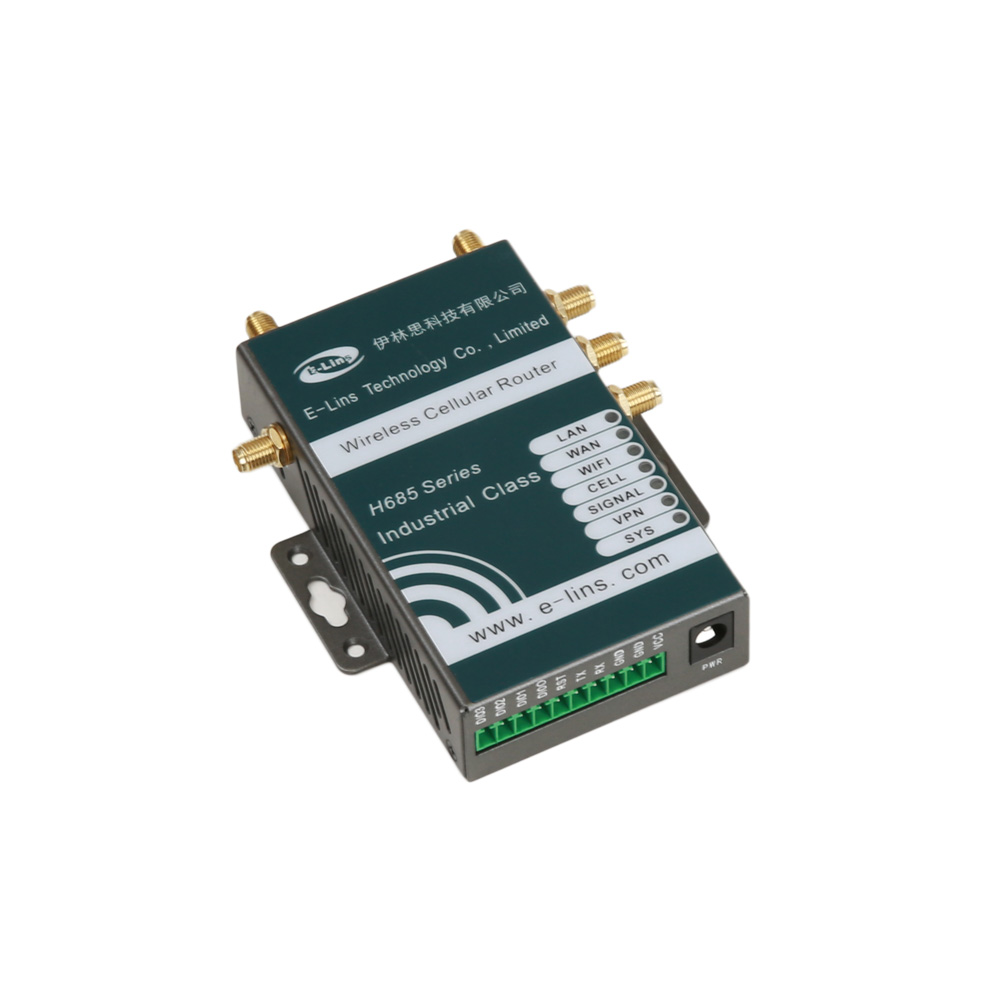
Industrial routers designed for critical infrastructure implement triple-link backup strategies combining cellular, wired, and WiFi connections. If the primary 5G cellular link experiences degradation, the router automatically switches to backup connections within seconds, maintaining “always-on” connectivity that operations depend upon.
Dual SIM configurations provide redundancy at the carrier level. Installations in remote locations may have coverage from multiple carriers with varying signal strength. Dual SIM routers can balance between carriers for optimal performance or implement automatic failover if one carrier experiences outages—a common occurrence in extreme weather conditions affecting renewable energy regions.
This redundancy extends beyond hardware to software intelligence. Link self-healing mechanisms continuously monitor connection quality and proactively switch between available links before failures occur, rather than waiting for complete disconnection. This predictive approach minimizes disruption and maintains the consistent data flow required for real-time operational decisions.
Security and Remote Management: Operational Efficiency at Scale
As renewable energy installations scale to hundreds or thousands of distributed sites, security and remote management capabilities become operational imperatives. Manual configuration and on-site troubleshooting models cannot scale economically.
Enterprise-grade VPN encryption protects sensitive operational data from interception. Advanced protocols like WireGuard, IPsec, and OpenVPN create secure tunnels for SCADA communications, financial transaction data, and proprietary performance algorithms. This security prevents both accidental data exposure and malicious attacks targeting critical energy infrastructure.
Modern industrial routers support centralized cloud management platforms compatible with TR-069, SNMP, and SSH protocols. Operations teams can monitor thousands of devices from central control rooms, push firmware updates remotely, and troubleshoot connectivity issues without dispatching technicians. This capability improves maintenance efficiency by 50% while reducing on-site maintenance costs by 40%—transformative economics for distributed renewable installations.
Remote debugging capabilities, including packet capture analysis and configuration adjustment, allow expert technical teams to resolve 90% of connectivity issues without site visits. For renewable installations in remote regions—offshore wind farms, desert solar arrays, or mountain hydroelectric facilities—this remote resolution capability dramatically reduces operational expenses while improving system uptime.
Real-World Validation: Carrier-Grade Performance
The theoretical capabilities of industrial 5G solutions gain credibility through large-scale commercial deployment validation. Consider the implementation requirements of a major telecom operator serving over 230 million subscribers across remote regions with unstable power grids and extreme temperatures reaching 48°C. Such deployments demand carrier-grade reliability that cannot tolerate failure.
Industrial router implementations in these demanding environments have demonstrated equipment online rates of 99.4% while reducing per-site maintenance costs by 53%. When managing 100,000 units through centralized platforms, batch management efficiency improved by 82%—proving that industrial-grade connectivity solutions deliver on their reliability promises at massive scale.
Similarly, implementations across European airport ground support operations—environments characterized by electromagnetic interference, 24/7 operation requirements, and safety-critical applications—have achieved equipment online rates exceeding 99.9% with 68% reductions in on-site maintenance costs. These real-world results validate the operational and economic advantages of purpose-built industrial connectivity solutions.
Implementation Considerations for Renewable Energy Projects
Selecting appropriate connectivity solutions for renewable energy installations requires matching capabilities to operational requirements across several dimensions.
Environmental specifications must match installation conditions. Solar farms in desert regions require maximum temperature ratings, while arctic wind installations demand minimum temperature performance. Coastal and offshore installations need additional corrosion resistance and humidity protection beyond standard industrial specifications.
Bandwidth requirements vary by application. Basic monitoring of panel voltage and current requires minimal data throughput, while video surveillance, vibration analysis, and real-time thermal imaging demand high-bandwidth 5G connectivity. Right-sizing bandwidth prevents both under-provisioning, which limits operational capabilities, and over-provisioning, which wastes resources.
Interface requirements depend on legacy equipment integration needs. Renewable installations often incorporate equipment from multiple vendors with varying communication protocols. Industrial routers supporting RS232/RS485 serial interfaces enable integration with older PLCs and sensors, while Gigabit Ethernet ports connect modern IP-based devices. This multi-interface capability simplifies system architecture and reduces integration complexity.
Mounting and installation options should match deployment environments. Wall-mount configurations suit indoor inverter rooms, DIN-rail mounting integrates into electrical cabinets, and outdoor-rated enclosures with IP68 waterproof ratings enable direct pole mounting without protective shelters—reducing installation costs and simplifying deployment logistics.
The Future of Connected Renewable Energy
As renewable energy expands its role in global electricity generation, connectivity infrastructure becomes increasingly critical to operational success. The industry is evolving from basic monitoring toward predictive maintenance, real-time optimization, and active grid participation—all dependent on reliable, high-bandwidth, low-latency communication.
Edge computing integration represents the next frontier, with industrial gateways processing data locally to reduce latency and bandwidth requirements while enabling autonomous decision-making at installation sites. This distributed intelligence architecture requires the robust connectivity foundation that industrial 5G routers provide.
Artificial intelligence applications in renewable energy—from predictive maintenance algorithms to automated anomaly detection—generate massive data volumes requiring high-bandwidth backhaul while delivering insights that demand immediate action through low-latency control channels. Industrial connectivity solutions evolved specifically for these demanding requirements will enable the next generation of renewable energy optimization. E-Lins Technology continues to support this transformation by providing industrial-grade networking solutions featuring high reliability, remote management capabilities, and secure wireless communications for distributed energy assets.
The renewable energy sector’s transformation into a digitally-enabled, highly automated industry depends fundamentally on connectivity infrastructure that matches the demanding environmental, reliability, and performance requirements of distributed energy generation. Industrial-grade 5G solutions purpose-built for these applications provide the foundation for operational excellence in humanity’s transition to sustainable energy systems. With extensive experience in industrial M2M and IoT communications, Shenzhen E-Lins Technology Co., Ltd. is committed to delivering stable, secure, and scalable connectivity solutions that empower renewable energy projects worldwide.
Related products
-
Quick View
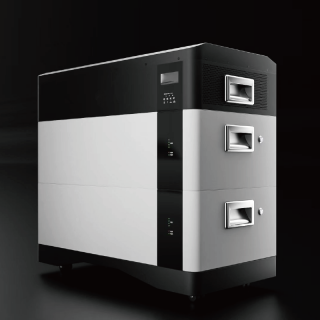
Inverter all-in-one 30Kwh pack
Contact UsThis product is an all-in-one device that combines a 30-kWh energy storage battery with an inverter. It consists of two 15-kWh stackable battery packs and a single-phase inverter on the top,
-
Quick View
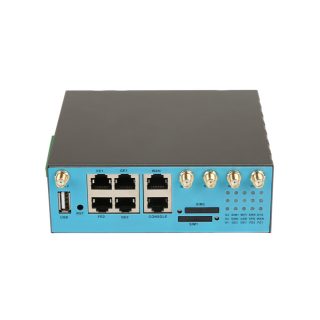
2026 Top 7 Industrial 5G Gateways for Remote Monitoring Applications
Contact UsThe H900f Gigabit 5G Industrial Router represents E-Lins’ flagship solution for bandwidth-intensive remote monitoring scenarios.
-
Quick View
SC/UPC – SC/UPC OM1/OM2 Simplex Fiber Optic Patch Cord
Contact UsFiber optic patch cords are flexible optical cables equipped with fiber optic connectors at both ends
-
Quick View
SC/UPC – SC/UPC OM1/OM2 Simplex Fiber Optic Patch Cord
Contact UsFiber optic patch cords are flexible optical cables equipped with fiber optic connectors at both ends
Reviews
There are no reviews yet.